
Expert insights, surgical technique guides, and medical device updates from industry leaders.
Exploring advancements in joint arthroplasty, trauma management, and spinal systems.
Choosing the right Cranio Maxillofacial Implants in 2026 requires more than comparing prices, materials, or catalog photographs. Global buyers must examine clinical evidence, manufacturing consistency, surgeon experience, and after-sales support. A titanium orbital floor implant may look ideal on a screen, yet fit poorly without accurate CT-based planning. A patient-specific PEEK implant may reduce shaping time, but its production workflow and sterilization controls deserve close review.
Craniofacial surgeon Dr. Ian Taylor is often associated with this practical principle: “Reconstruction must restore function before appearance.” That idea remains relevant. Stable fixation, soft-tissue protection, airway safety, chewing efficiency, and facial symmetry should guide product selection. Appearance matters. It is not the only measure.
This guide evaluates leading Cranio Maxillofacial Implants for hospitals, distributors, and specialist clinics worldwide. It considers titanium, PEEK, porous polyethylene, resorbable polymers, and custom 3D-printed solutions. The review also examines anatomical accuracy, screw compatibility, imaging visibility, sterilization packaging, traceability, and supplier responsiveness. Regulatory requirements differ between markets, so buyers should verify current approvals and local registration independently.
Some comparisons remain imperfect. Published studies may use different patient groups, follow-up periods, and success definitions. A highly rated implant is not automatically suitable for every defect. Clinical judgment still matters. So does surgical training. The strongest purchasing decision connects reliable evidence with the specific anatomy, procedure, and healthcare setting. That is where a product list becomes genuinely useful.
2026 Best Cranio Maxillofacial Implants for Global Buyers
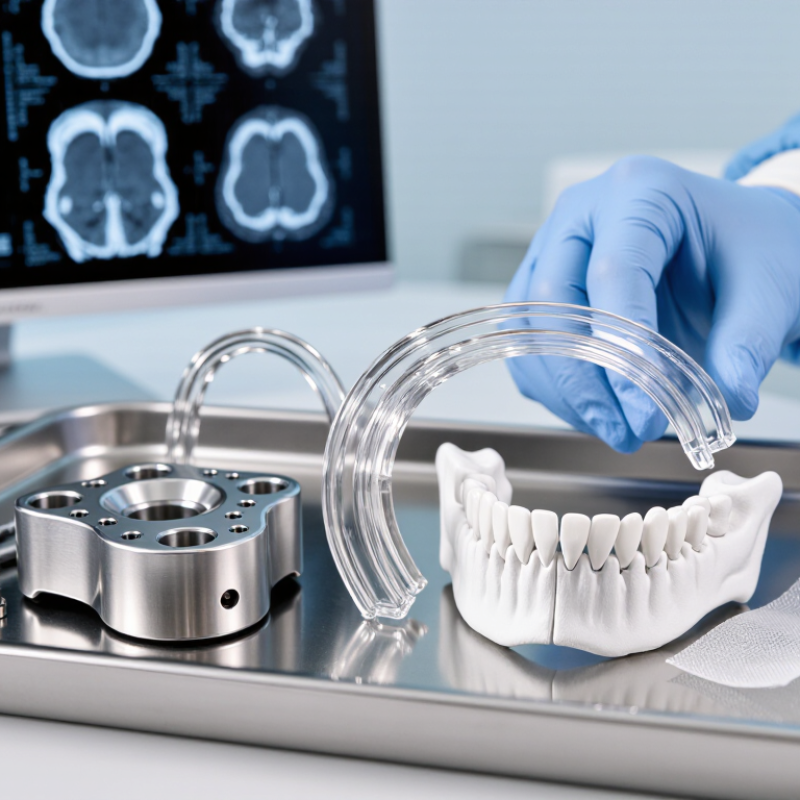
Cranio maxillofacial implants are medical devices used to rebuild or support the skull, face, jaw, and related bones. Surgeons may use titanium plates, patient-specific cranial implants, fixation screws, orbital implants, or jaw reconstruction systems. Their purpose is practical: protect the brain, restore facial structure, improve chewing, or support appearance after injury. The choice depends on anatomy, bone quality, infection risk, age, and surgical planning.
Cranial defects can follow trauma, tumor removal, infection, or decompressive surgery. Congenital conditions also matter. The U.S. Centers for Disease Control and Prevention reports craniosynostosis at approximately 4.1 cases per 10,000 live births, or about one in 2,500 births. The World Health Organization’s Global Status Report on Road Safety 2023 estimates 1.19 million annual road traffic deaths worldwide, with many more survivors experiencing serious facial injuries. These figures show why reliable reconstruction remains clinically important.
The word “best” is uncomfortable. Fit is never universal. A surgeon may select an implant after reviewing CT data, soft-tissue coverage, sterilization requirements, and long-term follow-up access. Patient-specific designs can improve contour matching, but they require accurate imaging and experienced planning. Standard systems may offer faster availability during urgent trauma care. ISO 10993 biological evaluation principles and local regulatory requirements should guide material assessment. Buyers should also examine documentation, traceability, fatigue testing, and evidence from peer-reviewed clinical studies. A polished surface does not guarantee success. Surgical judgment still matters most.
2026 Best Cranio Maxillofacial Implants for Global Buyers
Key Types of Cranio Maxillofacial Implants for Different Clinical Needs
Cranio maxillofacial implants must match anatomy, surgical goals, and healing conditions. Cranial reconstruction plates support patients with skull defects after trauma or neurosurgical procedures. They may use titanium, PEEK, or other medically approved materials. The best choice depends on imaging accuracy, defect size, fixation needs, and local clinical practice.
Orbital implants help restore the eye socket after fractures or tumor-related reconstruction. Their design should follow the orbital floor, medial wall, and soft-tissue requirements. Midface and maxillary implants support facial projection, bone continuity, and dental rehabilitation. Some cases require patient-specific designs based on CT data. Others may benefit from standard shapes during urgent surgery.
Mandibular reconstruction systems address segmental defects, facial symmetry, and functional loading. Fixation plates need suitable strength, contouring options, and stable screw placement. Small plates can assist with delicate pediatric or thin-bone procedures. However, pediatric growth requires careful planning.
Clinical teams should review sterilization status, traceability, imaging compatibility, and regulatory documentation before purchase. Surgical experience shows that a technically advanced implant can still fail when sizing or fixation is poorly planned. That remains an uncomfortable lesson. Global buyers should compare evidence, manufacturing controls, delivery reliability, and surgeon training support. No catalog replaces multidisciplinary assessment.
2026 Best Cranio Maxillofacial Implants for Global Buyers
Materials and design determine whether a cranio maxillofacial implant performs reliably after surgery. Titanium remains widely selected for its strength, corrosion resistance, and established surgical history. Its porous surface can support bone integration, but pore size and manufacturing quality require careful review. PEEK offers a lighter option and may reduce imaging artifacts. However, it does not naturally bond with bone like some titanium surfaces. No material is perfect.
Design features should match anatomy, fixation, and clinical workflow. Patient-specific contours can improve fit around the orbit, jaw, or cranial vault. Low-profile edges may reduce soft-tissue irritation. Strong screw channels help maintain fixation under functional loads. Buyers should also check compatibility with existing screws, plates, instruments, and imaging procedures. A device that fits one surgical system may not fit another. That detail is easy to miss.
Tips: Request material certificates, biocompatibility data, sterilization instructions, and traceability records. Review CT or MRI considerations with qualified clinicians. Confirm regulatory status in the target market. Ask whether the implant supports intraoperative adjustment. A perfect digital model can still meet imperfect bone. That deserves honest planning.
2026 Best Cranio Maxillofacial Implants for Global Buyers
Global buyers should evaluate cranio maxillofacial implants through evidence, not attractive product pages. Ask for material specifications, mechanical testing, sterilization records, and traceability documents. Titanium grade, surface treatment, and imaging compatibility deserve close review. A supplier should explain how each implant performs under realistic clinical conditions.
Certification must match the destination market. Verify the issuing authority, certificate scope, product model, and validity date. A quality-management certificate alone does not prove clinical safety. Request risk-management files, biocompatibility reports, and post-market surveillance procedures. Independent laboratory results are more useful when their methods and standards are clearly stated. Check whether packaging protects sterile barriers during long-distance transport.
Speak with surgeons and experienced distributors before placing a large order. Their feedback can reveal fit problems, difficult instrumentation, or inconsistent delivery. Review sample implants personally when possible. Inspect edges, markings, packaging seals, and instructions for use. Small details matter.
Be careful with impressive claims. “Universal compatibility” may hide limitations. Certification rules also change between countries, and translated documents can lose important meaning. Some buyers focus heavily on price, then discover hidden costs in training, customs, or replacement parts. I have found that a neat document folder can create false confidence. A deeper audit may still expose gaps in testing, communication, or clinical evidence.
| Evaluation Dimension | Recommended Technical Benchmark | Evidence Global Buyers Should Request | Practical Buyer Check |
|---|---|---|---|
| Implant Material | Implant-grade titanium, titanium alloy, PEEK, or other material specifically cleared for the intended anatomical application. | Material designation, chemical composition, material certificates, manufacturing specification, and applicable material standard such as ASTM F67, ASTM F136, ISO 5832-2, ISO 5832-3, or ASTM F2026 for implantable PEEK. | Confirm that the material certificate applies to the finished implant and that the material is suitable for long-term contact with bone and soft tissue. |
| Biocompatibility | Biological safety must be evaluated according to the nature and duration of patient contact. | Biological evaluation plan and report covering relevant endpoints under the ISO 10993 series, including cytotoxicity, sensitization, irritation or intracutaneous reactivity, systemic toxicity, and other tests justified by the device. | Check that testing covers the final finished device, including surface treatment, coatings, adhesives, residues, and sterilization effects. |
| Mechanical Performance | Strength, fatigue resistance, fixation stability, and deformation resistance must match the intended craniofacial site and clinical load. | Design verification reports, finite-element analysis where relevant, static and fatigue test methods, worst-case configuration testing, and acceptance criteria linked to the intended use. | Ask whether testing includes screw holes, thin sections, fixation points, anatomical curvature, and the smallest or weakest configuration. |
| Anatomical Fit and Design | The implant should provide predictable anatomical coverage, fixation, edge transition, and compatibility with the surgical plan. | Engineering drawings, dimensional tolerances, patient-matched design controls, design validation, anatomical model testing, and documented revision-control procedures. | Verify tolerance limits, minimum thickness, screw trajectory options, contour accuracy, and whether patient-specific files are securely controlled. |
| Surface and Coating | Surface finish and coating characteristics should support the intended fixation and should not introduce unacceptable particles or degradation products. | Surface roughness data, coating composition and thickness, adhesion testing, particulate assessment, corrosion or degradation testing, and cleaning-validation records. | Determine whether the surface is polished, machined, porous, coated, or treated, and confirm that the declared surface matches the supplied product. |
| Sterilization | Sterile implants must use a validated sterilization process suitable for the material, packaging, and claimed sterility level. | Sterilization validation, routine dose or cycle records, packaging compatibility data, and a sterility assurance level claim supported by applicable standards such as ISO 11135, ISO 11137, or ISO 17665. | Confirm the sterilization method, sterile barrier configuration, expiration date, storage conditions, and whether the product is supplied sterile or non-sterile. |
| Packaging and Shelf Life | Packaging must protect the implant from contamination, damage, moisture, and loss of traceability throughout transport and storage. | Packaging validation, accelerated-aging or real-time shelf-life data, transit testing, seal-integrity testing, and clear storage-condition specifications. | Inspect packaging labels for lot or serial number, manufacturing date, expiry date, sterile status, UDI where applicable, and visible damage indicators. |
| Manufacturing Quality System | The manufacturer should operate a documented medical-device quality management system appropriate to the product risk. | Current ISO 13485 certificate, scope of certification, audit status, design-control procedures, process validation, nonconformance control, corrective-action records, and supplier controls. | Confirm that the certificate covers the relevant implant type, design activity, manufacturing site, and sterilization activities rather than an unrelated product category. |
| Risk Management | Device risks should be identified, controlled, and reviewed throughout the product life cycle. | Risk-management file aligned with ISO 14971, including hazard analysis, benefit-risk assessment, risk controls, residual-risk evaluation, and post-market feedback. | Look for controls addressing infection, migration, loosening, fracture, corrosion, particulate release, imaging interaction, and surgical misuse. |
| Regulatory Authorization | Regulatory status must be appropriate for the destination market and the specific intended use of the implant. | Applicable market authorization, registration, conformity assessment, declaration of conformity, technical documentation, and authorized-representative information where required. | Verify the exact model, indication, classification, manufacturing site, and legal manufacturer in the official regulatory database or certification document. |
| Clinical Evidence | Clinical claims should be supported by evidence relevant to the implant design, material, anatomical site, and patient population. | Clinical evaluation report, published clinical data, post-market surveillance, complaint trends, adverse-event analysis, and documented equivalence justification where applicable. | Distinguish evidence for the same finished product from evidence for a different material, geometry, indication, or earlier-generation device. |
| Imaging Compatibility | MRI and other imaging conditions must be clearly defined when the implant may remain in the patient during diagnostic imaging. | MRI safety or conditional-safety assessment, magnetic interaction data, heating assessment, artifact information, and labeling that specifies field strength and operating conditions where applicable. | Do not rely on a generic “MRI compatible” statement; request the exact tested conditions and ensure they appear in the product labeling. |
| Traceability | Each implant should be traceable from raw material and production records to shipment and, where applicable, patient implantation. | Lot or serial-number system, UDI implementation where required, device history records, certificate of conformity, recall procedure, and complaint-handling process. | Confirm that the label, packaging, implant, delivery documents, and electronic records use consistent identifiers. |
| Surgical Instruments | Dedicated instruments should be compatible with the implant and validated for intended preparation, placement, fixation, cleaning, and reprocessing. | Instrument compatibility information, cleaning and reprocessing instructions, usability validation, dimensional drawings, and inspection criteria for reusable instruments. | Check whether instruments are single-use or reusable, whether they require calibration or inspection, and whether reprocessing instructions are complete. |
| Supply Reliability | Global supply should be supported by controlled production capacity, consistent specifications, and documented change management. | Lead-time information, capacity planning, business-continuity measures, change-notification procedure, approved-subcontractor list, and records of major manufacturing changes. | Establish written requirements for notification before changes to material, tooling, software, manufacturing location, packaging, or sterilization. |
| Procurement Decision | Selection should balance safety, regulatory compliance, clinical suitability, total cost, and long-term supplier performance. | Completed technical questionnaire, sample inspection, document review, supplier audit, quality agreement, warranty terms, and corrective-action response criteria. | Use a documented scoring method and approve only products whose specifications, certifications, labeling, and intended use are consistent. |
Choosing cranio maxillofacial implants requires more than comparing unit prices. WHO’s Global Atlas of Medical Devices reports over two million medical device types worldwide. Buyers should verify the exact implant category, intended anatomy, material, sterilization status, and regulatory pathway. Titanium grade, pore structure, and radiographic visibility can affect surgical planning. Request technical files, certificates, inspection records, and sample packaging before placing a large order. A low quote may exclude molds, validation, or import duties.
Customization should begin with high-quality CT or CBCT data and a confirmed design workflow. Ask who approves the final anatomy, how revisions are recorded, and whether the supplier maintains a design history file. Research and Markets’ 2024 medical device outlook highlights continued growth in patient-specific technologies, but customization still creates delays when clinical data is incomplete. Shipping documents should match the product label, invoice, packing list, HS code, and destination requirements. Use tracked, tamper-evident packaging. Check delivery terms carefully.
Tips: Set measurable acceptance criteria before production. Require lot traceability and a documented complaint process. After-sales support should include fit questions, replacement procedures, response times, and revision assistance. Keep written communication. It prevents confusion. ISO 13485-based quality systems can improve consistency, but certification alone does not guarantee surgical suitability. Buyers should audit evidence, not just logos. I would also reserve time for customs delays; ideal schedules often fail there.
Titanium offers strength, corrosion resistance, and a long surgical history. A porous surface may support bone integration. PEEK is lighter and may reduce imaging artifacts. No material is perfect.
Review bone integration, weight, imaging needs, and the intended anatomical location. Titanium may bond more readily with bone. PEEK does not naturally bond like some titanium surfaces. Clinical judgment still matters.
Custom contours can improve fit around the orbit, jaw, or cranial vault. Low-profile edges may reduce soft-tissue irritation. A digital model can still meet imperfect bone. That deserves honest planning.
Check contour accuracy, edge profile, screw channels, and fixation strength. Confirm compatibility with existing screws, plates, instruments, and imaging procedures. Small mismatches can create large surgical problems.
Request material certificates, biocompatibility data, sterilization instructions, and traceability records. Also ask for inspection reports and sample packaging. Do not rely on a polished brochure alone.
Provide high-quality CT or CBCT data and confirm the design approval workflow. Ask how revisions are recorded and whether a design history file is maintained. Incomplete clinical data can delay production. It happens.
Compare molds, validation, packaging, shipping, customs charges, and import duties. A low unit price may exclude essential services. Request a complete written quotation before ordering.
Ensure the label, invoice, packing list, product code, and destination requirements match. Use tracked, tamper-evident packaging. Review delivery terms carefully. Customs delays can disrupt ideal schedules.
Confirm support for fit questions, replacement procedures, response times, and design revisions. Require lot traceability and a documented complaint process. Keep written communication. It prevents confusion.
No. A quality system can improve consistency, but it cannot replace clinical evaluation. Review evidence, regulatory status, and anatomical suitability for the target market. Certificates help. They are not the whole answer.
Cranio Maxillofacial Implants are specialized medical devices used to restore, stabilize, or reconstruct the skull, facial bones, jaw, and related structures after trauma, surgery, congenital conditions, or disease. This guide explains how different implant types support applications such as cranial repair, orbital reconstruction, facial contour restoration, and jaw fixation. It also reviews essential material and design considerations, including biocompatibility, strength, lightweight construction, anatomical fit, imaging compatibility, and secure fixation.
For global buyers, selecting suitable Cranio Maxillofacial Implants requires careful evaluation of manufacturing quality, traceability, clinical documentation, sterilization procedures, and applicable regulatory certification. The article also highlights practical purchasing factors, including customization options, sample approval, production lead times, packaging, international shipping, documentation, technical communication, and after-sales support. By assessing both clinical performance and supplier reliability, buyers can make informed decisions that support patient safety, efficient surgical planning, and long-term product value.