


Cannulated Cancellous Screws: Biomechanical Engineering, Sizing Matrix, and OEM Selection Standards

An authoritative technical reference written for hospital procurement committees, orthopedic trauma surgeons, and medical device importers worldwide. Discover critical insights into core-to-thread geometry, pullout strength calculations, ISO 13485 quality control, and global supply chain dynamics for 3.5mm, 4.0mm, 6.5mm, and 7.3mm cannulated cancellous screw systems.

ISO 13485:2016 Certified CE Marked Medical Devices ASTM F136 Titanium Grade 5 ASTM F138 316LVM Steel 30+ Years OEM Excellence
Contact Us

Biomechanical Engineering & Lumen Concentricity in Cannulated Fixation

In modern orthopedic trauma surgery, Cannulated Cancellous Screws serve as the cornerstone for minimally invasive osteosynthesis across metaphyseal and epiphyseal bone structures. Unlike solid cortical screws, the defining characteristic of a cannulated screw is its hollow central core (lumen), engineered to facilitate precise percutaneous placement over a pre-positioned Kirschner wire (K-wire).

From an engineering perspective, drilling a continuous longitudinal lumen through high-tensile titanium or implant-grade stainless steel introduces significant manufacturing complexities. Microscopic variances in lumen concentricity can lead to localized stress risers, causing catastrophic shear failure during high-torque insertion or intraoperative guide-wire binding.

Information Gain Insight: Deep-Hole Drilling Precision

Sharma Orthopedic maintains a lumen concentricity tolerance of ±0.01 mm utilizing 5-axis Swiss-type automatic CNC lathes equipped with high-pressure internal coolant deep-hole drilling spindles. This ensures smooth K-wire sliding friction ($ \mu < 0.12 $) and preserves structural torsional rigidity per ASTM F543 requirements.

Sharma Orthopedic Precision CNC Manufacturing for Implants

Metallurgical Specification & Mechanical Property Comparison

Surgical success and implant longevity depend heavily on selecting the correct metallurgical alloy based on patient bone mineral density (BMD), mechanical load distribution, and anatomical site requirements.

Parameter / Metric Titanium Alloy (Ti-6Al-4V ELI) Stainless Steel (316LVM) Biomechanical Impact
Standard Compliance ASTM F136 / ISO 5832-3 ASTM F138 / ISO 5832-1 Guarantees biocompatibility and zero cell toxicity
Modulus of Elasticity (GPa) 110 GPa 200 GPa Titanium lowers stress shielding risk; Stainless Steel offers higher stiffness
Ultimate Tensile Strength (MPa) ≥ 860 MPa ≥ 930 MPa High resistance to bending torque in load-bearing fractures
Yield Strength (0.2% Offset) ≥ 795 MPa ≥ 690 MPa Prevents permanent plastic deformation during interfragmentary compression
Biocompatibility & Imaging MRI Compatible; Reduced Artifacts Minor MRI Artifacts Titanium allows post-op MRI visualization with minimal distortion
Corrosion Resistance Passive TiO₂ Oxide Film Chromium Oxide Layer Prevents fretting corrosion and ion release over long-term implantation

Comprehensive Cannulated Cancellous Screws Portfolio

Sharma Orthopedic manufactures an extensive array of cannulated screws engineered for targeted anatomical applications, ranging from delicate hand and foot trauma to high-load hip and pelvic stabilization.

Small Fragment System

3.5mm & 4.0mm Cannulated Screws

Designed for delicate articular fractures requiring precise lag compression without fragment splitting. Features reverse-cutting flutes for effortless removal.

    Thread Configurations: Short Thread (1/3), Full Thread Core Diameter: 2.4 mm Guide Wire: Ø 1.35 mm / 1.4 mm Common Anatomical Sites: Scaphoid, Distal Radius, Medial Malleolus, Talar Neck
Request Specs & Quote
Medium Fragment System

4.5mm & 5.0mm Cannulated Screws

Ideal for metaphyseal fixation in pediatric femora, tibial plateau reconstructions, and calcaneal fractures requiring robust tensile stability.

    Thread Configurations: 16mm Thread, 32mm Thread, Full Thread Core Diameter: 3.0 mm Guide Wire: Ø 1.6 mm / 2.0 mm Common Anatomical Sites: Tibial Plateau, Calcaneus, Pediatric Hip
Request Specs & Quote
Large Fragment System

6.5mm & 7.3mm Cannulated Screws

Heavy-duty trauma screws specifically engineered for intracapsular femoral neck fractures, slipped capital femoral epiphysis (SCFE), and sacroiliac joint disruption.

    Thread Configurations: 16mm & 32mm Partial Thread, Washer Compatible Core Diameter: 4.5 mm / 4.8 mm Guide Wire: Ø 2.8 mm Threaded Trocar Wire Common Anatomical Sites: Femoral Neck, Sacroiliac Joint, Femoral Condyles
Request Specs & Quote

Anatomical Target Zones for Cannulated Cancellous Screws

Explore how specialized cannulated thread geometries integrate with targeted skeletal regions to provide rigid interfragmentary stabilization.

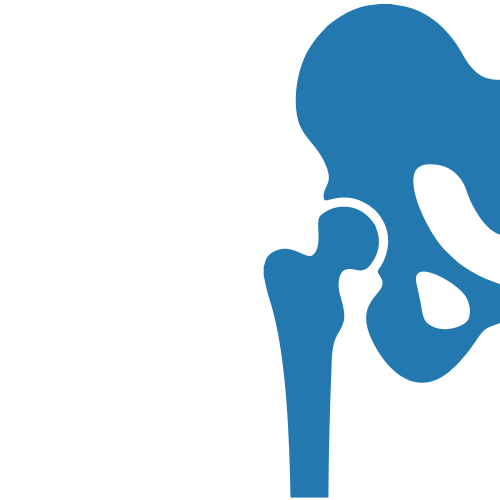
Hip Joint Femoral Neck Cannulated Screws Femoral Neck
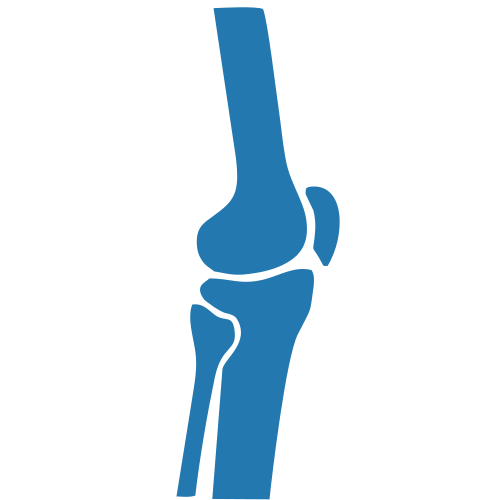
Knee Joint Tibial Plateau Cannulated Screws Tibial Plateau
Medial Malleolus Cannulated Screw Fixation Malleolar
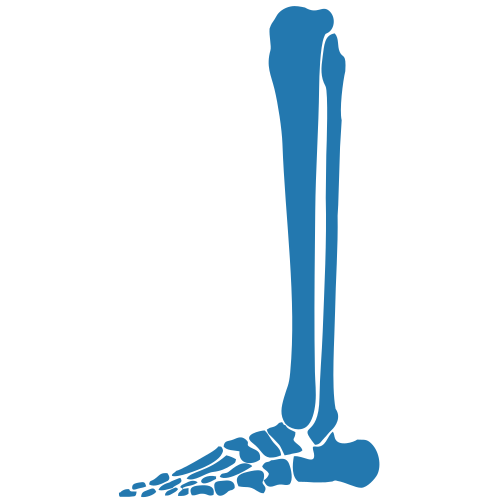
Foot Calcaneal & Talar Cannulated Screws Calcaneus/Talus
Distal Radius Cannulated Screw Fixation Distal Radius
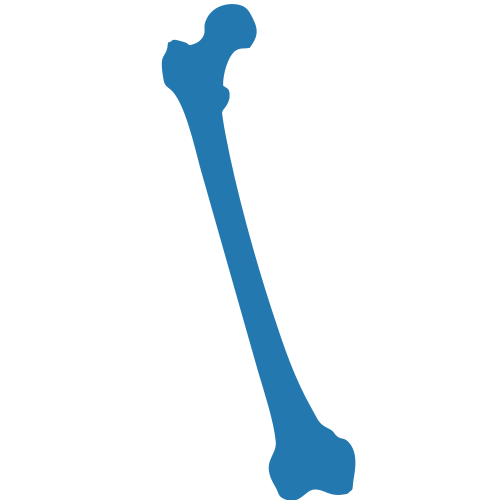
Femoral Condyle Cannulated Screws Femoral Condyle

The global trauma hardware market is undergoing a seismic structural transformation. Procurement departments across North America, Europe, Latin America, and the Asia-Pacific region are shifting away from high-cost single-source Western OEMs in favor of ISO 13485-certified manufacturers offering equivalent metallurgical performance at competitive direct factory economics.

  • Rise of ASCs (Ambulatory Surgery Centers): Demand for single-use pre-sterilized cannulated screw kits is surging due to the growth of outpatient orthopedic procedures.
  • Supply Chain Resiliency: Global hospital groups are actively adopting dual-sourcing strategies to protect against supply disruptions and localized stockouts.
  • UDI & Serialization Traceability: Strict regulatory enforcement (EU MDR, US FDA UDI) demands direct laser-etched matrix coding on every individual cannulated screw.
Request Global Distributor Terms

Next-Gen R&D Horizons in Cancellous Fixation

1. Hydroxyapatite (HA) Nanocoatings

Bioactive nano-HA plasma surface coatings enhance osteointegration speed in severe osteopenic bone, drastically reducing late-stage screw backout rates.

2. Bioabsorbable Polymer & Magnesium Alloys

Development of Mg-Zn-Ca biodegradable cannulated screws eliminates the necessity for secondary metal removal procedures in pediatric and foot & ankle operations.

3. Robotic Navigation Lumen Geometry

Precision chamfering at the screw tip and head allows optical trajectory alignment during AI-driven robotic surgical procedures.

Frequently Asked Questions by Global Procurement Officers

Clear, technical answers to the most common inquiries regarding cannulated cancellous screw selection, compliance, and ordering parameters.

How do core-to-thread ratios in 7.3mm cannulated cancellous screws impact pullout strength in osteopenic versus dense bone? +

The pullout strength ($F_{pullout}$) of a cannulated cancellous screw is governed by the shear area of the bone-thread interface, which is directly proportional to the outer thread diameter and the depth of the thread profile (outer diameter minus core diameter):

F_pullout = L * π * d_outer * (S_b) * [Thread Depth Ratio]

In 7.3mm large cannulated screws, a deeper thread profile combined with a core shaft diameter of ~4.5mm maximizes cancellous bone tissue compaction within the threads. This profile provides superior pullout resistance in soft, osteopenic trabecular bone (such as elderly femoral necks). In contrast, dense bone can tolerate smaller thread depths with thicker core shafts that resist higher torsional shear during high-torque insertion.
What metallurgical standards are required for ISO 13485 certified cannulated cancellous screws? +

Medical-grade cannulated screws must strictly conform to established international standards:

  • Titanium Alloy: ISO 5832-3 or ASTM F136 (Ti-6Al-4V ELI - Extra Low Interstitial grade).
  • Stainless Steel: ISO 5832-1 or ASTM F138 (316LVM - Vacuum Arc Remelted).

These standards enforce strict limits on trace elements (such as nitrogen, oxygen, iron, and carbon) to ensure maximum fatigue limit under cyclic loading, high strain fracture toughness, and total resistance to stress corrosion cracking inside the human body.

What is the recommended guide-wire clearance and drill bit match for 4.0mm, 6.5mm, and 7.3mm cannulated screws? +

Achieving flawless intraoperative execution requires absolute precision matching between the K-wire, cannulated drill bit, and screw lumen. Below is the standardized surgical pairing matrix:

  • 4.0mm Screw: Compatible with Ø 1.35mm / 1.4mm Guide Wire and Ø 2.7mm Cannulated Drill Bit.
  • 6.5mm Screw: Compatible with Ø 2.8mm Threaded Trocar Guide Wire and Ø 4.5mm Cannulated Drill Bit.
  • 7.3mm Screw: Compatible with Ø 2.8mm Threaded Trocar Guide Wire and Ø 5.0mm Cannulated Drill Bit.

Concentricity tolerances of the inner lumen are maintained within ±0.01mm at Sharma Orthopedic's Vadodara plant to avoid micro-jamming or galling during high-speed surgical drilling.

When should partially threaded cannulated screws be chosen over fully threaded configurations? +

The choice between partial thread (16mm or 32mm thread length) and full thread depends entirely on the biomechanical objective of the surgical fixation:

Partially Threaded Screws: Act as dynamic lag screws. As the distal threads engage the far bone fragment, the smooth unthreaded proximal shaft glides through the near fragment. Tightening the screw head draws the two bone fragments together, generating high interfragmentary compression across the fracture line.

Fully Threaded Screws: Provide rigid positional fixation without compressing the fracture gap. They are indicated for osteotomy stabilization, pediatric hip fixation, or preserving anatomical relationships where interfragmentary collapse must be strictly avoided.

What quality inspection processes ensure zero micro-cracks in deep-drilled inner cannulation lumens? +

Sharma Orthopedic employs multi-tier Quality Assurance (QA) protocols to verify lumen integrity across every batch:

  1. High-Pressure Coolant Deep-Hole CNC Machining: Prevents heat-induced micro-fractures during drilling.
  2. Automated Borescope Optical Inspection: Scans the interior wall of every lumen for microscopic burrs or roughness ($R_a < 0.4 \mu m$).
  3. Non-Destructive Eddy-Current Testing (NDT): Detects subsurface micro-voids or material inclusions in raw metal rods before machining.
  4. Torsional Failure Testing: Destructive torque-to-failure testing on sample lots per ASTM F543 benchmarks.
Can global distributors request customized OEM packaging, color-anodization, and sterile barrier pouches? +

Yes. Sharma Orthopedic provides full turnkey OEM/ODM contract manufacturing solutions for global medical brands and regional distributors. Capabilities include:

  • Custom laser marking for Unique Device Identification (UDI), catalog numbers, and batch lot tracking.
  • Electrolytic titanium color-anodization (Yellow, Blue, Green, Magenta) for quick intraoperative size identification.
  • Customized surgical instrumentation sets tailored to specific surgical preferences.
  • ISO 11607 compliant double-pouch Tyvek sterile packaging validated for Gamma radiation or Ethylene Oxide (EO) sterilization.
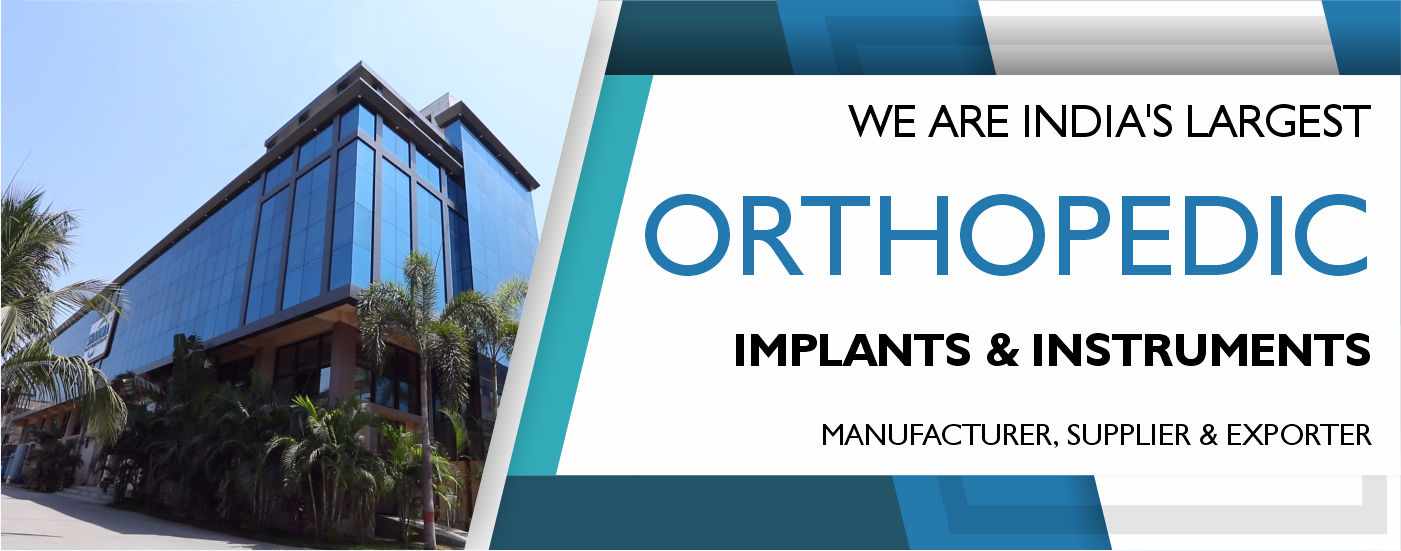
Sharma Orthopedic Manufacturing Facility and Cleanroom Setup

Sharma Orthopedic: India's Premier Implants OEM Specialist

Founded in 1992, Sharma Orthopedic India Limited operates a world-class 62,391 sq. ft. manufacturing campus located in the G.I.D.C. Industrial Estate, Waghodia, Vadodara, Gujarat. With over three decades of engineering excellence, we are an established leader in orthopaedic trauma, spinal, and joint replacement manufacturing.

  • Integrated Manufacturing Campus: 62,391 sq. ft. facility housing multi-axis CNC machines, 5-axis Swiss turning centers, and wire-EDM systems.
  • Uncompromised Regulatory Compliance: ISO 13485:2016 certified QMS and CE marked medical devices exportable to 50+ countries.
  • Extensive SKUs Portfolio: Over 10,000+ specialized surgical SKUs covering osteosynthesis, arthroplasty, and spine systems.
  • In-House Cleanroom Packaging: ISO Class 7 cleanroom packaging facilities guaranteeing sterility and bioburden control.
  • Direct OEM Factory Pricing: Eliminates intermediary margins, allowing global distributors to capture market share with maximum margin flexibility.
Contact Us

Request OEM Product Samples & Wholesale Pricing

Connect directly with our international sales and engineering team for custom quotes, technical drawings, and compliance dossiers.

[email protected] Global Export & OEM Procurement Desk
Contact Us