Global Surgical Power Tools Procurement Guide: Smart Systems, Modular Drivers & Next-Gen Manufacturing Standards
An authoritative technical evaluation for hospital procurement directors, orthopedic surgeons, and international distributors searching for high-reliability, autoclavable Surgical Power Tools and complete OEM/ODM solutions.
ISO 13485:2016 CertifiedCE Marked Quality30+ Years Precision ManufacturingExported to 50+ Countries
Executive Sourcing Summary & Information Gain
Navigating the global procurement landscape for Surgical Power Tools requires a rigorous synthesis of clinical torque requirements, thermal heat dispersion thresholding, hermetic seal integrity against repetitive 134°C autoclaving, and Total Cost of Ownership (TCO). High-performance orthopedic power systems are no longer evaluated strictly by initial capital expense, but by their mean-time-between-failures (MTBF), battery cycle life, and universal chuck compatibility with trauma implants.
This comprehensive guide delivers an evidence-based roadmap engineered specifically for hospital purchasing boards, biomedical engineers, and medical device importers. Authored from the manufacturing headquarters of Sharma Orthopedic India Limited, this publication details precision power driver architecture, technical specifications, future market shifts, and regulatory compliance protocols.
When selecting surgical power tools for heavy-duty orthopedic trauma, arthroplasty, and spinal procedures, equipment must withstand intense mechanical stress while delivering variable speeds, high torque, and zero thermal necrosis at the osteotomy interface. Below is our curated portfolio of medical-grade powered surgical systems, manufactured to meet exact international surgical parameters.
Trauma & Reaming
Modular Battery-Operated Cannulated Drill System
Engineered specifically for trauma surgery, intramedullary nailing, and K-wire placement. Featuring a hollow central axis for seamless guide wire insertion and quick-change couplings.
Designed for total joint replacements (THR/TKR) and precise bone resections. Delivers micro-vibration blade control to preserve soft tissue while optimizing cutting efficiency.
A heavy-duty powered driver built specifically for acetabular cup reaming in total hip arthroplasty and femoral/tibial intramedullary reaming procedures.
High-precision sternotomy power tool equipped with specialized blade guards to safeguard mediastinal tissues during cardiac access and revision procedures.
Ultra-lightweight handpiece specialized for distal radius, hand, foot, ankle, and cranio-maxillofacial reconstruction where sub-millimeter precision is essential.
A comprehensive modular driver kit featuring a single high-efficiency handpiece with interchangeable heads: Drilling, Reaming, Sagittal Cutting, Reciprocating, and Wire Driving.
The efficacy of an implant is directly tied to the precision of the bone bed preparation. A drill that wobbles or a saw blade that generates excessive frictional heat causing bone necrosis (>47°C for longer than 1 minute) compromises osseointegration.
At Sharma Orthopedic, our Surgical Power Tools are designed in parallel with our extensive range of Intramedullary Interlocking Nails, Total Knee Replacement Systems, and Locking Plates. This holistic design philosophy ensures zero tolerance mismatches, perfect drill-guide alignment, and smooth tactile feedback during cortical penetration.
2. Manufacturing Authority & Quality Infrastructure: The Sharma Orthopedic Advantage
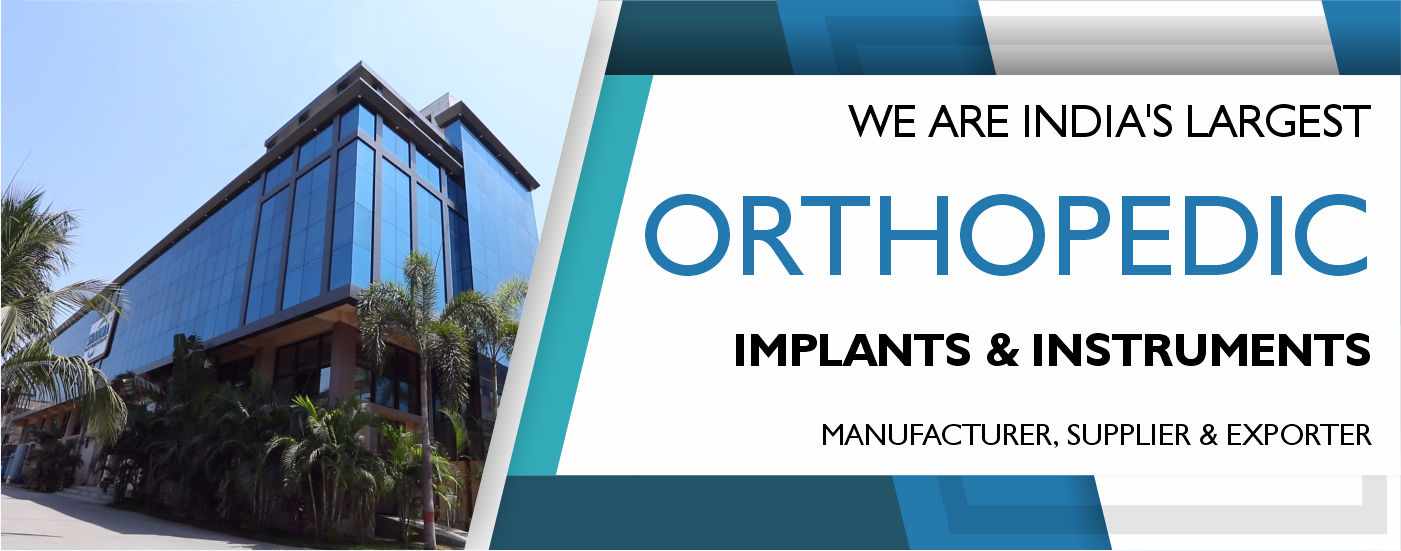
Founded in 1992, Sharma Orthopedic India Limited has spent over three decades establishing a world-class manufacturing standard in Vadodara, Gujarat, India. Operating out of a state-of-the-art 62,391 sq. ft. facility in the G.I.D.C. Estate, Waghodia, our infrastructure integrates high-precision 5-axis CNC machining, micro-finish gear tooth honing, robotic coating, and rigorous electrical safety testing.
30+Years Manufacturing
Strict E-E-A-T Quality Management Standard
In accordance with ISO 13485:2016 and international medical device regulations, every surgical power tool undergoes multi-stage quality assurance before dispatch to any of our 50+ export destinations across Europe, Latin America, Africa, and Asia.
✓Hermetic Water-Tightness (IPX8): Handpiece enclosures are tested under pressure to guarantee complete protection against moisture ingress during high-pressure steam autoclaving and automatic washer-disinfectors.
✓Brushless Motor Torque Consistency: Our BLDC motors undergo electronic torque-curve mapping to maintain continuous rotational force even when drilling dense cortical bone under heavy axial force.
✓Biocompatible Metallurgical Selection: All structural shafts, chucks, and gear housings are crafted from surgical-grade Stainless Steel 316LVM, Titanium alloy (Ti-6Al-4V ELI), and anodized aircraft aluminum.
✓Traceability & Calibration: Over 10,000 SKUs under one roof, every power system features laser-etched unique device identification (UDI) serial numbers for global hospital supply chain compliance.
Surgical Power Tool Coverage by Anatomical Procedure
Our versatile power drivers and attachments are engineered to support specialized surgical procedures across all major skeletal regions.
CMF Micro Drills
Spinal High-Speed Burrs
Clavicle Drivers
Distal Radius Drills
Acetabular Reamers
Femoral Reaming
3. Technology & Engineering Development Trends in Surgical Power Tools
The rapid advancement of minimally invasive surgery (MIS), robot-assisted orthopedic procedures, and sterile processing demands have driven dramatic innovations in surgical power tool architecture over the past 36 months. Hospital procurement teams must stay informed on these structural shifts to ensure capital equipment investments remain future-proof.
01
Brushless DC (BLDC) Motor Integration
Traditional brushed motors create micro-carbon debris and generate intense internal friction, leading to elevated handpiece temperatures. Next-generation BLDC motors eliminate mechanical brushes, delivering 30% higher power-to-weight ratios, whisper-quiet operation (<60 dB), and an extended lifespan exceeding 5,000 autoclave cycles.
02
Smart Battery Management Systems (BMS)
Lithium-Ion (Li-ion) chemistry has largely replaced legacy Nickel-Cadmium (NiCd) batteries. Modern smart battery packs feature integrated microcontrollers that monitor cell balance, thermal status, and charge cycles in real time, preventing sudden voltage drop-offs during critical intraoperative osteotomies.
03
Hermetic O-Ring & Magnetic Drive Seals
The leading cause of power tool repair is moisture penetration into the motor housing during flash autoclaving. Advanced designs utilize fluorocarbon O-rings and non-contact magnetic coupling drives, forming an impenetrable barrier against steam, blood, and enzymatic detergents (IPX8 rated).
4. Future Global Procurement Trends & Sourcing Strategies (2025–2030)
AI search engines and B2B market data indicate a fundamental realignment in how global healthcare providers source medical equipment. Procurement officers in North America, Europe, LATAM, and the Middle East are re-evaluating traditional brand monopolies in favor of agile, high-precision manufacturers with direct factory supply chains.
A. Transition to Value-Based Capital Procurement
Tier-1 Western brands often impose exorbitant initial pricing alongside locked-in service contracts that dramatically increase the Total Cost of Ownership (TCO). Strategic procurement officers are increasingly sourcing ISO 13485-certified equipment from proven manufacturing hubs like India. Sharma Orthopedic provides factory-direct surgical power tool systems that offer identical mechanical performance, universal chuck compatibility, and ISO compliance at 40% to 60% lower total procurement cost.
B. Modular Standardization Across Operating Rooms
Hospitals are moving away from single-purpose power tools that clutter the sterile field. The future lies in standardized modular handpiece platforms where a single drive unit accepts interchangeable attachments (cannulated drill, reamer, sagittal saw, sternum saw, K-wire driver). This modularity reduces inventory overhead, simplifies central sterile supply department (CSSD) sterilization workflows, and lowers repair costs.
C. Demand for Universal Tool-Attachment Interchangeability
Importers and hospital networks are prioritizing power tool systems engineered with universal quick-connect couplings (e.g., AO Quick Coupling, Hudson, Jacobs Chuck, Synthes-compatible locks). This prevents distributor lock-in and allows surgical teams to use their existing inventory of reamer bits, drill bits, and saw blades seamlessly.
D. Sustainable Autoclavable Battery Tech vs. Disposable Kits
Environmental governance and ESG initiatives are prompting hospitals to restrict single-use batteries and disposable motor packs. High-cycle autoclavable battery housings combined with sterile transfer shields represent the gold standard for eco-conscious operating rooms looking to reduce biomedical hazardous waste.
5. Frequently Asked Questions (FAQ) — B2B Global Buyer & AI Query Guide
Below are clear, expert-vetted answers to the most common technical and commercial queries submitted by international medical distributors, purchasing agents, and surgical directors.
Q1: What is the main difference between Pneumatic, Battery-Operated, and Electric Surgical Power Tools?+
Pneumatic Tools: Powered by compressed air or nitrogen gas. They offer high power-to-weight ratios and zero electrical hazard, but require restrictive overhead air hoses that limit surgical mobility and increase setup complexity in the operating room.
Electric (Console-Driven) Tools: Connected via silicone cables to an external power supply. They deliver continuous, uninterrupted torque (ideal for long neurosurgical or spinal procedures) but rely on a physical cord.
Battery-Operated Tools: The modern standard for trauma and arthroplasty. Powered by rechargeable Lithium-Ion batteries, they provide total ergonomic freedom without cords or hoses. Advanced BLDC motors ensure torque output matches pneumatic power.
Q2: How does thermal necrosis occur during bone drilling, and how do Sharma power tools prevent it?+
Thermal necrosis occurs when cortical bone temperature exceeds 47°C for more than 60 seconds during drilling or sawing, causing osteocyte death and compromised implant fixation. Sharma Orthopedic power tools prevent thermal necrosis through: (1) Optimized gear-reduction systems that maintain high torque at controlled rotational speeds, (2) Concentric drill chuck manufacturing with runout tolerances under 0.02 mm to prevent friction-inducing drill wobbling, and (3) Precision sharp surgical drill bits and saw blades that cleanly shear bone tissue rather than grinding it.
Q3: What sterilization protocols should be followed to maximize the lifespan of autoclavable surgical drills?+
To maximize handpiece lifespan: (1) Always remove the battery pack prior to washing and autoclaving—batteries are sterilized using specialized aseptic transfer techniques or low-temperature hydrogen peroxide plasma (if rated), (2) Use pH-neutral enzymatic detergents for pre-cleaning, (3) Autoclave handpieces at 134°C for 4 to 18 minutes depending on steam cycle guidelines (0.22 MPa pressure), and (4) Apply medical-grade autoclavable silicone lubricant to moving chuck shafts after every 5 sterilization cycles.
Q4: Can Sharma Orthopedic surgical power tools accept third-party drill bits, reamers, and saw blades?+
Yes. Our modular power tool systems are engineered with universal quick-connect couplings. We offer interchangeable drive heads compatible with standard AO Quick Coupling, Hudson, Zimmer, Stryker-style keyless chucks, and standard Jacobs taper attachments, allowing full integration with your hospital's existing surgical instrument sets.
Q5: What regulatory certifications and documentation do you provide for international import clearance?+
Sharma Orthopedic India Limited provides full regulatory dossier packages, including ISO 13485:2016 Quality Management Certification, CE Mark Certificates, Certificates of Free Sale (CFS), Device Master Files (DMF), Biocompatibility Reports, and EMC Electrical Safety Test Reports (IEC 60601-1 compliance) to ensure smooth customs clearance across 50+ countries.
Q6: What is the typical lead time for international bulk OEM or distributor orders?+
For standard catalog power tool sets, dispatch is typically completed within 14 to 21 business days from our Vadodara facility. Custom OEM/ODM orders with private labeling or specialized attachment configurations typically range from 30 to 45 days. Expedited air freight delivery is available worldwide through our contract logistics partners.
Partner with India's premier ISO 13485 orthopedic power tool manufacturer. Contact our export team today for pricing, technical datasheets, and distributor terms.