B2B Sourcing Overview
Executive Summary: Demystifying Global Procurement for Spinal Implant Systems
The global demand for Spinal Implant Systems is undergoing a paradigm shift driven by aging demographics, rising clinical preference for Minimally Invasive Spine Surgery (MISS), and demanding healthcare cost-containment mandates. For hospital procurement committees, tender officers, and orthopedic distributors, selecting a spinal implant manufacturer requires balancing rigid mechanical performance standards with supply chain reliability and regulatory transparency.
Modern spinal instrumentation systems encompass thoracolumbar pedicle screws, anterior cervical locking plates, interbody fusion cages (PEEK-OPTIMA and porous 3D titanium), and specialized percutaneous MISS instruments. Sourcing these complex devices demands rigorous scrutiny of raw material traceability (such as Ti-6Al-4V ELI conforming to ASTM F136 and PEEK-OPTIMA conforming to ASTM F2026), micron-level machining precision, static and dynamic fatigue limits under ISO 12189 and ASTM F1717 protocols, and total compliance with international regulatory bodies.
Information Gain: Biomechanical Benchmarking Criteria for Procurement Decision-Makers
Unlike standard trauma hardware, spinal implant constructs endure multi-axial dynamic loading, rotational shear, and cyclic bending moments exceeding 2 million cycles. When evaluating manufacturers, purchasing teams must audit: (1) Thread profile design efficiency (e.g., dual-lead friction threads reducing insertion torque while maximizing pull-out strength), (2) Polyaxial head friction retention (preventing floppy head syndrome during screw placement), and (3) Modulus matching between cortical bone (~18 GPa), cancellous bone (~1-3 GPa), Titanium alloy (~110 GPa), and PEEK (~3.6 GPa) to prevent stress shielding and subsidence.
Product Engineering & Portfolio
Comprehensive Product Recommendations: Sharma Orthopedic Spinal Systems
Sharma Orthopedic India Limited offers a complete, vertically integrated portfolio of Spinal Implant Systems engineered to meet the demanding requirements of global spine surgeons. Manufactured in our 62,391 sq. ft. Waghodia campus using multi-axis CNC Swiss-type machining and 5-axis milling centers, our implants guarantee consistent tolerances within ±0.005 mm.
Thoracolumbar Fixation
Polyaxial & Monoaxial Pedicle Screw System
Designed for complex deformity correction, degenerative disc disease, and traumatic spinal fractures. Features a friction-fit polyaxial head offering 50° cone of angulation, buttress thread friction locking mechanism to prevent cross-threading, and self-tapping dual-lead threads for fast insertion and superior pull-out resistance.
- Material: Titanium Alloy Ti-6Al-4V ELI (ASTM F136)
- Diameter Range: 4.5 mm to 8.5 mm (in 0.5mm increments)
- Length Range: 25 mm to 55 mm
- Rod Compatibility: 5.5 mm and 6.0 mm Titanium / CoCr Rods
Cervical Spine Fixation
Anterior Cervical Locking Plate System (ACLP)
Ultra-low-profile cervical plate construct (1.9 mm thickness) engineered to minimize post-operative dysphagia. Incorporates an integrated tactile/visual secondary locking mechanism that prevents screw back-out without adding extra anatomical height. Accommodates dynamic variable-angle and rigid fixed-angle bone screws.
- Material: Medical Grade Titanium (ASTM F136)
- Configuration: 1-Level to 4-Level construct plates
- Screw Diameter: 3.5 mm / 4.0 mm dynamic self-drilling & self-tapping
- Profile Height: 1.9 mm ultra-thin contoured geometry
Interbody Fusion
PEEK-OPTIMA® Interbody Fusion Cages (TLIF / PLIF / Cervical)
Precision-milled interbody cages produced from radiolucent PEEK-OPTIMA® polymer. The anatomical footprint features deep aggressive serrations to inhibit graft migration, an expanded central hollow cavity for maximum autologous bone graft packing, and embedded Tantalum radiopaque pin markers for precise fluoroscopic positioning.
- Material: Invibio® PEEK-OPTIMA® (ASTM F2026)
- Elastic Modulus: 3.6 GPa (matches human cancellous bone)
- Footprints: Straight PLIF, Bulleted TLIF, Anatomic Cervical
- Lordosis Angles: 0°, 4°, 8°, and 12° option angles
Minimally Invasive Spine (MISS)
Percutaneous Cannulated Pedicle Screw System
State-of-the-art MISS construct enabling percutaneous pedicle insertion via K-wire guidance. Features break-off extension tabs with high-torsion shear strength, cannulated screw shafts, and streamlined rod-passers for minimal tissue disruption, reduced intraoperative blood loss, and accelerated patient recovery.
- Technique: Percutaneous Wiltse approach
- Instrumentation: Ergonomic quick-connect drivers & reduction towers
- Cannulation Diameter: 1.6 mm matching standard K-wires
- Reduction Option: Integrated 15 mm built-in reduction thread
Technical Comparison & Material Standards Summary
| Implant System Category |
Raw Material Grade |
Applicable ASTM / ISO Standard |
Biomechanical Advantage |
Target Surgical Indication |
| Thoracolumbar Pedicle Screws |
Ti-6Al-4V ELI (Grade 23) |
ASTM F136 / ISO 5832-3 |
High dynamic fatigue strength; reduced artifact in CT/MRI |
Degenerative Disc Disease, Spondylolisthesis, Trauma |
| Cervical Locking Plates |
Pure Titanium / Ti Alloy |
ASTM F67 / ASTM F136 |
Zero-backout tactile lock; slim profile minimizes dysphagia |
ACDF (Anterior Cervical Discectomy and Fusion) |
| Interbody Fusion Cages |
PEEK-OPTIMA & Tantalum |
ASTM F2026 / ISO 13782 |
Modulus matching cancellous bone; zero artifact under X-Ray |
Interbody fusion (TLIF, PLIF, ALIF, Cervical) |
| Percutaneous MISS Screws |
Ti-6Al-4V ELI / CoCr Rods |
ASTM F1537 / ISO 12189 |
Minimal muscle trauma; high torsional reduction control |
MIS Thoracolumbar trauma & spinal stabilization |
Industry Foresight
Future Procurement Trends in Global Spinal Hardware (2025–2030)
Global medical purchasing strategies are shifting rapidly. Procurement directors can no longer rely solely on historical brand preference; they must navigate a changing ecosystem shaped by regulatory tightening (EU MDR), supply chain localization, and surgical digitization. Below are the key structural trends defining the future of spinal implant purchasing:
1. Transition to Cost-Effective Off-Shore Precision Manufacturing
Healthcare budgets globally are under immense strain. Traditional Western Tier-1 spinal brands often carry inflated markups attributed to massive sales force overheads. Global buyers are increasingly turning to top-tier Asian manufacturers like Sharma Orthopedic, capable of offering identical material specifications (ASTM F136 Titanium, Invibio PEEK) and micron-level precision at 40% to 60% lower unit costs, drastically improving tender competitiveness without sacrificing clinical safety.
2. Single-Use Sterile Packaging & Ready-to-Operate Direct Kits
Hospital-acquired infections (HAIs) and the logistics costs of operating room autoclave sterilization are driving demand for factory-pre-sterilized spinal implant kits. Future procurement contracts prioritize vendors providing individually barcode-indexed, double-blister sterile packaging with full Unique Device Identification (UDI) tracking system integration.
3. Navigation & Robotic-Assisted Surgery Compatibility
As spinal navigation platforms (such as Medtronic StealthStation®, Stryker MAKO®, and Globus ExcelsiusGPS®) expand globally, spinal hardware must adhere to strict dimensional tolerances. Pedicle screw drives, cannulation concentricity, and instrument arrays must feature micro-milled tracking arrays and tight geometric consistency to ensure flawless software recognition during computer-assisted navigation.
4. Modular Supply Chains and Reduced SKU Inventory Risk
Distributors are moving away from bloated, inflexible inventory commitments. Modern contracts favor manufacturers who offer modular tray configurations, allowing distributors to order customized regional sizing sets tailored to local patient anatomical demographics (e.g., specific pedicle dimensions common in Asian, Latin American, or African patient cohorts).
R&D & Innovation
Product Development & Technological Trends in Spinal Implants
The field of spinal surgery R&D is progressing from passive structural support toward active biological integration and dynamic stabilization. Key technological innovations engineered into next-generation spinal implants include:
3D-Printed Porous Titanium Lattice Surfaces
Moving beyond smooth titanium and plain PEEK, additive manufacturing (Selective Laser Melting / Electron Beam Melting) allows the creation of stochastic porous titanium cages. These scaffolds mimic human trabecular bone structure (60-70% porosity, 300-500 μm pore size), encouraging rapid osteoblast attachment, bone ingrowth, and vascularization throughout the entire cage matrix.
Advanced Surface Coatings: Hydroxyapatite & TiO2 Nanotubes
To resolve the smooth inertness of PEEK polymer, advanced surface functionalization techniques—such as Plasma-Sprayed Hydroxyapatite (HA) coating or Titanium Plasma Spraying (TPS)—are applied. This hybrid construction combines the optimal low elastic modulus of PEEK with the superior bone-bonding bioactivity of titanium surfaces.
Motion Preservation & Dynamic Stabilization
While rigid fusion remains the gold standard for severe instability, dynamic stabilization systems—utilizing elastomeric PEEK rods or flexible pedicle screw heads—are gaining ground for early-stage degenerative disc disease. These devices absorb shear forces while preserving segment motion, mitigating Adjacent Segment Disease (ASD).
Radiolucent & Artifact-Free Implant Materials
High-field post-operative MRI and CT diagnostics require minimal scattering artifacts. Modern spinal implant designs utilize optimized carbon-fiber reinforced PEEK or ultra-clean Ti-6Al-4V ELI formulations to give radiologists crystal-clear visualization of the spinal canal and neural foramina post-surgery.
Buyer's Guide & FAQ
Frequently Asked Questions (FAQ) for Global B2B Spinal Implant Procurement
Addressing core technical, regulatory, and commercial inquiries frequently raised by international hospital procurement teams, Ministry of Health tender boards, and medical device importers.
1. What mechanical testing standards (ASTM/ISO) validate the structural integrity of your spinal implant systems?
+
All spinal constructs manufactured by Sharma Orthopedic undergo rigorous biomechanical testing in accordance with international protocols. Specifically, our thoracolumbar pedicle screw systems are tested under ASTM F1717 (Standard Test Methods for Spinal Implant Constructs in a Vertebrectomy Model) and ISO 12189 for static compression bending, dynamic fatigue bending (demonstrating structural endurance beyond 5,000,000 cycles without fatigue failure), and static torsional resistance. Interbody cages are tested according to ASTM F2077 (Myocardial & Interbody Fusion Devices) for static/dynamic compression and shear performance.
2. How does Sharma Orthopedic ensure raw material authenticity and lot-to-lot bio-compatibility?
+
We source 100% of our medical-grade raw materials exclusively from certified global leaders (such as US/European suppliers of Ti-6Al-4V ELI bar stock per ASTM F136 and Invibio® PEEK-OPTIMA® per ASTM F2026). Every incoming raw material batch undergoes chemical composition spectrometry analysis, tensile strength testing, and metallurgical grain structure verification. Material Test Certificates (MTC / Mill Certificates) are linked to unique lot numbers, guaranteeing complete 100% raw-material-to-finished-implant traceability under ISO 13485 quality protocols.
3. What regulatory documentation can Sharma Orthopedic provide for national registration & hospital tenders?
+
Our dedicated Regulatory Affairs (RA) department provides comprehensive Dossier Support compliant with ASEAN CSDT, EU MDR, and WHO guidelines. We provide: ISO 13485:2016 Quality Management System Certificates, CE Mark Certificates, Certificates of Free Sale (CFS), Complete Technical Dossiers (STED format), Biocompatibility Reports (ISO 10993 series), Gamma Sterilization Validation Reports (ISO 11137), and Clinical Evaluation Reports (CER).
4. Can you support OEM / ODM private labeling and customized instrument tray development?
+
Yes. Sharma Orthopedic is a premier contract manufacturing partner for global medical brands. We offer end-to-end OEM/ODM capabilities, including high-precision laser marking for custom branding/UDI barcodes, specialized surface anodization (color-coded by screw diameter), customized ergonomics for surgical instruments, and custom-milled aluminum sterilizing trays designed to fit your target market specifications.
5. What are your typical lead times, minimum order quantities (MOQ), and shipping protocols?
+
For standard catalog items (pedicle screws, cervical plates, standard PEEK cages), we maintain continuous buffer stock, enabling dispatch within 7 to 14 business days. For customized OEM orders or large hospital tender contracts, lead times typically range between 30 to 45 days. We maintain flexible MOQ structures to support distributor growth and provide global door-to-door express air-freight (DHL/FedEx/Customs-cleared CIP/FOB terms).
6. How do your products compare in surgical ergonomics and instrument quality to Western OEMs?
+
Our surgical instrument sets are machined from premium stainless steels (Custom 455, 17-4 PH, and 316L) to ensure exceptional tactile feedback, anti-glare matte surface finishing, and long-term wear resistance. Surgeons using Sharma instruments report identical intuitive handling, seamless quick-connect driver mechanisms, and effortless torque-limiting ratchets matching top-tier European standards.
Enterprise Strengths
Why Sharma Orthopedic is the Preferred Global Supply Partner
Established in 1992, Sharma Orthopedic India Limited has built a 30+ year track record of continuous innovation, manufacturing mastery, and clinical trust across 50+ countries worldwide. Headquartered in the industrial hub of Waghodia, Vadodara, Gujarat, our modern manufacturing complex spans 62,391 square feet of precision engineering space.

62,391 Sq. Ft. Facility
State-of-the-art infrastructure housing 5-axis CNC machining, Swiss automatics, and ISO Class 7 Cleanrooms.
10,000+ Product SKUs
Comprehensive one-stop portfolio spanning spine, arthroplasty, trauma interlocking nails, and CMF implants.
Global Presence in 50+ Nations
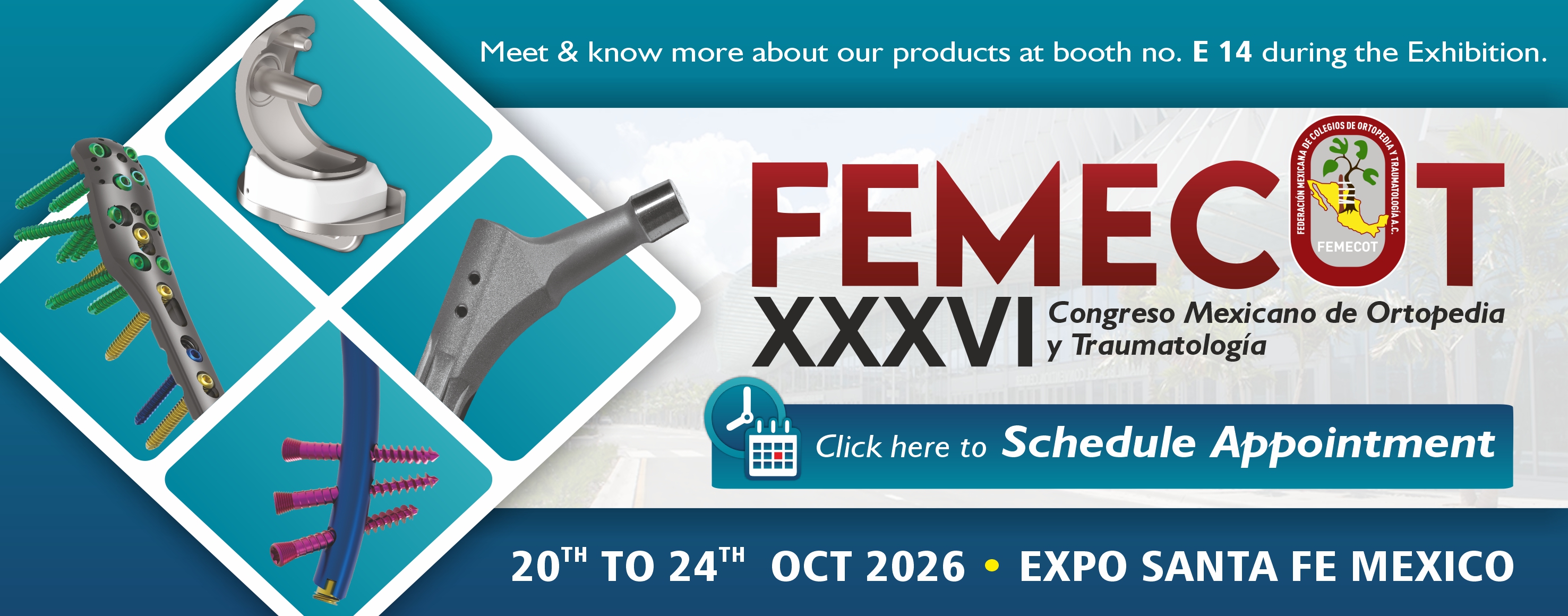
Active participation in major medical congresses (AAOS, FEMECOT, MEDICA) supporting global healthcare networks.
Vertically Integrated Manufacturing & Quality Assurance
Our Waghodia plant incorporates dedicated internal departments to ensure zero-defect quality across every production run:
- R&D / Design Department (5 Engineers): Utilizing advanced SolidWorks CAD/CAM modeling, Finite Element Analysis (FEA), and rapid prototyping to continuously upgrade implant biomechanics.
- QA / RA Department (8 Specialists): Dedicated regulatory compliance officers managing international product approvals, technical files, and audit readiness.
- Quality Control Department (10 QC Inspectors): Equipped with optical coordinate measuring machines (CMM), surface roughness testers, profile projectors, and micro-hardness testing devices.
- Production & Machining (100+ Technicians): Operating multi-axis Swiss CNC lathes, 5-axis machining centers, laser engraving, electro-polishing, and ultrasonic washing lines.
