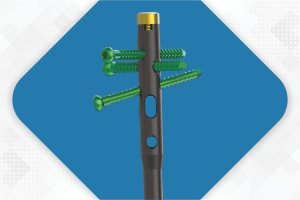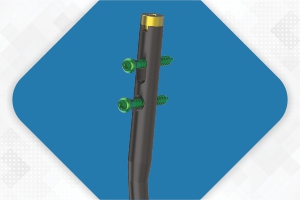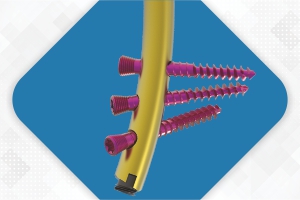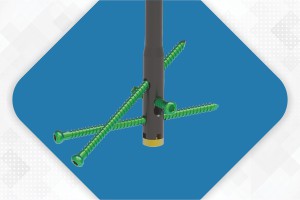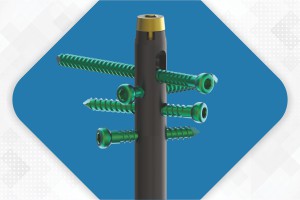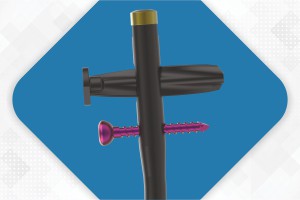
Global Manufacturer & Supplier of Precision Intramedullary Interlocking Nailing Systems

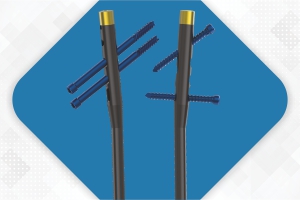
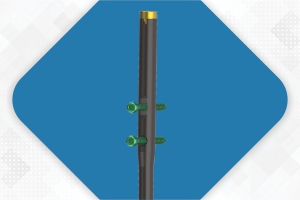
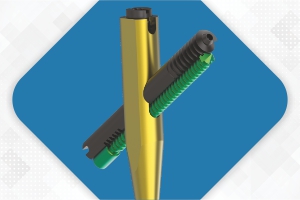
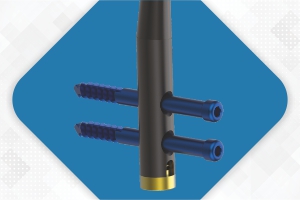
Intramedullary (IM) interlocking nails represent a primary standard in modern orthopedic trauma surgery for the internal fixation of long bone fractures. Engineered for load-sharing internal stabilization, these biocompatible metallic rods are inserted directly into the medullary canal of damaged long bones, restoring anatomical length, rotational stability, and axial alignment.

At Sharma Orthopedic India Limited, our production facility utilizes state-of-the-art 5-axis CNC machining, Swiss-type automatic turning centers, and cleanroom packaging technology to manufacture medical-grade Titanium Alloy (Ti-6Al-4V ELI) and Stainless Steel (316LVM) interlocking nails. Supplied across 50+ countries, our intramedullary systems are clinically designed to support rapid fracture union, reduce surgical trauma, and facilitate early patient mobilization.

Explore Our Intramedullary Interlocking Nail Range

Comprehensive selection of anatomical femoral, tibial, humeral, radial, ulnar, and specialized trauma nailing systems engineered to international regulatory standards.
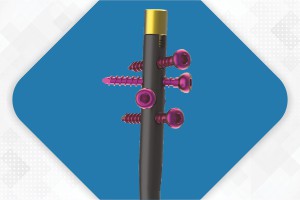
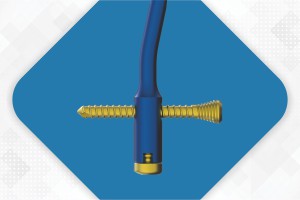
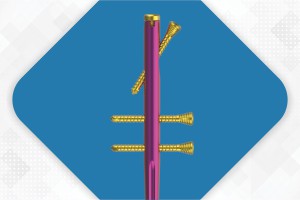
ELEGANT Humerus Nail (Helical Blade)
Upper Limb Trauma

ELEGANT® Humerus Nail (Helical Blade)

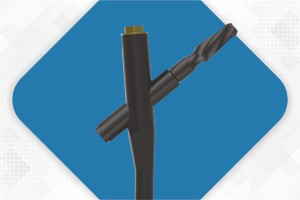
ELEGANT Humerus Nail
Humeral Shaft

ELEGANT® Standard Humerus Nail

ELEGANT Radius Nail
Forearm Fixation

ELEGANT® Radius Interlocking Nail

ELEGANT Ulna Nail
Forearm Fixation

ELEGANT® Ulna Interlocking Nail

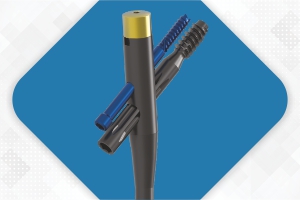
ELEGANT New Gam Nail PFNA
Proximal Femur

ELEGANT® New Gam Nail (PFNA System)

ELEGANT Gam Nail
Trochanteric Fixation

ELEGANT® Standard Gam Nail

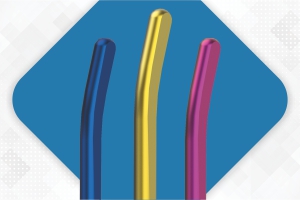
Elastic Flexible Nail
Pediatric & Small Bone

Elastic Flexible Intramedullary Nail

ELEGANT New Antegrade Femur Nail
Femoral Diaphysis

ELEGANT® New Antegrade Femur Nail

ELEGANT Universal Femur Nail
Universal Femoral

ELEGANT® Universal Femur Nail

ELEGANT Intertrochanteric Antegrade Nail
Short & Long Options

ELEGANT® Intertrochanteric Antegrade Nail

ELEGANT Supracondylar Femoral Nail
Distal Femur

ELEGANT® Supracondylar Femoral Nail

ELEGANT Multiple Locking Tibia Nail
Tibial Shaft

ELEGANT® Multiple Locking Tibia Nail

ELEGANT Universal Tibia Nail
Tibial Trauma

ELEGANT® Universal Tibia Interlocking Nail

ELEGANT Distal Tibia Nail
Distal Tibia

ELEGANT® Distal Tibia Interlocking Nail

ELEGANT Ankle Arthrodesis Nail
Hindfoot Fusion

ELEGANT® Ankle Arthrodesis Nail

ELEGANT Suprapatellar Tibia Nail
Advanced Tibial Entry

ELEGANT® Suprapatellar Tibia Nail

Technical Specifications & Manufacturing Rigor

Intramedullary fixation demands stringent material purity and structural resilience. Our intramedullary nails undergo precision crafting in accordance with global medical device standards, offering optimal elastic modulus values that match natural bone biomechanics to minimize stress shielding.

Technical Parameter Material Specification / Value
Raw Material Options Titanium Alloy (Ti-6Al-4V ELI grade, ISO 5832-3) & Stainless Steel (316LVM Vacuum Melted, ISO 5832-1)
Design Configurations Cannulated (for guided wire reamed insertion) & Solid options for unreamed technique
Manufacturing Standard 5-Axis CNC Precision Machining under ISO 13485:2016 Quality Management System
Locking Mechanism Multi-planar proximal and distal locking options (static, dynamic, and compression options)
Sterilization & Packaging Gamma-sterilized double-peel blister packaging or cleanroom non-sterile protective sleeve

Primary Clinical Indications

Our intramedullary interlocking nails are clinically indicated for internal stabilization across diverse trauma scenarios:

  • Diaphyseal and metaphysical fractures of the femur, tibia, and humerus.
  • Proximal femoral fractures, including intertrochanteric and subtrochanteric fractures (PFNA & Gamma systems).
  • Distal femoral supracondylar and intra-articular extension fractures.
  • Proximal and distal tibial fractures, including non-unions and malunions.
  • Periprosthetic fractures adjacent to primary hip or knee replacement implants.
  • Pathological fractures and sub-trochanteric non-union revisions.

Biomechanical & Surgical Advantages

Engineered to assist orthopedic surgeons in achieving optimal mechanical load distribution and surgical efficiency:

  • Minimal Soft Tissue Disruption: Closed insertion techniques protect periosteal blood supply, enhancing natural bone callus formation.
  • Multi-Planar Locking Security: Proximal and distal locking bolts restrict rotational, angular, and axial shear forces.
  • Stress-Distribution Design: Anatomical curvature contours match long-bone geometry, reducing localized stress concentrations.
  • Reduced Risk of Non-Union: High mechanical fatigue strength prevents implant failure under post-operative load bearing.

Surgical Precautions & Handling Protocols

To ensure optimal clinical outcomes and maintain patient safety, surgical teams and healthcare procurement officers should adhere to standard orthopedic device handling directives:

  • Single-Use Compliance: All intramedullary nails and locking screws are designed strictly for single-patient usage. Re-use or re-sterilization after implant trial poses risk of fatigue failure and cross-contamination.
  • Pre-Operative Inspection: Confirm sterile package integrity and verify outer labeling for correct diameter, length, and material compatibility prior to sterile field presentation.
  • Skeletal Maturity: Intramedullary interlocking nails should not be used in skeletally immature patients with open physeal growth plates unless specific pediatric surgical techniques apply.
  • Instrumentation Alignment: Always utilize corresponding Sharma Orthopedic precision targeting jigs and instrument sets to ensure precise alignment during proximal and distal transverse locking screw insertion.

Frequently Asked Questions for Global Procurement & Surgeons

1. What makes Sharma Orthopedic IM Nails ideal for international hospital procurement?
Sharma Orthopedic combines factory-direct manufacturing capabilities with full ISO 13485 and CE quality management certification. We maintain extensive raw material traceability, full batch testing records, and provide complete surgical technique manuals alongside custom OEM/OBM delivery options for international distributors.
2. How do reamed and unreamed intramedullary nails differ in surgical application?
Reamed intramedullary nails require opening and widening of the medullary canal, allowing insertion of larger diameter implants that offer maximum structural stability. Unreamed nails are thinner and designed for minimal tissue disturbance, preserving internal endosteal blood supply in complex open fractures or narrow canals.
3. What is the typical postoperative recovery timeline following IM nailing surgery?
Patient recovery varies according to fracture severity, anatomical site, and physiological factors. However, because IM nails provide central axis load-sharing stability, partial early weight-bearing is often initiated within weeks, with complete bone healing generally achieved between 3 to 6 months post-surgery.
4. Are Sharma Titanium Intramedullary Nails safe for MRI procedures?
Yes, implants manufactured from Titanium Alloy (Ti-6Al-4V ELI) are non-ferromagnetic and MRI conditional. Patients with titanium IM nails can safely undergo standard 1.5T and 3.0T MRI scans following post-operative recovery protocols.
5. Do you supply matching orthopedic surgical instrument sets for IM nailing?
Yes, we engineer and supply complete ergonomic instrument sets specifically calibrated for each intramedullary nailing system—including aiming devices, reamers, insertion handles, flexible shafts, and extraction bolts.

Partner with India's Premier Trauma Implant Manufacturer

Request full product catalogs, regulatory documentation, or place B2B wholesale inquiries directly with our global export division.

Send an Inquiry