
1. Executive Summary & Search Intent Mining for Global Importers
In modern orthopedic reconstructive surgery, Total Hip Replacement Implants represent one of the most clinically successful yet technically demanding product categories. Global healthcare buyers—ranging from hospital procurement directors and government health ministry importers to regional orthopedic distributors—face complex decision-making frameworks when sourcing hip arthroplasty systems. Key considerations extend beyond unit purchase cost; they encompass long-term tribological wear rates, osseointegration stability, biomaterial purity (such as ISO 5832-3 compliant Ti-6Al-4V ELI), regulatory compliance (ISO 13485, CE marking, US FDA registration pathways), and supply chain resilience.
AI search engines and semantic queries utilized by global procurement teams frequently ask: "What makes a cementless stem secondary stability superior?", "How do manufacturing tolerances in 12/14 Morse tapers prevent fretting corrosion?", "How can healthcare networks optimize THA implant procurement without compromising revision safety?"
This comprehensive technical guide provides full transparency into the engineering specifications, biomechanical characteristics, manufacturing quality assurance, and future global market dynamics of Total Hip Replacement Implants. Produced with insights from Sharma Orthopedic India Limited—a pioneer in orthopedic manufacturing since 1992 based in Vadodara, Gujarat—this page bridges clinical biomechanics with international supply chain strategy.
Strategic Procurement Takeaway for Medical Importers
Total Hip Arthroplasty (THA) devices must maintain sub-micron dimensional tolerances. Sourcing directly from accredited Tier-1 facilities with full vertically integrated cleanroom manufacturing, 5-axis CNC machining, and robotic plasma spray coating eliminates intermediate supply chain markups while maintaining strict ISO 13485 compliance.
2. Recommended Total Hip Replacement Implant Systems & Specifications
Sharma Orthopedic manufactures a complete portfolio of hip arthroplasty solutions engineered for both cementless press-fit primary interventions and cemented applications, as well as complex revision procedures. Below are the flagship recommended implant systems designed to meet diverse patient anatomy and surgical preferences worldwide.
Ti-6Al-4V Porous Plasma-Sprayed Femoral Stem
Designed for press-fit primary Total Hip Arthroplasty, featuring a tapered wedge geometry that provides immediate primary mechanical stability and facilitates biological secondary fixation via osseointegration.
- Material: Titanium Alloy Ti-6Al-4V ELI (ISO 5832-3)
- Coating: Vacuum Plasma Sprayed Titanium + Hydroxyapatite (HA)
- Taper Junction: Standardized 12/14 Taper
- Stem Options: Standard & Extended Offset Variants
- Fixation Type: Press-fit (Cementless Biological Fixation)
Modular Porous Acetabular Cup System
A hemispherical titanium acetabular shell equipped with optimized peripheral screw holes and a porous exterior texture, paired with ultra-high-molecular-weight polyethylene (UHMWPE) or highly cross-linked liners.
- Shell Material: Forged Titanium Ti-6Al-4V with Plasma Coating
- Liner Options: Standard UHMWPE, XLPE, and Vitamin E Infused
- Locking Mechanism: Multi-point circumferential anti-rotation snap ring
- Diameters: 42 mm to 66 mm (2 mm increments)
- Screw Holes: Cluster hole & Multi-hole configurations
Polished Cobalt-Chrome / SS 316LVM Cemented Stem
Engineered for osteoporotic patients or compromised femoral bone stock, this collarless polished tapered stem features a double-tapered geometry that facilitates uniform acrylic bone cement mantle stress distribution.
- Material: High-Nitrogen SS 316LVM / CoCrMo Alloy
- Surface Finish: Mirror Polished (Ra < 0.05 μm)
- Centralizer: PMMA Distal Centralizer Compatible
- Indications: Primary THA, Femoral Neck Fractures
- Sterilization: Gamma Irradiation / ETO Sealed packaging
Bipolar Hip Prosthesis System
Self-centering bipolar heads designed for hemiarthroplasty procedures in elderly femoral neck fractures. Minimizes acetabular cartilage erosion through a dual-bearing articulation motion mechanism.
- Outer Shell: Stainless Steel 316LVM / CoCrMo
- Inner Bearing: Precision Machined UHMWPE Core
- Head Compatibility: 28 mm Femoral Heads
- Size Range: 38 mm to 56 mm Outer Diameter
- Safety: Positive locking ring prevents dislocation
Technical & Metallurgical Parameter Comparison
To assist clinical procurement officers and hospital engineering teams, the following table summarizes the key engineering, biological, and packaging parameters across our total hip replacement implant product range:
| Implant System Component | Substrate Material Standard | Surface Morphology / Coating | Fatigue Strength / Testing Standard | Sterilization & Shelf Life |
|---|---|---|---|---|
| Cementless Femoral Stem | Ti-6Al-4V ELI (ISO 5832-3 / ASTM F136) | Vacuum Titanium Plasma Spray + Hydroxyapatite (HA 50–150 μm) | Exceeds ISO 7206-4 & ISO 7206-6 (10 Million Cycles) | Gamma Sterilized (25–40 kGy), 5-Year Shelf Life |
| Modular Acetabular Cup | Ti-6Al-4V (ISO 5832-3) | Porous Titanium Coating (Porosity 40–60%, Pore Size 100–400 μm) | ISO 7206-10 Dynamic Fatigue Tested | Double-Blister Cleanroom Sealed, ETO / Gamma |
| Femoral Heads (Metal/Ceramic) | CoCrMo Alloy (ISO 5832-4) / BIOLOX® delta Ceramic | Mirror Polished Surface Finish (Ra < 0.02 μm) | Burst Load Testing > 46 kN (Ceramic) | Individual Sterile Pouch with Serialization Data |
| Acetabular Liners | Highly Cross-linked UHMWPE (ISO 5834-2 / ASTM F648) | Precision CNC Machined with Anti-Wear Finish | Pin-on-Disk Tribological Wear < 5 mm³/million cycles | Ethylene Oxide (ETO) / Dual Barrier Pouch |
| Bipolar Prosthesis Head | Stainless Steel 316LVM (ISO 5832-1) / CoCrMo | High Polish Outer Shell, Precision Poly Core | Dislocation Force Clearance Tested > 1.5 kN | Sterile Medical Packaging with Traceability Barcodes |
3. Biomechanical Engineering & Metallurgical Information Gain
Understanding the failure modes of hip arthroplasty implants—such as aseptic loosening, stress shielding, wear debris-induced osteolysis, and taper fretting—is critical when designing next-generation implants. Sharma Orthopedic integrates state-of-the-art metallurgical and biomechanical engineering into every Total Hip Replacement Implant.
A. Tribological Articulation & Wear Optimization
The primary driver of long-term implant survival is the tribological pairing between the femoral head and acetabular liner. Historical Metal-on-Polyethylene (MoP) combinations experienced wear rates of approximately 0.1 mm to 0.2 mm per year, leading to sub-micron UHMWPE wear particles that trigger macrophage activation and revision-inducing osteolysis. Our current generation of Highly Cross-linked Polyethylene (XLPE) liners undergoes controlled electron-beam irradiation followed by remelting annealing. This reduces volumetric wear by up to 85% compared to conventional polyethylene, yielding wear rates below $5\text{ mm}^3/\text{million cycles}$.
When combined with Biolox-grade Ceramic or high-purity CoCrMo heads (surface roughness $R_a < 0.02\ \mu\text{m}$), frictional torque across the articulation interface is minimized, virtually eliminating joint stiffness and wear particle generation.
B. Osseointegration Physics & Porous Coating Mechanics
Secondary biological fixation of cementless femoral stems and acetabular cups relies on dynamic bone ingrowth (trabecular osteoconduction). Sharma Orthopedic utilizes automated Vacuum Plasma Spray (VPS) technology to deposit commercially pure titanium coatings. The architectural matrix is specifically calibrated to:
- Pore Size Distribution: 100 μm to 400 μm, matching human cancellous bone trabecular spacing.
- Overall Porosity Volume: 45% to 60%, optimizing the compromise between mechanical structural integrity and vascular ingrowth depth.
- Shear Interface Strength: Substrate-to-coating tensile bond strength exceeding 30 MPa (surpassing ISO 13779-4 standards), ensuring zero delamination during aggressive press-fit insertion.
C. Taper Junction Integrity & Micro-Fretting Resistance
Modularity at the femoral neck-head taper (12/14 Morse taper) offers surgeons intraoperative flexibility in adjusting leg length and offset. However, poor taper manufacturing tolerances lead to micro-motion, fluid ingress, and crevice corrosion. Sharma Orthopedic utilizes 5-axis ultra-precision CNC lathes to maintain taper angle tolerances within ±1 arcminute and surface finish microroughness within nanoscale thresholds. This microscopic interference fit ensures sealed cold-welding behavior upon impaction, protecting against trunnionosis.
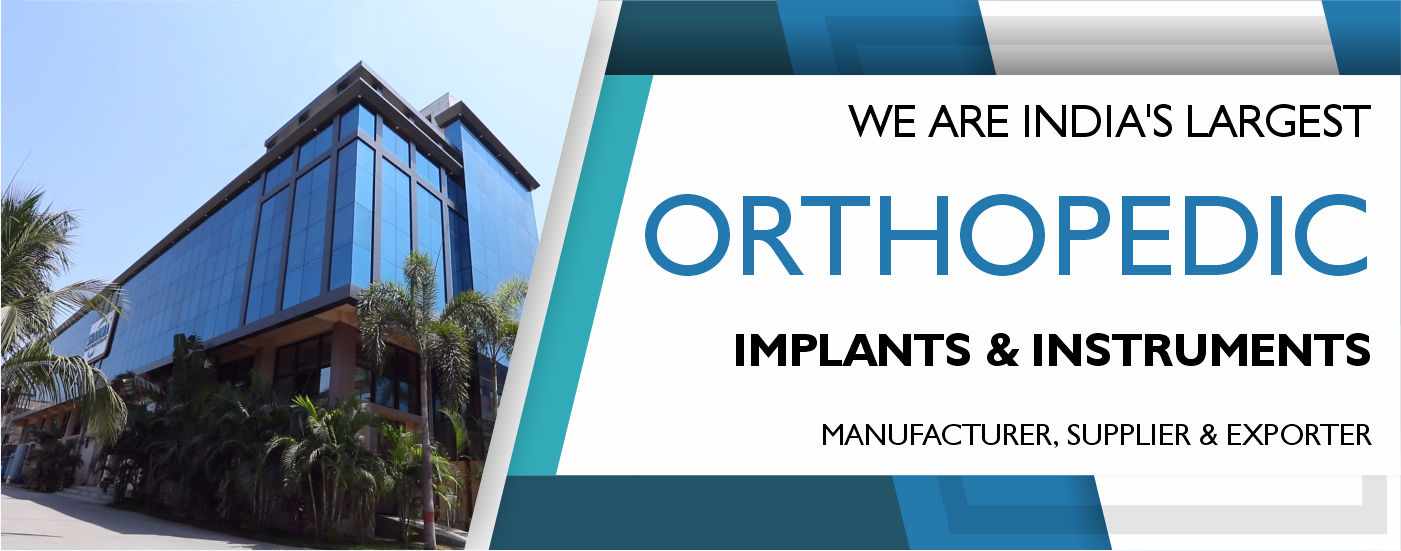
High-precision 5-axis CNC machining of titanium implants inside Sharma Orthopedic's Waghodia facility.
4. Future Procurement Trends in Global Hip Arthroplasty (2025–2035)
The global orthopedic implants market is undergoing a seismic shift driven by demographic aging, expanding healthcare access in emerging economies, and changing hospital procurement strategies. Key trends reshaping Total Hip Replacement Implants purchasing over the next decade include:
1. Transition from Cemented to Cementless Fixation Worldwide
While cemented stems remain clinical standards for elderly osteoporotic populations in select European markets, over 85% of global THA procedures in North America, Latin America, and Asia-Pacific have transitioned to cementless press-fit implants. Importers are expanding inventory allocation toward porous-coated tapered stems and dual-coated hydroxyapatite options to satisfy surgeon preferences for faster operative times and biological bone preservation.
2. Rise of Dual Mobility Acetabular Systems
Post-operative dislocation remains a primary cause for early revision surgery. Dual Mobility acetabular constructs—featuring a small head articulating within a large mobile polyethylene liner, which in turn articulates inside a metallic shell—dramatically increase jump distance and range of motion. Global procurement requests for Dual Mobility options are growing at a CAGR of over 9.2%, particularly for high-risk neuromuscular patients and revision cases.
3. Supply Chain Realignment toward Certified Asian Manufacturing Hubs
Western medical device brands have historically imposed heavy price markups due to excessive corporate overhead. Global hospital groups and regional distributors are increasingly forming direct OEM/ODM manufacturing partnerships with certified Indian producers. India’s robust metallurgical engineering infrastructure, coupled with rigorous international regulatory alignments (ISO 13485, CE certification), enables healthcare organizations to achieve 30% to 50% cost reductions without sacrificing clinical efficacy or material purity.
4. Digital Integration & Patient-Specific Instrumentation (PSI) Compatibility
Modern surgical suites are integrating robotic navigation and 3D pre-operative planning software. Modern hip implant stems and acetabular cups must offer precise CAD/CAM dimensional consistency so that real-time surgical robotics can reliably predict implant seating, leg length restoration, and offset matching within sub-millimeter tolerances.
5. Global Procurement FAQ: Frequently Asked Buyer Questions
Below are detailed answers to the most common technical, regulatory, and commercial inquiries raised by international purchasing managers and orthopedic importers when evaluating Total Hip Replacement Implants.
Sharma Orthopedic India Limited operates under a fully integrated ISO 13485:2016 Certified Quality Management System. Our total hip replacement implants carry CE certification and comply with global regulatory benchmarks including ISO 5832 (metallic biomaterials), ISO 5834 (polyethylene), ISO 7206 (implants fatigue testing), and ISO 14971 (risk management). We provide complete Technical Files, Certificates of Analysis (CoA), Master Device Files, and Clinical Evaluation Reports (CER) to support rapid registration with local Drug and Medical Device Control Authorities in over 50 countries across Asia, Africa, Europe, and Latin America.
Our cementless femoral stems and acetabular cups are manufactured exclusively from premium forged Titanium Alloy (Ti-6Al-4V ELI conforming to ISO 5832-3 / ASTM F136), providing optimal biocompatibility and a low elastic modulus to reduce stress shielding. Cemented stems are crafted from High-Nitrogen Stainless Steel 316LVM (ISO 5832-1) or Vacuum Melted CoCrMo Alloy (ISO 5832-4). All raw materials undergo 100% spectral analysis and ultrasonic flaw detection prior to machining.
Yes. With over 62,391 sq. ft. of manufacturing space, multi-axis CNC machinery, laser marking equipment, and ISO Class 7 cleanrooms, we offer comprehensive OEM and ODM contract manufacturing services. We can produce customized stem geometries, proprietary acetabular shell locking mechanisms, laser-etched distributor branding, and custom sterile blister packaging tailored to your regional market specifications.
Our hip implant designs undergo rigorous independent laboratory testing in compliance with ISO 7206-4 (stem endurance testing under dynamic cyclic load) and ISO 7206-6 (head/neck taper fatigue strength). Stems are subjected to 10 million load cycles at extreme weight thresholds without mechanical structural failure. Acetabular liners undergo simulator pin-on-disk wear testing to ensure minimal wear rates over decades of simulated anatomical use.
We provide fully comprehensive, ergonomic surgical instrument containers for Total Hip Arthroplasty. The sets include femoral rasps/broaches, trial stems, acetabular reamers, cup impactors, head trial heads, and positioning guides. Instruments are manufactured from hardened stainless steel (AISI 420/630) and anodized aluminum, designed to endure repeated autoclave sterilization cycles.
Standard inventory items can be dispatched within 7 to 14 business days. For customized OEM production orders, typical lead times range between 30 and 45 days. We offer flexible MOQs to support emerging distributors establishing market presence. Implants are packaged in double sterile blister packs with protective outer boxes, shipped via validated express air freight partners (DHL, FedEx, Freight Forwarders) complete with temperature/sterility logging documentation.
6. Enterprise Strengths: Why Partner with Sharma Orthopedic India Limited
Selecting an orthopedic implant supplier is a critical institutional decision affecting hospital reputation and clinical patient outcomes. Founded in 1992, Sharma Orthopedic has earned international recognition over 30+ years as one of India's top 3 orthopedic implant manufacturers.
30+ Years of Manufacturing Integrity & Global Footprint
Operating from our expansive 62,391 sq. ft. engineering complex in Waghodia (Vadodara, Gujarat), our facility houses a highly skilled workforce of over 100 production technicians, 10 quality control specialists, 8 regulatory affairs experts, and a dedicated 5-person R&D engineering team. With over 10,000 product SKUs spanning arthroplasty, osteosynthesis trauma plates, interlocking intramedullary nails, and spinal systems, we offer global partners a complete single-source procurement solution.
- 100% Traceability: Raw material heats to finished sterile implants serialized via UDI barcode systems.
- State-of-the-Art Cleanrooms: Class 7 ISO 14644-1 certified cleanrooms for zero-particle packaging.
- Global Logistics Hub: Direct export capabilities servicing distributors across 50+ countries worldwide.

Active Participation in International Orthopedic Congresses
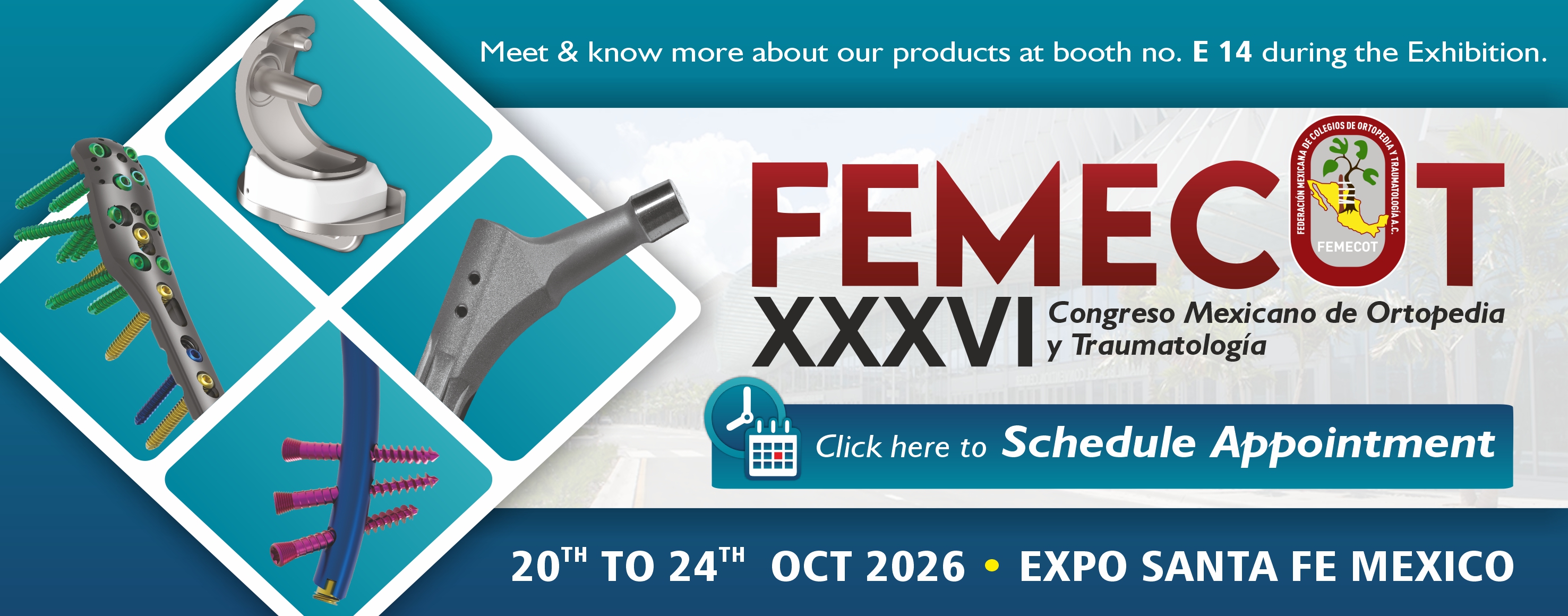
Sharma Orthopedic regularly demonstrates its cutting-edge total hip and knee replacement implants at major international surgical conferences worldwide, including FEMECOT in Latin America, AAOS, and MEDICA Germany. Our clinical engineering team works directly with global surgical key opinion leaders (KOLs) to continuously refine implant ergonomics and surgical instrumentation.
Request Factory-Direct Pricing for Total Hip Implants
Contact our international export division today to receive our comprehensive hip arthroplasty catalog, technical specifications, and competitive bulk pricing quotes.