
Expert insights, surgical technique guides, and medical device updates from industry leaders.
Exploring advancements in joint arthroplasty, trauma management, and spinal systems.
Global sourcing of Orthopedic Bone Cement requires more than comparing prices or package sizes. Different formulations serve different surgical needs, and product names alone may not reveal meaningful differences. Buyers should understand the material, intended use, and handling characteristics before reviewing suppliers.
Polymethylmethacrylate (PMMA) cement is widely used to secure joint implants. It hardens during polymerization, so working time, viscosity, and heat generation matter in practice. Antibiotic-loaded PMMA options add another consideration: their composition and intended use should match the product’s approved labeling and clinical setting. Calcium phosphate and other bioactive formulations may offer different handling or resorption properties, but they are not interchangeable with PMMA. Details matter.
This guide introduces key cement types and practical criteria for global buyers, including technical documentation, packaging, traceability, supply continuity, and market-specific regulatory status. Ask suppliers for current instructions for use, product specifications, and evidence supporting stated performance. Check how cement behaves during mixing, delivery, and setting—not just how it reads in a catalog. Small handling differences can affect workflow.
There is no perfect shortlist. Availability, local requirements, and clinical preferences can change the comparison, and published claims deserve careful review. This overview supports informed evaluation; it does not replace advice from qualified clinicians or regulatory specialists. Even a thorough comparison has limits. A careful buyer keeps those limits in view.
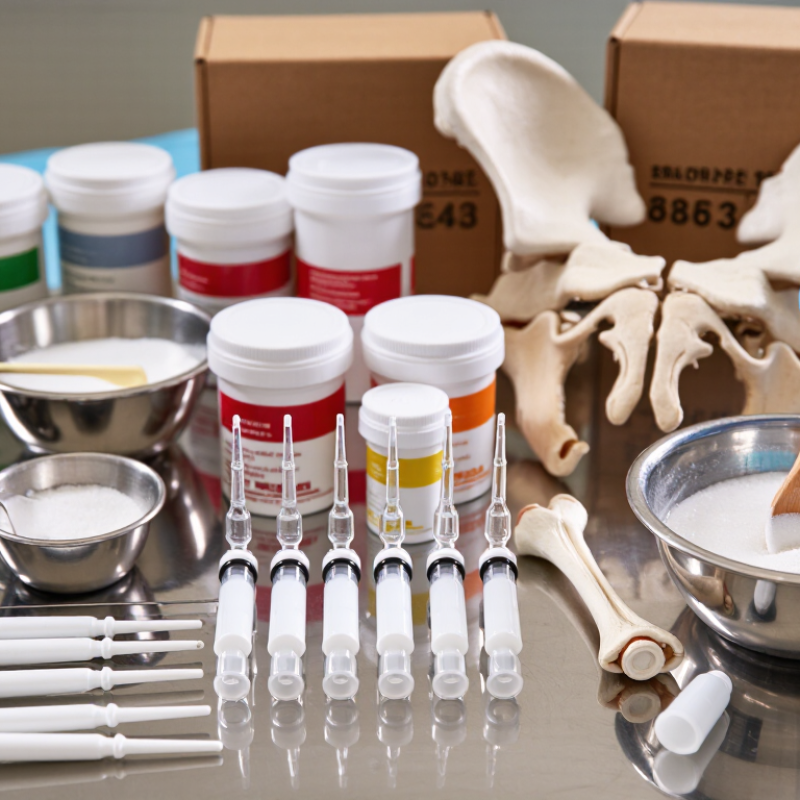
Orthopedic bone cement is a material placed between an implant and prepared bone to help stabilize the implant. In joint replacement, the most widely used cement is polymethyl methacrylate, or PMMA.
It begins as powder and liquid, then hardens around the implant and enters small spaces in cancellous bone. Not glue. Its grip comes mainly from this mechanical interlock, not from bonding chemically to bone.
The cement can help distribute loads and hold a joint component steady, but it does not make damaged bone heal.
The World Health Organization’s 2022 Ageing and Health fact sheet projects that one in six people worldwide will be aged 60 or older by 2030, rising to 2.1 billion by 2050.
This demographic shift makes dependable fixation an important consideration in orthopedic care, though age alone does not determine which fixation method is appropriate. Surgeons assess bone quality, implant design, activity, and patient health.
During mixing and placement, timing matters: PMMA generates heat as it cures, and excess cement must be removed carefully. Small details matter.
Cemented fixation is not ideal for every case, and clinical evidence, surgical judgment, and follow-up all shape the decision.
Orthopedic bone cements differ in chemistry, setting behavior, and how the body interacts with them. Polymethyl methacrylate, or PMMA, is a widely used acrylic cement. Its powder commonly contains polymer beads and a radiopaque additive; its liquid contains methyl methacrylate monomer. When mixed, the material hardens around an implant or within a prepared bone space. It provides mechanical fixation, but does not naturally bond to bone. Mixing technique matters. The dough can feel workable, then stiffen sooner than expected.
Calcium phosphate cements form another important group. Their mineral powders may include calcium phosphate compounds that react with a liquid to form a hardened, bone-mineral-like material. Depending on formulation, they can be molded or injected into selected bone defects. Calcium sulfate cements are also resorbable options, with compositions based on calcium sulfate. Their breakdown and strength differ from PMMA, so they are not interchangeable. Small details count: setting time, handling, radiopacity, and intended load all affect suitability. No single material fits every case, and product instructions and clinical judgment remain essential.
Most orthopedic bone cement is polymethylmethacrylate, or PMMA. It starts as powder and liquid mixed at the operating table. The mixture thickens, then hardens through polymerization. During this reaction, it releases heat. Lewis’s 1997 review in the Journal of Biomedical Materials Research describes how measured temperatures vary with cement volume and testing conditions. Heat is real. In a patient, surrounding tissue and blood flow also affect temperature, so laboratory peaks should not be treated as direct predictions of clinical exposure.
As the cement reaches a dough-like stage, it can be pressed into prepared cancellous bone. Small cement fingers enter the spaces between trabeculae, creating mechanical interlock rather than a chemical bond with bone. That distinction matters. Blood, marrow, or excess fluid at the interface may impair penetration, making preparation and timing important. ISO 5833:2002 specifies a minimum compressive strength of 70 MPa for acrylic bone cement under defined laboratory tests. This figure describes a material test, not a guarantee of fixation in every patient. Cement volume, mixing, insertion timing, and bone quality all influence the result. The process is controlled, but not perfectly predictable. A useful reminder for buyers: compare handling and curing data alongside strength figures, and review the product’s technical documentation for its stated test conditions.
Acrylic bone cement (PMMA) is widely used for fixation. During curing, its monomers polymerize in an exothermic reaction; the hardened cement mainly stabilizes an implant through mechanical interlocking with the bone surface rather than directly bonding to bone.
The chart shows minimum strength requirements specified by ISO 5833 for acrylic resin bone cement—not product-specific results. Calcium phosphate, calcium sulfate, and bioactive glass cements have different compositions and setting mechanisms, so their performance should be assessed using relevant product data and test methods.
Orthopedic bone cements differ in how they anchor implants, manage infection risk, and interact with bone. Polymethyl methacrylate (PMMA) remains common for securing hip and knee components. It hardens in place and provides immediate mechanical fixation, but does not become living bone. Plain PMMA suits routine fixation when infection risk is not elevated. Antibiotic-loaded PMMA is used in selected revision or infection-related procedures, though adding antibiotics can alter cement strength and release varies over time. The clinical choice is not always tidy.
Calcium phosphate cements are used mainly to fill contained bone defects, such as some metaphyseal voids; they are not interchangeable with PMMA for anchoring a joint replacement. Calcium sulfate products can carry local antibiotics in selected cases, but their resorption means they do not provide durable implant fixation. For acrylic cements, ISO 5833:2002 specifies minimum bending and compressive strengths of 50 MPa and 70 MPa, respectively. These material benchmarks help buyers compare specifications, not predict outcomes for an individual patient. Fit, mixing technique, bone quality, and surgical judgment still matter. A datasheet cannot capture every operating-room variable.
Global buyers should compare bone cement by intended use, formulation, and verified performance—not by price alone. Common options include standard PMMA cement, radiopaque formulations, and antibiotic-loaded variants, where permitted and clinically appropriate. Their handling can differ. Ask for specifications covering mixing behavior, working time, curing profile, and compressive strength. Check test methods and acceptance limits, not just headline figures.
Compliance deserves equal scrutiny. Request current certificates, applicable conformity documents, sterilization evidence where relevant, and lot-specific traceability records. Confirm that the product’s stated classification and registration status match the destination market. Requirements vary. A document accepted in one region may not satisfy another regulator’s rules. Review labeling, instructions for use, shelf life, and storage limits against the shipped packaging.
Packaging matters in practice. Inspect seals, lot numbers, and expiry dates on received cartons, then compare them with shipping records. Ask suppliers how they investigate deviations and communicate safety updates. A polished data sheet is useful, but it cannot replace careful review or clear answers. Comparisons are not always tidy; test methods and conditions can differ. Record those gaps before approval, especially when assessing a new formulation.
Polymethylmethacrylate, or PMMA, is common. Powder and liquid are mixed, then thicken into a dough-like material. It hardens through polymerization. Heat is real.
It enters small spaces between the bone’s trabeculae and forms a mechanical interlock. It does not chemically bond with bone.
Yes. Blood, marrow, or excess fluid may reduce cement penetration. Preparation and timing matter, though the process is not perfectly predictable.
A compressive strength of 70 MPa is a laboratory benchmark under specified conditions. Acrylic cement also has a 50 MPa bending-strength benchmark. These figures do not guarantee fixation in a patient.
Not exactly. Cement volume and test conditions affect measured temperatures. In patients, surrounding tissue and blood flow also matter. Not a perfect forecast.
It can secure hip and knee components and provide immediate mechanical fixation. It does not become living bone. That distinction is easy to overlook.
It may be selected for certain revision or infection-related procedures. Added antibiotics can change cement strength, and release varies over time. The choice can feel untidy.
Calcium phosphate cement can fill some contained bone defects, including certain metaphyseal voids. Calcium sulfate may carry local antibiotics in selected cases, but resorbs. Neither should be treated as interchangeable with PMMA for durable implant fixation.
Orthopedic Bone Cement helps secure implants and stabilize bone structures by filling spaces between bone and a device or within a fracture site. Common types include acrylic-based cement, often made with polymethyl methacrylate, and mineral-based formulations such as calcium phosphate or calcium sulfate. These materials differ in strength, setting behavior, and whether they remain in place or gradually resorb. Acrylic cement typically hardens through a chemical curing process that releases heat, while mineral cements set through reactions involving their components and the surrounding fluid environment.
Choosing a cement depends on the clinical task, required fixation strength, handling time, and compatibility with the surgical procedure. Some formulations are suited to implant fixation, while others may be selected for filling bone defects. Global buyers can compare product specifications, consistency between batches, packaging integrity, sterilization information, and evidence of quality-system controls. Clear documentation and compliance with applicable requirements help buyers assess suitability for their intended clinical settings.