
Choosing a Bipolar Hip Prosthesis in 2026 requires more than comparing prices or product photographs. Global buyers must examine design, materials, clinical evidence, manufacturing controls, and after-sales support. A bipolar implant usually combines an inner femoral head with an outer acetabular bearing. This structure can support movement while limiting direct contact with the native acetabulum.
Small details matter. The femoral stem should match the patient’s anatomy and fixation plan. The bearing surface may involve metal, polyethylene, ceramic, or combinations of these materials. Packaging should protect sterile components during long-distance transport. Lot numbers, certificates, inspection records, and traceability documents also deserve careful review. They are not glamorous. They are essential.
This guide introduces leading bipolar hip prosthesis types for global buyers, including cemented, uncemented, modular, and specialized designs. It considers where each option may fit, what evidence supports its use, and which questions buyers should ask manufacturers and clinical partners. However, no product category guarantees a successful outcome. Patient age, bone quality, fracture pattern, surgical technique, and rehabilitation all influence results. Regulatory expectations also differ across markets, so approval in one country does not automatically confirm suitability elsewhere.
Clinical judgment remains central.
A practical evaluation should include surgeon feedback, imaging requirements, instrument compatibility, revision planning, and supplier responsiveness. Some brochures make performance appear simple. Real operating rooms are less predictable. This article therefore highlights both strengths and limitations, while encouraging buyers to verify current documentation with qualified orthopedic professionals and approved suppliers before making procurement decisions.
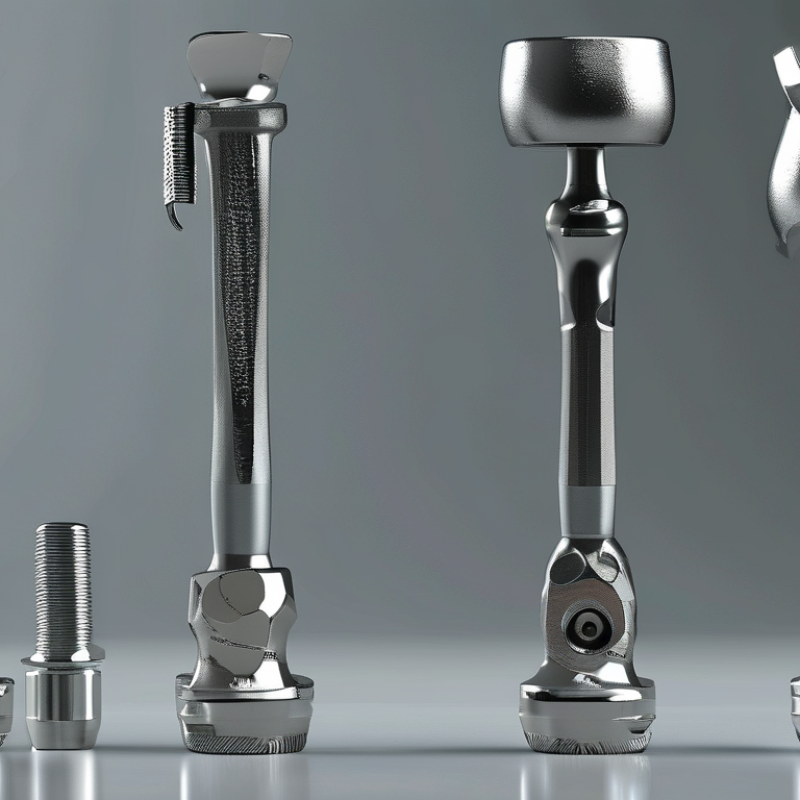
A bipolar hip prosthesis is a partial hip replacement designed to restore movement after specific femoral head damage. Unlike a total hip replacement, it usually preserves the patient’s natural acetabulum. The prosthesis contains two moving surfaces, creating its “bipolar” name.
Its structure is compact but carefully engineered. A femoral stem anchors inside the thigh bone. A taper connects the stem to an inner femoral head. An outer shell surrounds that head and contacts the natural socket. Between these components, a bearing surface allows controlled movement. Some models use cemented fixation, while others depend on bone growth around a textured stem. Selection depends on bone quality, age, activity level, and surgical judgment.
The main function is to replace the damaged femoral head and restore hip mechanics. The inner articulation allows movement within the implant. The outer articulation moves against the acetabulum. This design may reduce direct wear on the natural socket, although the benefit is not identical for every patient. Stability matters too, especially during walking, turning, or rising from a low chair. An experienced surgical team checks implant sizing, leg length, alignment, and soft-tissue tension. Small errors can become painful problems.
Not every patient is an ideal candidate. That is easy to overlook. Global buyers should review fixation method, bearing materials, sterilization records, traceability, and clinical documentation. A polished specification sheet is not enough. Long-term performance also depends on surgical technique, rehabilitation, and patient follow-up.
| Prosthesis Type | Definition and Structural Features | Primary Bearing Interfaces | Typical Materials | Main Functions | Common Clinical Use | Key Advantages | Important Considerations |
|---|---|---|---|---|---|---|---|
| Monoblock Bipolar Prosthesis | A single-piece femoral component with a fixed stem and an integrated bipolar head assembly. The outer shell articulates with the native acetabulum, while the inner bearing permits movement between the femoral head and polyethylene liner. | 1. Inner metal head–polyethylene liner articulation 2. Outer metal shell–native acetabulum articulation |
Cobalt-chromium or stainless-steel alloy head and shell; ultra-high-molecular-weight polyethylene liner; metallic femoral stem. | Replaces the fractured femoral head and neck, restores hip length and offset, and allows two-site motion intended to reduce direct acetabular contact. | Selected femoral-neck fractures in older adults when hip preservation is unsuitable and acetabular cartilage is reasonably preserved. | Simple construction, fewer modular junctions, and efficient intraoperative workflow. | Limited ability to adjust femoral offset, leg length, and version compared with modular systems; component sizing must be accurate. |
| Modular Bipolar Prosthesis | A bipolar head assembly is combined with a separately selected femoral stem. The modular connection allows intraoperative adjustment of head size, neck length, and stem dimensions. | Inner head–liner articulation and outer shell–acetabulum articulation, with an additional modular taper connection between the head and stem. | Metallic shell and head; polyethylene liner; titanium or cobalt-chromium stem; titanium-alloy modular taper is common. | Provides bipolar motion while helping the surgeon restore leg length, femoral offset, stability, and soft-tissue tension. | Frequently considered for displaced femoral-neck fractures and selected salvage procedures requiring intraoperative flexibility. | Broad sizing options and improved ability to match patient anatomy. | Requires careful inspection and seating of the taper; additional modular interfaces may introduce risks such as corrosion or fretting if poorly assembled. |
| Cemented Bipolar Prosthesis | A bipolar femoral component fixed in the prepared femoral canal with bone cement, usually polymethylmethacrylate. | The bipolar head has an inner head–liner bearing and an outer shell–acetabulum bearing; fixation is achieved through a cement mantle around the stem. | Metallic stem and bipolar shell, polyethylene liner, and polymethylmethacrylate bone cement. | Provides immediate implant fixation and transfers load from the femoral component to the femur through the cement mantle. | Often considered for older patients with osteoporotic or poor-quality bone, depending on surgical assessment and local practice. | Immediate fixation and reduced dependence on early bone ingrowth for stability. | Requires meticulous cementing technique; potential cement-related cardiovascular or respiratory complications must be considered. |
| Uncemented Bipolar Prosthesis | A press-fit or biologically fixed femoral component designed to achieve initial mechanical stability followed by bone ingrowth onto a prepared stem surface. | Inner head–liner and outer shell–acetabulum articulations; fixation occurs through stem geometry and bone–implant contact rather than cement. | Titanium or cobalt-chromium stem with porous or textured coating; metallic shell and polyethylene liner. | Restores hip mechanics while supporting long-term biological fixation of the femoral stem. | May be selected for patients with adequate bone quality and sufficient capacity for osseointegration. | Avoids cement-related complications and may provide durable fixation in suitable bone. | Initial stability is essential; thigh pain, periprosthetic fracture, and postoperative subsidence are relevant risks. |
| Porous-Coated Bipolar Prosthesis | A subtype of uncemented bipolar prosthesis with a porous or highly textured stem surface intended to encourage bone ongrowth or ingrowth. | Inner metal head–polyethylene liner and outer shell–native acetabulum; the stem relies on biological fixation. | Porous-coated titanium or cobalt-chromium stem, metallic bipolar shell, and ultra-high-molecular-weight polyethylene liner. | Promotes secondary fixation through bone integration and maintains femoral stability after the initial healing period. | Used when the femoral canal and bone stock are appropriate for press-fit fixation and biological integration. | Potential for strong long-term fixation without bone cement. | Requires appropriate implant sizing, stable initial fixation, and sufficient bone quality; porous surfaces can make later removal more difficult. |
| Large-Head Bipolar Prosthesis | A bipolar design using a relatively large outer shell selected to match the patient’s native acetabular dimensions while preserving the two-articulation mechanism. | Inner head–liner articulation and outer shell–acetabulum articulation; the outer diameter is selected according to acetabular anatomy. | Metallic shell and femoral head, polyethylene liner, and either cemented or uncemented stem materials. | Supports stability, restores the femoral head diameter, and may increase the effective range of motion before impingement. | May be considered for patients with larger acetabular anatomy or increased stability requirements, subject to cartilage condition. | Potentially improved stability and reduced risk of dislocation compared with smaller head configurations. | An excessively large shell may increase acetabular contact stress, cartilage wear, or difficulty with proper seating. |
| Metal-on-Polyethylene Bipolar Prosthesis | The most established bipolar bearing configuration, using a polished metallic head or shell against a polyethylene liner at the inner articulation. | Metal head–polyethylene liner internally, plus metal shell–native acetabulum externally. | Cobalt-chromium or stainless-steel alloy and ultra-high-molecular-weight polyethylene. | Provides low-friction internal movement, distributes load across the bipolar assembly, and replaces the damaged femoral head. | Commonly used in bipolar hemiarthroplasty when the acetabulum does not require replacement. | Well-established material combination, broad clinical familiarity, and comparatively predictable manufacturing. | Polyethylene wear and progressive acetabular erosion may occur, especially with long-term use or high activity levels. |
| Ceramic-Head Bipolar Prosthesis | A bipolar system incorporating a ceramic femoral head or ceramic bearing element, where the design and compatibility of the modular interface permit its use. | Ceramic or ceramic-compatible head against a polyethylene liner internally; metallic or ceramic-compatible outer shell against the native acetabulum. | Alumina or zirconia-toughened alumina ceramic, polyethylene liner, and metallic shell and stem. | Provides a hard, smooth bearing surface with low friction and potential reduction in metallic wear debris at the inner bearing. | May be considered for selected patients when material compatibility, anatomy, activity level, and product availability support its use. | High hardness, chemical stability, and favorable wear characteristics under suitable conditions. | Higher cost, strict handling requirements, possible ceramic fracture or squeaking, and limited suitability for every bipolar design. |
Common types include cemented, uncemented, hybrid, and modular designs. Each suits different bone conditions and surgical plans. The best choice is not universal.
Cemented stems may help older patients with fragile bone. Bone cement provides immediate fixation. However, patient health and surgical judgment remain important.
An uncemented stem uses press-fit fixation. Later, bone may grow around the implant. Suitable bone quality is essential.
A modular design allows changes to head size, neck length, and offset. These adjustments can address varied femoral anatomy. Small differences matter.
Common combinations include metal-on-polyethylene and ceramic-based bearings. A bipolar head has inner and outer movement surfaces. Performance depends on more than material choice.
Buyers should check stem size, taper geometry, offset, neck length, and head diameter. Every measurement must match the surgical plan. Compatibility errors can delay surgery.
Review material traceability, dimensional accuracy, fatigue testing, and manufacturing controls. Also examine sterilization records, shelf-life data, and clinical evidence. Documentation should be clear.
Not always. Freight, instruments, training, storage, and revision costs affect the real budget. A low quote may hide weak service or incomplete records.
Review local regulatory acceptance, technical files, surgeon feedback, and post-market support. Confirm instrument compatibility and training requirements. Some evidence may remain incomplete.
No. Newer is not automatically better. Alignment, soft-tissue balance, patient activity, and surgical experience also influence outcomes. The implant is not acting alone.
This guide explains the Bipolar Hip Prosthesis, including its basic definition, internal structure, and role in restoring hip movement after specific joint conditions or injuries. It introduces the main prosthesis types available in 2026, comparing their bearing designs, fixation methods, materials, and intended clinical applications. Readers will gain a practical understanding of how options may differ in stability, durability, range of motion, and suitability for various patient needs.
For international buyers, the article also outlines key factors for evaluating product quality, anatomical compatibility, total cost, and long-term supply reliability. It highlights the importance of reviewing technical documentation, surgical requirements, sterilization information, packaging, and applicable regulatory approvals before purchasing. By considering clinical use, surgeon preferences, hospital resources, and regional distribution conditions together, global buyers can make more informed and responsible decisions when selecting a Bipolar Hip Prosthesis for healthcare applications.