
Sharma Orthopedic Surgical Insights & Clinical Blog
Knowledge Hub

Orthopedic Innovations & Clinical Blog

Expert insights, surgical technique guides, and medical device updates from industry leaders.

Global Orthopedic Updates & Research
Global Trends

Surgical Insights & Medical Tech

Exploring advancements in joint arthroplasty, trauma management, and spinal systems.

0%

Choosing the China best manufacturer for Variable Angle Distal Radius Plates requires more than comparing prices. It demands evidence, manufacturing discipline, and clinical understanding. Distal radius fractures remain among the most frequent upper-limb injuries, especially in older adults and active workers. Reports from the American Academy of Orthopaedic Surgeons and peer-reviewed trauma studies emphasize stable fixation, accurate reduction, and protection of surrounding soft tissues. These requirements place strict demands on plate geometry, screw trajectory, and instrumentation.

Market research from Grand View Research identifies continued growth in the global orthopedic implants sector, driven by trauma care, aging populations, and improved surgical techniques. However, market growth does not prove product quality. A reliable Chinese supplier should provide traceable raw materials, validated titanium or stainless-steel processing, dimensional inspection records, and documented sterilization compatibility. ISO 13485 certification is important, but it should not be treated as the only proof of competence. Ask for test reports, audit access, sample plates, and clear technical drawings.

Variable-angle locking technology can help surgeons adjust screw placement around fracture fragments and avoid sensitive joint regions. Yet, flexibility has limits. Poor plate fit or inconsistent thread performance can create avoidable risks. Not every catalog looks equally convincing in the operating room. Details matter: smooth edges, readable markings, secure screw engagement, and instruments that fit without excessive force. A thoughtful manufacturer also supports regulatory documentation, surgeon feedback, and post-market monitoring. China has capable orthopedic suppliers, but selection should remain evidence-based. No supplier is perfect. Careful verification protects patients, surgeons, and distributors.
China Best Variable Angle Distal Radius Plates Manufacturer?

What Are Variable Angle Distal Radius Plates?

Variable angle distal radius plates are designed for fractures near the wrist joint, where bone fragments may point in different directions. Their locking holes allow screws to be placed at adjustable angles, often within a controlled range. This helps surgeons target small fragments, support the joint surface, and avoid crowded screw paths.

The detail matters.

A plate can look stable on an X-ray but still irritate tendons if screw length or position is poorly selected.

The Global Burden of Disease 2019 report estimated 178 million new fractures worldwide that year. However, it does not identify every distal radius fracture requiring fixation. That limitation matters when reading market claims.

The AAOS and ASSH clinical practice guideline reports limited evidence for major long-term functional differences between common fixation methods. Variable-angle designs may improve intraoperative flexibility, but they do not replace reduction quality, bone assessment, or postoperative monitoring.

In practice, surgeons check fragment size, joint involvement, bone density, and screw trajectory. Cadaver testing and clinical follow-up both matter. Some reports show favorable early motion, yet study methods vary.

That is worth questioning.

An experienced manufacturer should provide fatigue testing, pull-out data, sterilization information, and traceable quality records. The best plate is not automatically the most adjustable one. It must match anatomy, surgical technique, and the patient’s healing conditions.

How Do Variable Angle Distal Radius Plates Work?

Variable angle distal radius plates use a locking system that lets surgeons adjust screw direction within a controlled range. This flexibility helps address different fracture patterns, especially when fragments sit at unusual angles. Each screw locks into the plate hole, creating a stable connection between the implant and bone. The plate supports the joint surface while reducing unwanted movement during healing.

During surgery, the surgeon selects screw trajectories using fluoroscopic images and the patient’s fracture anatomy. A screw may be aimed toward a specific dorsal or volar fragment, rather than following one fixed path. This can improve subchondral support and help avoid penetration into the wrist joint. Careful drilling matters. A small angle error can change the final screw position.

From a manufacturing perspective, reliable plates require accurate hole geometry, consistent material strength, and clear instrumentation. Titanium and stainless steel options each have practical advantages, depending on design and clinical preference. However, variable angle technology is not a replacement for judgment. Bone quality, reduction accuracy, soft-tissue condition, and postoperative protection still affect results. The concept sounds simple, but it is not foolproof. Even a well-made plate can perform poorly if positioning or imaging is inadequate. That limitation deserves honest attention when evaluating a distal radius plate manufacturer.

What Features Define a Reliable Chinese Manufacturer?

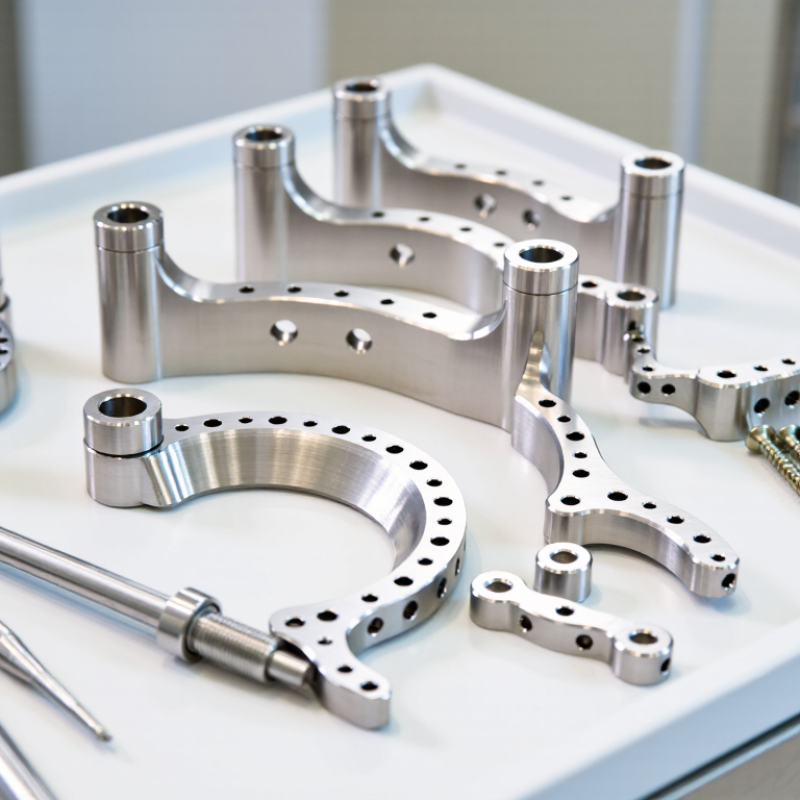
A reliable Chinese manufacturer of variable angle distal radius plates should show more than attractive product photos. Look for documented experience in orthopedic implant production, skilled engineers, and clear evidence of quality control. The team should understand plate contouring, screw trajectory, radial anatomy, and the challenges of low-profile fixation. Ask for material certificates, dimensional reports, and sterilization compatibility data. Practical knowledge matters.

Walk through the production details. CNC machining should create consistent holes and smooth edges, while polishing should prevent sharp contact points. Each plate needs batch identification and traceability from raw material to final inspection. A dependable factory should explain its testing process, including screw engagement, angular stability, fatigue performance, and corrosion resistance. Independent laboratory reports add credibility. So does a quality system aligned with recognized medical-device requirements.

Communication also reveals reliability. Engineers should answer technical questions directly, not hide behind sales language. Sample plates should match later production in thickness, hole position, and surface finish. Small differences can affect surgical handling. No factory is flawless. We once found that a rushed sample review overlooked a minor edge transition. That experience reinforced the need for surgeon feedback, repeated inspection, and written corrective actions. A trustworthy manufacturer accepts questions, records changes, and provides realistic delivery information instead of promising everything immediately.

How Are China’s Distal Radius Plates Designed and Tested?

China’s variable angle distal radius plates are designed around anatomy, fixation control, and surgical handling. Engineers study wrist CT data to shape the plate around common distal radius contours. The design usually includes multiple threaded holes, allowing screws to change direction within a controlled angle. This helps surgeons target joint fragments and avoid sensitive structures. Low-profile edges can reduce soft-tissue irritation, but thinner is not always better.

Prototypes are produced through precision machining or metal additive manufacturing. Engineers then check hole accuracy, plate contour, screw engagement, and surface finish. Mechanical tests may include bending, torsion, cyclic fatigue, and screw pull-out strength. Simulated bone blocks provide repeatable results. Cadaver testing can offer more realistic feedback. However, no laboratory model fully reproduces an active patient’s wrist. A plate may pass fatigue testing and still need improvement in surgical handling. That point deserves honest review.

Tips: Ask for documented test methods, sample sizes, and acceptance criteria. Check whether testing covers the specific plate size and screw system. Inspect the locking interface under magnification. Small machining marks matter. Review sterilization compatibility and traceability records. In practice, fit should be assessed with imaging data, not assumed from a catalogue drawing. Clear instructions, controlled production records, and independent quality checks make the evidence more reliable.

How to Select the Best Manufacturer for Your Clinical Needs?

China Best Variable Angle Distal Radius Plates Manufacturer?

Selecting the best manufacturer starts with your clinical workflow, not a catalog price. Assess plate profiles, variable-angle locking ranges, screw quality, and instrument ergonomics. The AAOS/ASSH Clinical Practice Guideline (2020) links operative decision-making in non-geriatric patients to factors such as radial shortening above 3 mm, dorsal tilt above 10 degrees, or intra-articular step-off above 2 mm. Your supplier should provide verified design data for these scenarios.

Request fatigue testing, pull-out testing, corrosion evidence, sterilization guidance, and lot-level traceability. ISO 13485:2016 certification supports a controlled quality system, but certification alone does not prove clinical suitability. Review surgeon feedback from comparable fracture patterns. Ask how design changes are validated before release. The AAOS/ASSH guideline also reports limited long-term functional benefit from surgery in many geriatric patients, so a manufacturer should support patient-specific choices, not automatic fixation. One plate cannot fit every wrist.

Tips: Compare three suppliers using the same checklist. Inspect a sample plate and its drill guides. Confirm the permitted screw angulation in degrees. Check radiographic visibility and packaging details. Request adverse-event and complaint-handling procedures. Do not accept vague statements like “premium titanium.” Ask for test methods and acceptance limits. I would also audit response times. A delayed technical answer may reveal future clinical friction. No selection checklist is perfect; revise it after real cases and operating-room feedback.

FAQS

What are variable-angle distal radius plates used for?

They support fractures near the wrist joint. Their locking holes allow screws to follow controlled, adjustable directions. This helps target small bone fragments and support the joint surface. The design is useful, but not foolproof.

How do variable-angle locking holes work?

Surgeons select screw trajectories during the operation. Each screw locks into the plate after placement. A screw may support a dorsal or volar fragment directly. Small drilling errors can still change the final position.

What factors guide plate selection?

Surgeons assess fragment size, joint involvement, bone density, and soft-tissue condition. They also evaluate radial shortening, dorsal tilt, and joint step-off. One plate cannot fit every wrist. Anatomy matters most.

Can these plates improve fracture stability?

They can create a stable plate-and-screw connection. This may reduce unwanted movement during healing. They can also support bone beneath the joint surface. However, reduction quality remains critical.

What testing should a manufacturer provide?

Request fatigue testing, pull-out data, corrosion evidence, and sterilization guidance. Lot-level traceability is also important. Review test methods and acceptance limits, not vague quality claims. Details reveal more.

Does certification prove clinical suitability?

No. A controlled quality system supports manufacturing consistency. It does not prove that every plate suits every fracture pattern. Clinical feedback, design validation, and follow-up data still matter. Certification is only one piece.

What complications can result from poor screw placement?

Incorrect screw length or direction may irritate tendons. A misplaced screw can also threaten the wrist joint surface. Fluoroscopic imaging helps verify each trajectory. Imaging quality cannot be ignored.

How should hospitals compare different suppliers?

Use the same checklist for at least three suppliers. Inspect sample plates, drill guides, packaging, and radiographic visibility. Confirm the permitted screw angulation in degrees. Also assess technical response times.

Do variable-angle plates guarantee better long-term function?

No. Evidence for major long-term differences remains limited in many comparisons. Early motion may look favorable, but study methods vary. Bone quality, healing conditions, and postoperative protection influence results. A promising result is not a guarantee.

What should be reconsidered after real clinical cases?

Review screw placement, operating-room workflow, imaging, and patient recovery. Record complaints and unexpected technical difficulties. Then revise the supplier checklist. No checklist catches everything.

Conclusion

Variable Angle Distal Radius Plates are orthopedic fixation devices designed to stabilize complex distal radius fractures while allowing surgeons greater flexibility in screw placement. Their adjustable locking angles help target different fracture fragments, support the joint surface, and adapt to varied bone anatomy. A reliable plate should combine anatomical contouring, secure locking performance, corrosion-resistant materials, smooth edges, and clear instrumentation to support efficient and consistent surgical use.

When evaluating a Chinese manufacturer, clinical teams should review the company’s engineering capabilities, quality management system, material traceability, and production consistency. Well-designed plates are typically developed through anatomical research, digital modeling, prototype evaluation, mechanical testing, and simulated-use assessments. The best manufacturer for a specific clinical need should offer dependable product documentation, appropriate sizing options, responsive technical support, and evidence of rigorous testing. Careful comparison of design quality, manufacturing reliability, regulatory documentation, and service capabilities can help healthcare providers select Variable Angle Distal Radius Plates that meet surgical requirements and patient safety expectations.

Ethan Caldwell

Ethan Caldwell

Ethan Caldwell is a dedicated marketing professional and a trusted voice behind the company’s expert blog. With a strong understanding of product strategy, customer needs, and evolving market trends, he transforms complex information into clear, practical, and engaging content for business leaders,......