
Sharma Orthopedic Surgical Insights & Clinical Blog
Knowledge Hub

Orthopedic Innovations & Clinical Blog

Expert insights, surgical technique guides, and medical device updates from industry leaders.

Global Orthopedic Updates & Research
Global Trends

Surgical Insights & Medical Tech

Exploring advancements in joint arthroplasty, trauma management, and spinal systems.

0%

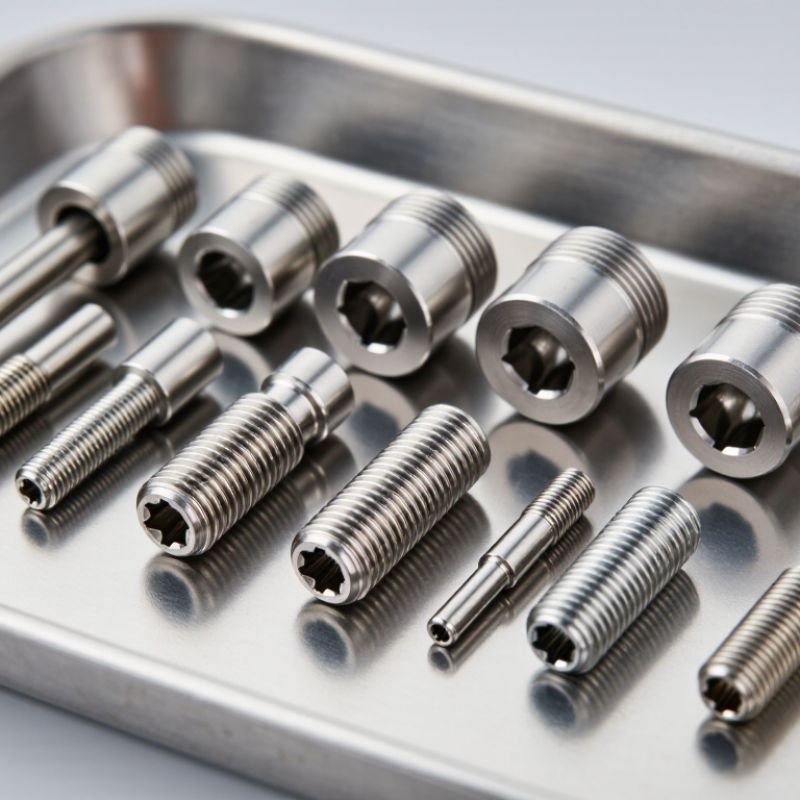
Choosing the right Headless Compression Screws requires more than comparing prices or browsing polished product pages. Global buyers must examine thread design, core diameter, alloy, cannulation, driver interface, and dimensional consistency. These details affect insertion control, compression performance, and revision risk.

Orthopedic implant specialist Dr. William M. Mihalko offers a useful principle: “The implant must support healing, not merely hold fragments in place.” That idea gives this comparison a practical foundation. A screw may look precise under bright warehouse lighting, yet its performance depends on verified tolerances, material traceability, and validated manufacturing processes. Small differences matter. A damaged recess can complicate insertion. An inconsistent thread can weaken purchase. A poor surface finish may create unnecessary concerns during clinical use.

Reliable sourcing also requires documented quality systems, batch records, inspection reports, and appropriate regulatory evidence for the destination market. Buyers should confirm whether the product is intended for orthopedic, dental, or non-medical applications. They should not assume that one certification covers every country.

Price still matters. It should not lead.

This guide compares leading Headless Compression Screws through a buyer-focused lens. It considers clinical design, supplier reliability, customization, packaging, lead times, and after-sales support. Some product claims may sound impressive but remain difficult to verify without samples or independent testing. That is where careful review becomes essential. The strongest choice is not always the cheapest or most famous option. It is the screw that performs consistently, arrives traceable, and matches the buyer’s real surgical and regulatory requirements.
Top Headless Compression Screws for Global Buyers?

Headless Compression Screws: Anatomy, Threads, and Compression Mechanics

Top Headless Compression Screws for Global Buyers?

Headless Compression Screws: Anatomy, Threads, and Compression Mechanics

A headless compression screw usually has a recessed drive, tapered tip, and two thread zones. The distal threads purchase the far fragment. The proximal threads engage the near fragment. Different pitches can create interfragmentary compression as the screw advances. This design leaves less hardware prominence near cartilage or soft tissue. Small details matter. Drive depth, tip geometry, and cannulation affect insertion control.

According to Grand View Research’s 2024 orthopedic devices analysis, the global market reached approximately USD 47.4 billion in 2023. The report also projects about 4.2% annual growth through 2030. That expansion increases demand for traceable, consistently manufactured fixation components. Buyers should review material certificates, dimensional inspection records, fatigue data, and sterilization compatibility. ASTM F543-23 provides recognized test methods for metallic bone screws, including torsional and driving performance.

Thread selection requires more than comparing pitch numbers. A fine proximal thread may improve compression control, but it can reduce tolerance for poor trajectory. A larger distal thread can improve purchase in soft bone, yet excessive insertion torque may damage the interface. In design reviews, the convenient assumption is that more compression always improves stability. It does not. Compression must match bone quality, fracture pattern, and surgical technique. Test results may look excellent on paper, while real handling reveals a shallow drive recess or difficult screw removal.

Material Benchmarks: ASTM F136 Titanium vs ASTM F138 Stainless Steel

Top Headless Compression Screws for Global Buyers?

Material choice affects fixation behavior, imaging, handling, and purchasing risk. ASTM F136 titanium is wrought Ti-6Al-4V ELI, valued for its lower density and strong corrosion resistance. It weighs about half as much as stainless steel. Its elastic modulus is also closer to bone, although clinical performance depends on design and loading.

ASTM F138 stainless steel is wrought 18Cr-14Ni-2.5Mo alloy. It offers high strength, familiar machining behavior, and broad surgical use. Its greater stiffness can support demanding compression applications. However, it may create more imaging artifact than titanium. Neither material is automatically superior. Anatomy, screw diameter, thread design, and removal plans matter.

Small details often decide procurement success. Check mill certificates, heat numbers, mechanical testing, thread accuracy, and surface finish. Confirm whether the supplier provides non-sterile or sterile packaging. Global buyers should also review labeling, traceability, and destination-market requirements. Titanium can reduce weight, but it may cost more and require careful machining. Stainless steel is often economical, yet dissimilar-metal contact deserves attention. Avoid assumptions.

A practical oversight is treating ASTM compliance as a complete quality guarantee. It is not. The finished screw still needs dimensional inspection and documented process control. One lesson remains easy to miss: material data cannot replace application-specific verification.

Top Headless Compression Screws for Global Buyers: Material Benchmarks

ASTM F136 titanium alloy compared with ASTM F138 stainless steel for key material-selection criteria.

ASTM F136 titanium offers substantially lower density and a higher minimum tensile and yield strength, making it attractive when weight reduction and high strength-to-weight ratio are priorities. ASTM F138 stainless steel provides higher elongation and elastic modulus, which can support greater ductility and stiffness. Mechanical values shown are ASTM minimum benchmark values where specified; density and elastic modulus are representative alloy properties.

Size Data: 2.0–7.3 mm Diameters, Lengths, and Indications

Top Headless Compression Screws for Global Buyers?

Headless compression screws commonly range from 2.0 to 7.3 mm in diameter. Smaller 2.0–3.0 mm screws suit tiny bone fragments, hand procedures, and selected foot applications. Sizes from 3.5–4.5 mm often support medium fracture fixation, osteotomies, and arthrodesis. Larger 5.0–7.3 mm screws may serve stronger fixation in larger bones, depending on anatomy and surgical planning. Available lengths vary by design, commonly from about 8 mm to over 100 mm. Buyers should confirm the exact length range, thread configuration, and measurement method with technical documents.

Tips: Match diameter to fragment size, bone quality, and the required compression—not simply to the largest available option. Measure the planned trajectory carefully. A few extra millimeters can risk joint penetration or insufficient purchase. Cannulated systems also require compatible guidewires and instruments.

Clinical indications must be assessed by qualified orthopedic professionals. A 2.0 mm screw may be appropriate for a small fragment, while a 7.3 mm screw can provide stronger purchase in larger anatomy. However, diameter alone does not determine stability. Thread length, insertion depth, countersinking, and bone density also matter. A neat size chart can mislead. I would treat it as a planning tool, not a final decision. Global purchasers should request sterilization status, material data, dimensional tolerances, and regulatory documentation before ordering.

Performance Testing: ASTM F543 Torque, Pullout, and Fatigue Criteria

Top Headless Compression Screws for Global Buyers?

Performance Testing: ASTM F543 Torque, Pullout, and Fatigue Criteria

For global buyers, headless compression screws need more than attractive specifications. ASTM F543 provides practical methods for assessing metallic bone screw performance. A qualified laboratory should document screw diameter, thread design, cannulation, material condition, and batch traceability. These details affect test results. Small geometry changes can alter insertion torque significantly.

Torque testing records driving resistance and torsional failure. The fixture should align with the screw axis and use calibrated sensors. Report peak torque, torsional strength, angular displacement, and the visible failure mode. A screw may survive insertion but still show thread damage. That detail matters. Pullout testing measures axial resistance under controlled conditions. Test blocks should represent the intended bone quality, with density and embedment depth clearly recorded. Loading speed must remain consistent.

Fatigue evaluation requires extra care. ASTM F543 is not a complete fatigue protocol for every clinical application. Buyers should request a justified cyclic-loading method, including load range, frequency, cycle count, and stopping criteria. Inspect threads and cannulation after testing. Microscopic cracks may appear before final failure. Results can look impressive, yet poor fixture alignment may distort them. That is an uncomfortable limitation. Repeat testing across multiple lots improves confidence, although variability never disappears entirely. A reliable report should include raw data, calibration records, environmental conditions, and excluded specimens with clear reasons.

Global Buyer Scorecard: ISO 13485, FDA, EU MDR, MOQ, and Lead Time

Top Headless Compression Screws for Global Buyers?

A reliable buyer scorecard starts with ISO 13485, but the certificate alone is not enough. Check its scope, issuing body, expiry date, and manufacturing site. The certificate should cover orthopedic implants, not only general medical products. Request recent audit evidence when possible. Small details matter.

FDA status needs careful wording. Registration and device listing do not equal FDA approval. Confirm the product category, listing information, and responsible establishment through official records. For European sales, review EU MDR technical documentation, clinical evaluation, post-market surveillance, and CE requirements. A notified body may be required, depending on classification. Ask for traceability from raw titanium or stainless steel to final packaging.

MOQ and lead time often decide whether a supplier is practical. Ask whether the MOQ applies per diameter, length, or complete order. A mixed-size order may look flexible but increase production time. Confirm sample timing, tooling charges, inspection points, and sterilization arrangements. A useful request is a written schedule: samples in three weeks, production in eight, shipping separately. Treat estimates cautiously. Delays happen.

The scorecard should also record thread design, driver compatibility, surface finish, packaging, and lot-release documents. A supplier may meet compliance requirements yet provide weak communication. That is a real risk. One limitation remains: documents can look complete while practical performance is unclear. Independent testing and surgical-user feedback can expose that gap.

Top Headless Compression Screws for Global Buyers? - Global Buyer Scorecard: ISO 13485, FDA, EU MDR, MOQ, and Lead Time

An anonymized procurement benchmark for sterile and non-sterile headless compression screw programs. Commercial values are indicative ranges and must be confirmed through supplier quotations and technical documentation.

Procurement Profile Typical Screw Specification Common Material & Standard ISO 13485 Expectation FDA Pathway / Evidence to Verify EU MDR Readiness to Verify Indicative MOQ Indicative Lead Time Global Buyer Score Recommended Buyer Checks
Premium implant program Cannulated, fully threaded headless compression screw
Typical diameter range: 2.0–4.5 mm
Typical length range: 8–50 mm
Titanium alloy Ti-6Al-4V ELI
ASTM F136 / ISO 5832-3
Passivated or electropolished finish where specified
Current ISO 13485:2016 certificate covering the relevant manufacturing scope, site, and product category Confirm establishment registration and device listing where applicable. FDA registration/listing is not the same as FDA product approval. Verify applicable 510(k), De Novo, PMA, exemption, or other pathway. Verify CE marking under Regulation (EU) 2017/745, valid EU Declaration of Conformity, technical documentation, UDI obligations, and applicable notified-body certificate. 100–500 pieces for standard configurations; lower quantities may require a development fee 8–16 weeks for validated production; longer for new tooling, sterilization, or packaging validation 92 Material traceability Lot release records Dimensional Cpk data Sterilization validation
High-volume orthopedic line Cannulated or solid headless compression screw
Typical diameter range: 2.5–7.5 mm
Standardized thread and drive geometry
Titanium alloy Ti-6Al-4V ELI or implant-grade stainless steel
ASTM F136 / ASTM F138
Surface treatment controlled by approved specification
ISO 13485 certification should cover production, inspection, supplier controls, and process validation Verify the legal manufacturer, U.S. importer where relevant, device listing, complaint handling, MDR reporting process, and applicable product clearance or approval evidence. Verify MDR classification rationale, clinical evaluation, post-market surveillance plan, vigilance process, UDI-DI allocation, and authorized representative details where required. 500–5,000 pieces, depending on diameter, length, packaging, and finishing requirements 6–12 weeks after approved drawings, purchase order, and forecast confirmation 89 Capacity plan Process capability Annual quality agreement Forecast flexibility
Custom geometry / OEM development Patient-specific or instrument-compatible geometry
Custom thread pitch, cannulation, drive recess, or length
Drawing-controlled configuration
Titanium alloy, stainless steel, or cobalt-chromium alloy only when supported by the risk assessment and applicable material requirements ISO 13485 certificate alone is insufficient; verify design-control, change-control, risk-management, and validation capabilities Confirm who owns the device specification and regulatory submission. Verify design history documentation, biocompatibility evidence, software or instrument interfaces where relevant, and change-notification controls. Verify manufacturer obligations under MDR, clinical evaluation responsibilities, risk management to ISO 14971, and whether the configuration affects the existing conformity assessment. 25–100 pieces for prototypes; 100–1,000 pieces for validated pilot production 10–20 weeks for first article; 8–16 weeks for repeat production after validation 78 First article inspection Drawing revision control FEA or fatigue evidence Engineering change process
Non-sterile bulk supply Standard headless compression screw supplied non-sterile
Compatible with validated downstream cleaning, packaging, and sterilization processes
Implant-grade titanium or stainless steel
Material certificate and heat/lot traceability required
Surface condition specified on the drawing
Prefer a certified medical-device quality management system; verify that the certificate scope includes the actual production site Verify the legal manufacturer and intended use. The buyer may carry additional obligations when performing final packaging, labeling, sterilization, or importing into the United States. Define economic operator responsibilities, labeling ownership, sterilization status, UDI data, and final conformity-assessment responsibilities before purchase. 1,000–10,000 pieces for catalog-like configurations 4–10 weeks for stocked or repeat items; 8–14 weeks for made-to-order products 81 Incoming inspection plan Cleanliness specification Packaging compatibility Country-of-origin records
Sterile finished-device supply Headless compression screw supplied sterile and labeled for clinical use
Sterilization method and shelf life established before release
Implant-grade titanium or stainless steel
Packaging materials selected for the validated sterilization method
Shelf-life testing required
Verify ISO 13485 scope for sterilization, packaging, labeling, and release activities, whether performed in-house or by qualified subcontractors Verify device listing, applicable regulatory submission, sterilization method, packaging validation, shelf-life evidence, and U.S. labeling requirements. Verify MDR conformity assessment, sterile-device requirements, packaging validation, sterilization records, UDI, labeling language, and post-market surveillance responsibilities. 250–2,000 pieces, depending on packaging format and sterilization batch size 10–18 weeks for validated repeat orders; first-time sterile configurations may require additional validation time 87 Sterility assurance level Packaging validation Shelf-life data Batch release authorization
Rapid evaluation / low-volume sourcing Standard dimensions selected from an existing validated range
Non-sterile samples or engineering evaluation units
Titanium or stainless steel with documented material grade
Samples should be clearly marked as non-clinical unless fully released
Request the current certificate and verify the issuing body, certificate number, scope, and expiration date Treat samples as evaluation units unless regulatory status and labeling support clinical use. Do not infer FDA approval from registration or sample availability. Confirm that samples are not marketed as CE-marked clinical devices unless the applicable conformity assessment has been completed. 10–100 pieces for samples or engineering evaluation 2–6 weeks for standard samples; production timing must be quoted separately 74 Sample status Inspection report Material certificate No clinical-use assumption
Important purchasing note: ISO 13485 certification, FDA establishment registration, FDA device listing, CE marking, and EU MDR conformity assessment are different regulatory elements. MOQ and lead time are commercial benchmarks rather than regulatory requirements and should be confirmed in a written quotation together with Incoterms, inspection criteria, sterilization status, packaging configuration, and change-notification obligations.

Regulatory references used for the scorecard: ISO 13485:2016; ISO 14971:2019; ASTM F136; ASTM F138; ISO 5832-3; U.S. FDA medical-device establishment registration and device-listing requirements; Regulation (EU) 2017/745 on medical devices.

FAQS

What is a headless compression screw?

It usually has a recessed drive, tapered tip, and two thread zones. The screw sits below the surface. This can reduce irritation near cartilage or soft tissue.

How do the two thread zones create compression?

Distal threads purchase the far fragment. Proximal threads engage the near fragment. Different pitches draw the fragments together as the screw advances. Compression is not automatic.

Why do drive depth and tip geometry matter?

A deeper drive recess can improve insertion control. Tip geometry affects starting accuracy and bone purchase. Cannulation may help guide placement, but it can also reduce strength.

How should buyers choose thread designs?

Match thread pitch and diameter with bone quality and fracture pattern. Fine proximal threads may improve compression control. However, they allow less tolerance for a poor trajectory.

Can stronger compression always improve stability?

Not always. Excessive compression may damage the bone interface. Insertion torque, soft bone, and fracture shape must be considered together. Paper results may look better than real handling.

Which supplier documents deserve close review?

Request material certificates, dimensional inspection records, fatigue data, and sterilization compatibility. Check certificate scope, expiry, issuing body, and manufacturing location. Traceability should reach from raw material to final packaging.

What should buyers verify about regulatory status?

Registration or listing does not automatically mean product approval. Verify the product category, official listing details, and responsible manufacturing site. For regional sales, review technical files, clinical evidence, surveillance plans, and conformity requirements.

How should MOQ and lead time be evaluated?

Ask whether minimum quantities apply by diameter, length, or full order. A mixed-size order may appear flexible but increase production time. Request written dates for samples, production, inspection, and shipping. Delays happen.

What practical risks can a buyer miss?

A supplier may provide complete documents but weak communication. A shallow drive recess can make insertion difficult. Independent testing and surgical-user feedback may reveal problems. The scorecard is useful, but incomplete.

Conclusion

Headless Compression Screws are specialized orthopedic fixation devices designed to stabilize fractures and osteotomies while allowing compression across the treatment site. Their buried, threadless or partially threaded headless design can reduce soft-tissue irritation and support controlled fragment approximation. Selecting the appropriate screw requires understanding thread geometry, compression mechanics, diameter options from approximately 2.0 to 7.3 mm, available lengths, and the clinical indications associated with each size.

Material selection is another critical consideration. ASTM F136 titanium is valued for its biocompatibility, corrosion resistance, and relatively low stiffness, while ASTM F138 stainless steel offers strength, durability, and established surgical use. Performance evaluation should include torque, pullout, and fatigue testing aligned with ASTM F543 principles. For global buyers, a practical scorecard should review ISO 13485 quality systems, applicable FDA and EU MDR documentation, manufacturing consistency, minimum order quantities, customization capability, and lead times. A balanced assessment of mechanical data, regulatory readiness, and supply reliability helps buyers select suitable products for different surgical and market requirements.

Ethan Caldwell

Ethan Caldwell

Ethan Caldwell is a dedicated marketing professional and a trusted voice behind the company’s expert blog. With a strong understanding of product strategy, customer needs, and evolving market trends, he transforms complex information into clear, practical, and engaging content for business leaders,......