
Expert insights, surgical technique guides, and medical device updates from industry leaders.
Exploring advancements in joint arthroplasty, trauma management, and spinal systems.
Choosing among the 7 Best Radial Head Prosthesis Suppliers for Global Buyers requires more than comparing prices or product photographs. A reliable supplier should demonstrate consistent manufacturing, documented quality systems, traceable materials, and practical clinical support. Buyers should examine implant designs, stem fixation options, head sizes, instrumentation, sterilization methods, and packaging details. Small differences matter in the operating room.
Orthopedic surgeon Bernard F. Morrey stated, “The radial head is a secondary stabilizer of the elbow.” This principle explains why Radial Head Prosthesis selection demands careful biomechanical and clinical consideration. A suitable implant should support elbow stability while matching the patient’s anatomy and surgical plan. Evidence from peer-reviewed studies, surgeon feedback, and post-market surveillance can help confirm that suitability.
The best supplier is rarely the cheapest one. It is the partner that answers difficult questions clearly. Does the company provide ISO 13485 certification? Can it share regulatory documentation for the target market? Are replacement instruments and technical training available? How quickly can it respond to a sizing problem or a damaged shipment?
Global buyers should also assess manufacturing audits, distributor qualifications, warranty terms, and complaint-handling procedures. These details may seem administrative. They affect patient safety.
This guide compares seven notable suppliers through those practical criteria. It does not assume that one implant fits every elbow. That would be careless. Product availability and regulatory status can change, so buyers must verify current records independently before purchasing. A supplier may appear impressive online yet provide limited clinical evidence. That gap deserves attention. The final decision should involve qualified orthopedic professionals, hospital procurement teams, and local regulatory specialists.
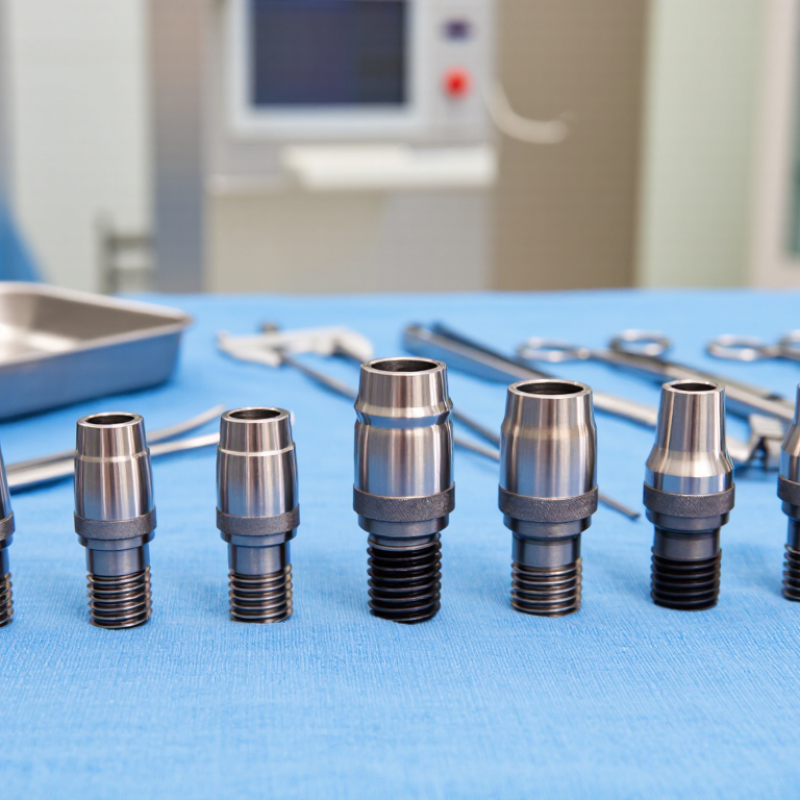
Radial head prostheses support elbow stability when fracture fragments cannot be reliably reconstructed. Epidemiological reviews report radial head fractures represent about 1.7% to 5.4% of adult fractures, according to Duckworth and colleagues in Injury. Severe comminution, ligament damage, and forearm instability may justify replacement. A suitable design should restore axial load transmission without overstuffing the joint. Modular stems help surgeons adjust diameter and length. Bipolar designs may improve motion, but clinical evidence remains mixed.
Common materials include cobalt-chromium alloys, titanium alloys, and pyrocarbon. Titanium offers lower density and useful biocompatibility. Cobalt-chromium provides strong wear resistance. Pyrocarbon may reduce stiffness mismatch, although long-term evidence is still developing. Buyers should review ISO 13485 quality documentation, ISO 10993 biocompatibility testing, fatigue data, and published follow-up results. The AO Surgery Reference stresses accurate sizing and preservation of elbow alignment. Small measurement errors can limit rotation or increase capitellar pressure. That detail is easy to underestimate.
Tips:
Compare radiographic outcomes, revision rates, and follow-up duration.
Ask for instrument compatibility details.
Check sterilization validation and traceability records.
Do not judge suppliers by catalog breadth alone.
The difficult part is admitting when evidence is incomplete.
A polished brochure cannot replace independent clinical data.
Procurement teams should also examine surgeon training, complaint handling, and regional regulatory documentation before global purchasing.
Selecting a radial head prosthesis supplier requires more than comparing prices. Global buyers should examine design files, material specifications, and intended clinical use. Ask for traceable certificates, current quality-system records, and documented risk controls. A polished website is not proof. Request audit summaries and independent test reports. Check whether production lots can be traced from raw material to final inspection. This detail matters when shipments cross several borders.
Clinical credibility deserves close attention. Review peer-reviewed evidence, surgeon feedback, and follow-up data for comparable implant designs. Ask how sizing, fixation, instrumentation, and revision support are managed. The supplier should explain sterilization status, packaging validation, shelf life, and storage conditions clearly. Vague answers are warning signs. Regulatory authorization must fit the destination market, not merely the manufacturing country. Local registration duties should be confirmed with qualified regulatory professionals.
Assess communication before signing a contract. Test response times with technical questions, sample documents, and a simulated complaint. Reliable suppliers provide controlled revisions, training materials, and a defined post-market reporting process. Inspect production capacity, contingency planning, and delivery records instead of trusting promised lead times. Price still matters, but unusually low pricing may hide weak validation or limited support. No checklist is perfect. Buyers can still overlook small inconsistencies between certificates, labels, and shipping documents. Record every unresolved question before approval.
| Rank | Anonymous Supplier Profile | Typical Product Offering | Common Implant Materials | Regulatory Evidence to Request | Quality Documentation | Customization Capability | Indicative MOQ | Indicative Lead Time | Best Fit for Global Buyers |
|---|---|---|---|---|---|---|---|---|---|
| 1 | Established orthopedic implant manufacturer | Modular radial head systems, stems, instrumentation, and revision components | Cobalt-chromium alloy, titanium alloy, stainless steel instruments | Current ISO 13485 certificate; applicable market registration; technical file and post-market surveillance records | Material certificates, dimensional inspection reports, sterilization validation, biocompatibility records | High; diameter, stem size, offset, instrumentation, packaging, and labeling options | Usually 10–50 sets for standard products | 4–8 weeks for standard stock; 8–16 weeks for customized items | Hospitals, distributors, and buyers requiring a broad product portfolio |
| 2 | Specialist upper-limb implant supplier | Radial head arthroplasty systems focused on elbow reconstruction and revision surgery | Cobalt-chromium, titanium, and selected polymer bearing options | ISO 13485; market-specific device registration; clinical evaluation and risk-management documentation | Design history file, risk analysis, fatigue testing, wear assessment, and traceability records | High; suitable for surgeon-led design input and specialty instrument development | Often 5–25 sets, subject to product configuration | 6–10 weeks for standard products; 12–20 weeks for new designs | Specialty distributors and orthopedic centers with upper-limb expertise |
| 3 | Contract manufacturer with medical-device capability | OEM radial head components, private-label systems, and precision-machined instruments | Titanium alloy, cobalt-chromium alloy, stainless steel, and PEEK for selected non-implant components | ISO 13485 scope covering the requested process; supplier controls; customer-owned regulatory responsibilities clearly defined | CMM inspection, process validation, batch traceability, surface-finish records, and nonconformance reports | Very high; suitable for drawings, tolerances, coating, marking, and packaging specifications | Commonly 25–100 pieces or sets, depending on tooling and validation needs | 8–14 weeks after design approval; longer for validation-intensive projects | Private-label brands, importers, and buyers with their own regulatory strategy |
| 4 | Large-scale export-oriented supplier | Standard radial head implants, trauma products, surgical instruments, and distributor support | Cobalt-chromium alloy, titanium alloy, and medical-grade stainless steel | ISO 13485; certificate of free sale where applicable; destination-country registration documents | Batch release records, sterilization certificates, certificate of origin, and export documentation | Medium to high; standard catalog products are usually preferred | Typically 10–50 sets for catalog items | 3–8 weeks when inventory is available; 8–12 weeks for production orders | International distributors seeking established export processes and consolidated shipments |
| 5 | Cost-focused regional manufacturer | Basic modular radial head systems and standard instrument trays | Cobalt-chromium alloy and titanium alloy | Verify ISO 13485 scope, product registration, sterilization method, and destination-market eligibility | Material certificates, inspection reports, lot traceability, and packaging validation evidence | Medium; customization may require minimum volumes and engineering fees | Often 50–200 pieces or sets | 6–12 weeks for standard orders | Price-sensitive buyers with local technical and regulatory support |
| 6 | Additive-manufacturing and patient-specific supplier | Patient-matched or complex-geometry components, planning support, and low-volume production | Titanium alloy and cobalt-chromium alloy; material selection depends on validated indication | ISO 13485; validated additive process; design controls; patient-specific regulatory pathway where applicable | Powder-lot traceability, build records, CT or dimensional inspection, cleaning validation, and mechanical testing | Very high; supports anatomical matching and complex geometry after clinical approval | 1–10 pieces per patient-specific order | 8–16 weeks, including design review and validation | Complex revision cases and buyers requiring patient-specific solutions |
| 7 | Distributor-supported niche supplier | Focused radial head portfolio with local training, inventory, and after-sales support | Usually cobalt-chromium alloy or titanium alloy, subject to product specification | Verify manufacturer authorization, current registration, labeling language, and importer responsibilities | Instructions for use, implant cards, batch records, complaint handling, and recall procedures | Low to medium; generally limited to catalog configurations | Usually 5–25 sets from local inventory | 1–6 weeks when regional stock is available | Hospitals that prioritize local training, technical support, and rapid replenishment |
For international buyers, the seven leading radial head prosthesis suppliers usually fall into distinct supplier profiles. Established orthopedic manufacturers often provide broad size ranges, surgical instruments, and documented quality systems. Trauma-focused specialists may offer implants designed for complex elbow fractures and revision procedures. Modular implant developers can support intraoperative flexibility through interchangeable heads and stems. Custom manufacturing partners may produce tailored components, but buyers should verify clinical validation and production controls. Regional distributors can simplify import procedures, local training, and after-sales communication. Contract manufacturers with OEM experience may support private-label programs under strict technical agreements. Hospital-proven suppliers often provide stronger evidence from published clinical use and surgeon feedback.
A dependable supplier should share material specifications, sterilization records, inspection methods, and traceability documents. Look for a quality system aligned with recognized medical-device standards. Confirm market authorization in the destination country before placing an order. Ask about radiographic visibility, head diameters, stem geometry, and compatibility with existing instruments. Small details matter during surgery. Packaging should protect sterile barriers through long-distance transport. Lead times, minimum order quantities, and replacement policies also deserve written confirmation. A low unit price can appear attractive, but that judgment may be incomplete. Training quality and revision support can affect the real cost. Buyers should request samples, technical files, and references from comparable hospitals. Supplier claims need independent review. Even experienced teams can overlook an unclear responsibility in the purchasing contract.
Selecting the seven best radial head prosthesis suppliers requires more than comparing catalog prices. A serious review should examine product range, quality systems, pricing, and long-term support.
The strongest suppliers usually offer multiple radial head diameters, stem sizes, offsets, and modular options. This matters when anatomy varies between patients. Check material specifications, surface finishes, instrument compatibility, and packaging details. Quality evidence should include ISO 13485 certification, batch traceability, biocompatibility data, and validated sterilization processes. Clinical references are valuable, but marketing claims deserve careful verification. Ask for current technical files and inspection records.
Price comparisons can be misleading. A low unit price may exclude instruments, samples, freight, documentation, or replacement parts. Request a landed-cost quotation with minimum order quantities and warranty terms clearly listed. Support is equally practical. Reliable suppliers provide responsive engineering assistance, surgical training materials, complaint handling, and stable delivery schedules. Test communication before signing; delayed answers often predict difficult after-sales service.
No supplier is perfect. A broad product range may increase inventory pressure, while a smaller range can simplify purchasing. I would also inspect sample machining personally, especially the taper and locking mechanism. One overlooked detail can create problems later. Final decisions should involve orthopedic surgeons, quality teams, and regulatory professionals, not purchasing staff alone.
7 Best Radial Head Prosthesis Suppliers for Global Buyers?
How to Select and Purchase the Right Radial Head Prosthesis Supplier
Selecting a radial head prosthesis supplier requires more than comparing catalog prices. Start with implant design, material quality, and available size options. Ask whether the system supports reliable anatomical restoration and stable fixation. Review technical drawings, surgical instruments, sterilization packaging, and shelf-life data. Small details matter.
A dependable supplier should provide current quality certifications, destination-specific regulatory documents, and clear lot traceability. Request clinical evidence that matches the intended patient population and surgical technique. Examine complaint handling, recall procedures, delivery records, and inventory continuity. A polished website proves very little. Verifiable documents matter more.
Speak with surgeons and operating-room staff before purchasing. Their feedback can reveal whether instruments feel intuitive and whether sizing is practical during surgery. Ask suppliers for training materials, technical support, and responses to difficult cases. Pricing deserves attention, but unusually low costs may hide weaker documentation or inconsistent production. I would also compare several suppliers using the same checklist, because memory can distort a purchasing decision. One overlooked issue is local service. Time-zone delays can become serious when a hospital needs urgent technical guidance. Check response times in writing, and review the agreement carefully before placing a large order.
How to Select and Purchase the Right Radial Head Prosthesis Supplier
The chart presents a practical 100-point procurement weighting model for comparing radial head prosthesis suppliers. Regulatory compliance and clinical evidence receive the highest weights because they directly influence patient safety, market access, and purchasing risk. Buyers can adjust the weighting according to local approval requirements, hospital protocols, and budget priorities.
Compare implant designs, material specifications, size options, instruments, quality systems, pricing, and support.
Request current quality certificates, technical files, material records, risk controls, and independent test reports.
Review peer-reviewed evidence, surgeon feedback, and follow-up data for comparable designs.
Examine diameters, stem sizes, offsets, modular features, surface finishes, and instrument compatibility.
Request landed-cost quotations covering instruments, samples, freight, replacement parts, warranties, and minimum orders.
Send technical questions, sample-document requests, and a simulated complaint.
Verify authorization for the destination market with qualified regulatory professionals.
Review production capacity, delivery records, contingency planning, inventory continuity, and local technical service.
This guide provides a practical overview of the Radial Head Prosthesis, covering its design principles, material options, sizing considerations, fixation methods, and common clinical applications. It explains how implant geometry and material selection may influence elbow stability, range of motion, durability, and compatibility with surgical requirements. The article also outlines key factors for evaluating international suppliers, including manufacturing experience, quality management systems, regulatory documentation, product customization, traceability, and after-sales support.
A comparison of seven leading supplier types helps global buyers assess product range, quality consistency, pricing structure, production capacity, delivery reliability, and technical assistance without relying solely on promotional claims. The final section offers a structured purchasing approach: define clinical and market requirements, verify certifications and testing records, review samples and documentation, clarify warranty and support terms, and evaluate total procurement costs. By following these steps, hospitals, distributors, and medical procurement teams can select a dependable Radial Head Prosthesis supplier that balances performance, compliance, service, and long-term value.