
Expert insights, surgical technique guides, and medical device updates from industry leaders.
Exploring advancements in joint arthroplasty, trauma management, and spinal systems.
Choosing the right Arthroscopy Implants begins with the procedure, the patient’s anatomy, and the surgeon’s treatment goals. An implant that suits one repair may not fit another. Small details matter. A few millimeters can affect placement, tissue tension, and the room available for instruments inside a joint.
This guide outlines the factors that help clinicians compare implant options. These include material, size, fixation method, delivery system, and compatibility with the planned technique. The intended tissue and location also matter. For example, an implant used in a shoulder repair may face different mechanical demands from one used in a knee procedure. Product instructions, clinical evidence, and applicable safety information should be reviewed together, not in isolation.
Evidence deserves careful attention. Bench testing can describe mechanical performance, while clinical studies may report healing, complications, or revision rates. Neither automatically predicts an individual outcome. Study design, follow-up time, and patient characteristics can change how useful a result is. The answer is not always obvious, and published evidence may not settle every trade-off. That uncertainty should be acknowledged.
A practical comparison also considers handling, visibility, and whether the device fits the surgeon’s established workflow. Cost and availability may influence planning, but they should not replace clinical suitability or verified product information. This overview offers a structured starting point, not a substitute for professional judgment. The best choice is the one supported by the patient’s needs, the procedure, and reliable evidence.
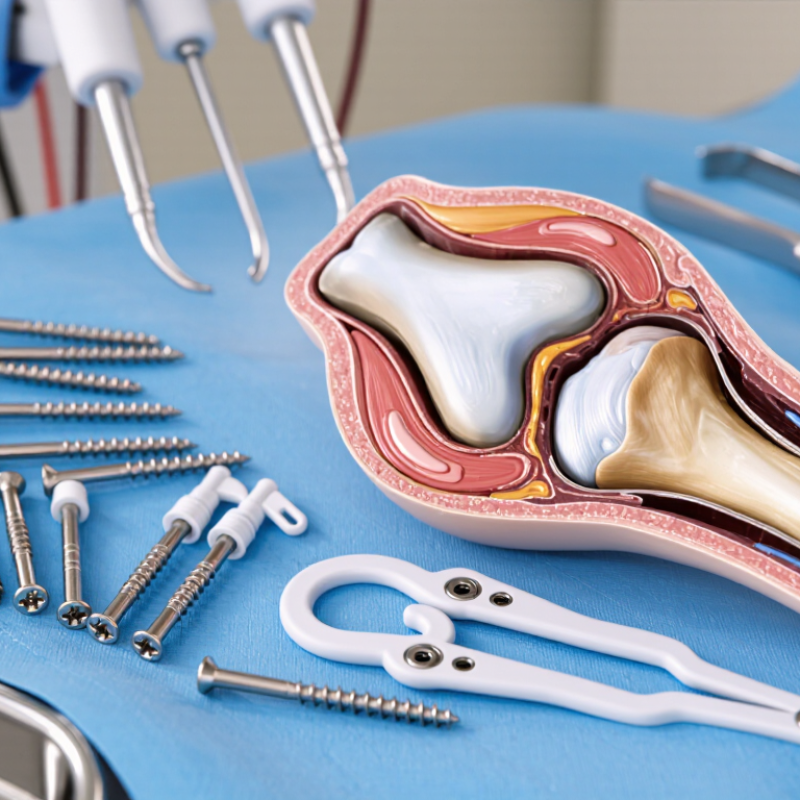
Arthroscopy implants are small devices used during keyhole surgery to repair or stabilize tissue inside a joint. Common examples include suture anchors, screws, and fixation buttons. An anchor may hold a repaired shoulder tendon against bone, while a screw can help secure a ligament graft in the knee. Not every arthroscopy needs an implant. The choice depends on the injury, the tissue involved, and the repair plan. Some devices remain in the body; others are designed to gradually break down. Materials and designs vary, so the surgeon’s reasoning matters more than a device’s appearance.
Tips: Ask what the implant is intended to hold, what material it uses, and whether it may affect future imaging or treatment. Discuss allergies, previous operations, and your expected activity level. Ask about rehabilitation, too; careful healing is part of the repair.
There is no single best implant for every patient. Bone quality, tissue strength, joint anatomy, and the forces placed on the repair all matter. A surgeon may weigh these details alongside the device’s handling and clinical evidence. The trade-offs are not always obvious, even to patients who have read extensively. That uncertainty deserves an honest conversation, not a quick promise. A qualified orthopedic surgeon can explain which options suit your procedure and why.
The right implant depends on what needs repair, where it sits, and how much load the tissue must تحمل. For a shoulder labral repair, small anchors can secure sutures to bone around the socket. A rotator cuff repair may need a different anchor configuration to spread tension across the tendon. In the knee, meniscus tears may be treated with sutures or compact fixation devices, while ACL reconstruction commonly uses screws or buttons to hold a graft in place. Small details matter.
Material and fixation matter, too. A surgeon may consider bone quality, tear pattern, tissue condition, and the patient’s activity needs when comparing absorbable and nonabsorbable options. Imaging helps define the injury, but it cannot answer everything about tissue strength. A tidy plan can change once the joint is viewed directly. That is not necessarily a failure; it is part of careful decision-making. The implant should support the repair without adding unnecessary bulk or placing fixation where it could interfere with nearby structures. There is no universal best choice. Discussing the available options, expected healing, and possible trade-offs with an orthopedic surgeon helps connect the implant to the actual procedure and injury.
Material choice affects strength, imaging, and how an implant behaves over time. Titanium offers strong fixation, but it can create imaging artifacts. PEEK is radiolucent, which may make follow-up images easier to interpret. Bioresorbable polymers gradually break down, yet their behavior depends on implant design and local bone conditions. No material is best for every repair. Bone quality, tissue type, and expected loading all matter.
Design shapes how an implant grips and holds tissue. For example, an anchor’s thread pattern and insertion angle can influence its purchase in bone. Its eyelet must also guide sutures without adding unnecessary friction. Fixation methods vary: anchors secure soft tissue, while screws may hold grafts within bone tunnels. Small details matter. A device that feels secure during insertion may still face different forces during healing. That distinction is easy to underestimate. Surgeons weigh the procedure, anatomy, and available clinical evidence when choosing among options. Patients can ask what material is planned, how it will be fixed, and whether imaging or follow-up may be affected. The trade-offs are not always obvious, even to careful readers.
Assessing Safety, Compatibility, and Clinical Evidence
Safety starts with the implant’s materials, fixation method, and intended use. Check whether its instructions cover the planned procedure and whether imaging, sterilization, or tissue-contact requirements fit the patient. FDA’s MAUDE database collects medical-device adverse-event reports, but the agency warns that reports may be incomplete or unverified and cannot establish how often an event occurs. Treat a reported complication as a signal to investigate, not a risk rate.
Compatibility is practical, not just technical. Confirm that the implant works with the instruments and fixation system used in the operating room. Review allergies, bone quality, activity level, and any previous hardware. A device that looks suitable on paper may be awkward in a small joint or difficult to revise later. Those details deserve a second look.
Clinical evidence should match the implant, procedure, and patient group as closely as possible. In a 2017 BMJ randomized trial, 146 adults with degenerative meniscal tears received arthroscopic surgery or placebo surgery; at five years, surgery showed no clinically relevant advantage. The study did not compare implants, but it is a useful reminder: device choice cannot compensate for weak indications. Ask whether published studies report follow-up length, complications, and patient-reported outcomes—not just successful placement. Evidence can still be imperfect. That is worth acknowledging.
Selecting an implant should be a conversation with the orthopedic surgeon, not a choice based on a catalog. The surgeon considers the injured tissue, bone quality, tear shape, activity goals, and planned rehabilitation. A small anchor must hold securely without crowding nearby tissue. Small details matter. Ask why a particular fixation method fits your anatomy and what alternatives exist.
Evidence can guide that discussion, but it does not dictate one answer. The American Academy of Orthopaedic Surgeons’ 2019 rotator cuff guideline found that double-row repair may reduce re-tears in tears larger than 3 cm. For small and medium tears, it found no improved patient-reported outcomes over single-row repair. These findings concern rotator cuff repairs; they should not be applied automatically to every arthroscopy procedure.
Bring questions about implant material, expected healing, and possible removal or revision. Ask how the surgeon’s experience and your imaging affect the recommendation. A scan cannot show everything, and tissue quality may look different during surgery. That uncertainty deserves an honest conversation. No implant can replace sound technique, realistic recovery planning, and follow-up care.
Selecting an Implant with the Orthopedic Surgeon
Approximate Young’s modulus values illustrate how implant materials differ in stiffness; they do not predict fixation strength or clinical outcomes. Actual values vary by material grade and processing. Discuss the procedure, bone quality, fixation needs, imaging considerations, and material options with your orthopedic surgeon.
They help hold or stabilize tissue during keyhole joint surgery. Small anchors can secure shoulder tendons or labral tissue to bone.
No. The injury and repair plan guide that choice. Some repairs need sutures alone, while others need fixation devices.
Shoulder repairs may use small anchors. Knee ligament grafts may be held with screws or buttons. Meniscus repairs may use sutures or compact devices.
They consider the injury, bone quality, tissue strength, joint anatomy, and expected activity. There is no single best option.
Some are designed to remain; others gradually break down. Ask what material is planned and what that means for your repair.
It may. The effect depends on the material and device. Ask your surgeon whether it could matter for imaging or later procedures.
Mention allergies, earlier operations, and your usual activities. Ask what the implant will hold and how rehabilitation supports healing. Small details matter.
Not necessarily. Evidence should match the procedure and patient group. A study of surgery versus placebo does not directly compare implants.
Yes. Direct viewing may reveal tissue conditions that imaging did not show. That is not always a failure, though it can feel unsettling.
Choosing the right Arthroscopy Implants begins with understanding how each implant supports a specific joint procedure and injury. The surgeon considers the affected anatomy, the tissue being repaired, and the stability needed during healing. Implant types should be matched to the procedure rather than selected as a one-size-fits-all solution, since different repairs may call for different shapes, functions, and methods of attachment.
Material, design, and fixation also matter. These features can influence implant strength, fit, compatibility with the patient’s needs, and performance in the joint. Safety information and relevant clinical evidence help guide the decision, while the patient’s medical history and treatment goals provide important context. Ultimately, implant selection is a collaborative process: an orthopedic surgeon can explain the available options, weigh their potential benefits and limitations, and recommend an approach tailored to the injury and planned procedure.