
Sharma Orthopedic Surgical Insights & Clinical Blog
Knowledge Hub

Orthopedic Innovations & Clinical Blog

Expert insights, surgical technique guides, and medical device updates from industry leaders.

Global Orthopedic Updates & Research
Global Trends

Surgical Insights & Medical Tech

Exploring advancements in joint arthroplasty, trauma management, and spinal systems.

0%

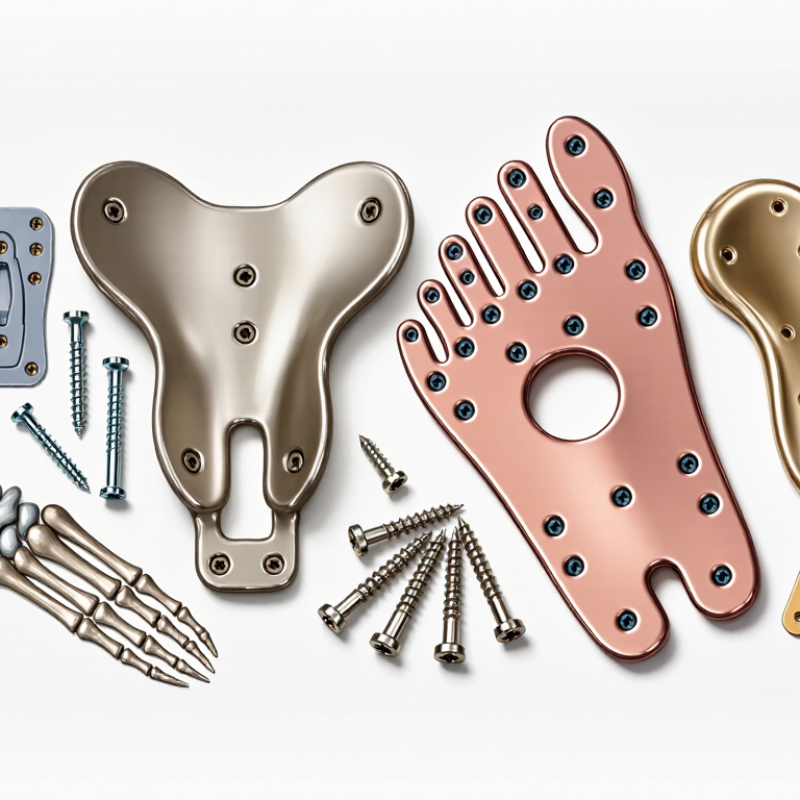
Choosing the right Foot and Ankle Plates is not simply a matter of matching metal to bone. These implants help surgeons stabilize fractures or support corrective procedures, but no single design suits every case. Selection depends on injury location, bone quality, anatomy, soft-tissue condition, and the planned surgical approach. A plate near the ankle joint may need a different shape from one used along the heel or midfoot. Details matter. A design that looks suitable in a catalog may not match a patient’s anatomy or the surgeon’s plan.

Plate shape, thickness, screw configuration, and material can all influence the choice. Low-profile designs may help where soft tissue is limited, while other cases call for different contours or fixation patterns. The surgeon considers imaging, the fracture pattern, and the available implant system. These decisions require clinical judgment; product descriptions alone cannot determine what is appropriate. Fit matters. So does the surrounding tissue.

This guide outlines practical factors to discuss when comparing Foot and Ankle Plates, including anatomical fit, fixation needs, and system compatibility. It also explains why the same plate may not work equally well for two similar-looking injuries. That can be frustrating, and there is no simple checklist that replaces examination and surgical planning. Patients should ask their treating specialist how the proposed implant fits their specific condition, what alternatives exist, and which details may affect recovery.
How to Choose the Right Foot and Ankle Plates?

Define the fracture pattern and anatomy before selecting a plate system

Before choosing a foot or ankle plate, define the fracture pattern and the anatomy involved. Review the anteroposterior, mortise, and lateral images for displacement, joint involvement, and fragment size. CT can clarify articular extension or hidden comminution when plain films leave uncertainty. Small details matter. A population-based study of 9,767 ankle fractures reported an incidence of 168.7 per 100,000 person-years (Elsoe et al., Foot and Ankle Surgery, 2018). That scale reinforces the need for a consistent assessment, not a one-plate-fits-all approach.

Match plate position and contour to the fracture location, bone shape, and available fixation corridors. A distal fibular pattern may need a different construct from a medial malleolar fracture or a posterior fragment involving the joint surface. Consider soft-tissue condition, bone quality, and whether screw paths can capture the key fragments without crowding the joint. The images can look clear, yet small fragments may still be difficult to control.

The choice should follow the reduction plan and the patient’s anatomy, with intraoperative imaging used to check alignment and screw position. Not every case is textbook. I would pause when the fracture line, fragment size, or bone quality does not fit the initial plan; that uncertainty deserves review rather than assumption. A plate can support fixation, but it cannot compensate for an unclear understanding of the fracture.

Match plate geometry to the site and screw options, commonly 2.7–4.5 mm

Choosing a foot or ankle plate starts with the bone and fracture pattern, not the catalog shape. A narrow plate may suit a small metatarsal, while a T- or Y-shaped plate can help address a joint-adjacent area. Curved surfaces, limited soft-tissue coverage, and nearby joints all affect fit. A plate that looks right on an image may still need careful contour assessment in the operating room.

Screw options matter just as much. Systems commonly offer diameters from 2.7 to 4.5 mm, but the appropriate size depends on the bone, available space, and fixation plan. Smaller screws may fit narrower bones; larger options may provide different purchase where anatomy permits. Check screw length and trajectory against joint surfaces and the far cortex. Locking and non-locking screws also serve different roles, so compatibility with the plate should be confirmed.

Details matter. A low-profile design can be useful where soft tissue is thin, yet profile alone does not determine comfort or stability. Compare the plate’s holes, contour, and intended site with imaging and the patient’s anatomy. There is no perfect template. Even familiar patterns can vary, and that uncertainty deserves a second look. Final selection should follow the treating surgeon’s assessment and the implant system’s instructions.

Compare implant materials with ASTM F136 titanium and ASTM F138 steel standards

When comparing foot and ankle plates, check the material specification, not just the metal name. ASTM F136 covers wrought titanium alloy, commonly Ti-6Al-4V ELI. ASTM F138 specifies stainless steel bars and wire for surgical implants, commonly a low-carbon, vacuum-melted alloy. These standards describe material requirements; they do not, by themselves, establish that a finished plate suits every patient or fracture.

The differences can matter in practical ways. Titanium alloy is relatively lightweight, while stainless steel is often chosen for its familiar mechanical behavior and established use in implant manufacturing. Imaging appearance can also differ, depending on the material and the scan. Small details count. Ask whether the plate’s documented material matches the stated ASTM specification, and whether the complete device has been evaluated for its intended use. A specification is useful, but it is not the whole story.

For a small bone near the ankle, plate shape, screw placement, and fit against the bone may be just as important as material. A surgeon may consider fracture pattern, bone quality, prior sensitivities, and imaging needs when discussing options. I would not treat one material as automatically superior; that would oversimplify a real clinical choice. Device-specific evidence and the treating clinician’s judgment matter.

How to Choose the Right Foot and Ankle Plates? Compare ASTM F136 Titanium and ASTM F138 Steel

Comparison Dimension ASTM F136 Titanium Alloy ASTM F138 Stainless Steel Foot and Ankle Selection Consideration
Material designation Wrought titanium-6aluminum-4vanadium extra-low interstitial alloy (Ti-6Al-4V ELI), intended for surgical implant applications. Wrought 18 chromium-14 nickel-2.5 molybdenum stainless steel for surgical implant applications. Confirm that the plate material and supplied product meet the applicable ASTM specification and device requirements.
Typical composition Titanium balance, with approximately 5.5–6.5% aluminum and 3.5–4.5% vanadium; the standard also limits interstitial elements and impurities. Iron balance, with approximately 17–19% chromium, 13–15% nickel, and 2.25–3.00% molybdenum; the standard also limits carbon and other elements. Review the applicable standard and material test certificate for verified chemistry; composition alone does not determine clinical suitability.
Density Approximately 4.4 g/cm³. Approximately 8.0 g/cm³. Titanium is substantially lighter for the same volume, which may matter when plate mass is a design consideration.
Elastic modulus Approximately 110 GPa. Approximately 190–200 GPa. Titanium’s lower modulus may influence construct stiffness, but plate geometry, thickness, fixation, and bone quality also strongly affect mechanical behavior.
Corrosion behavior Forms a stable passive oxide layer and is widely used in implant applications. Chromium- and molybdenum-containing stainless steel is designed to resist corrosion in implant environments. Both materials require appropriate manufacturing, surface condition, and handling. Avoid assuming either is immune to corrosion or fretting-related damage.
Imaging considerations Non-ferromagnetic in typical implant forms; the device can still produce imaging artifacts. Generally non-ferromagnetic in its specified wrought condition, though magnetic response can vary with processing and cold work; the device can produce imaging artifacts. MRI safety and image artifact depend on the complete device and its labeling, not only the material name. Follow the device’s MRI instructions.
Mechanical properties Strength and ductility depend on product form, dimensions, processing, and material condition. Strength and ductility depend on product form, dimensions, processing, and material condition. Compare certified properties for the actual plate product and evaluate the intended loading, anatomy, fixation pattern, and surgical technique.
Potential advantages Lower density and lower elastic modulus than implant-grade stainless steel. High corrosion resistance and a long history of use in surgical implant applications. Balance material characteristics with plate profile, contourability, screw compatibility, availability, and the specific clinical indication.
Key checks before selection Verify ASTM F136 conformance, product condition, dimensions, surface finish, and device-specific labeling. Verify ASTM F138 conformance, product condition, dimensions, surface finish, and device-specific labeling. Use the current applicable ASTM edition, technical documentation, and clinician judgment. Do not select a plate on material properties alone.

Note: Density and elastic-modulus figures are approximate reference values; actual values can vary by product and processing. ASTM material compliance does not by itself establish the safety or performance of a finished plate. Refer to the applicable standard edition, material certification, and device labeling.

Review plate-bending evidence using ASTM F382 test methods

Choosing a foot or ankle plate requires more than comparing thickness or material. ASTM F382, the standard test method for metallic bone plates, evaluates bending strength, bending stiffness, and bending fatigue through controlled mechanical tests. Its four-point bend setup applies load at two locations, creating a defined bending region. These measurements help compare plate designs under consistent conditions. Small details matter: plate contour, hole spacing, and the test span can all affect the result.

Compare results only when the test setup is comparable. A plate with greater bending stiffness may resist deformation, but stiffness alone does not establish suitability for a specific fracture or patient. ASTM F382 provides a repeatable engineering framework, not a universal clinical pass mark. Test reports should identify specimen dimensions, loading conditions, and sample counts; without these, a headline strength value can mislead. Review fatigue results too, since repeated loading may reveal differences that a single bend test misses. Real anatomy is messier. Bone quality, fixation pattern, and healing time also shape performance, so laboratory figures should inform—not replace—clinical judgment. Source: ASTM International, ASTM F382, Standard Specification and Test Method for Metallic Bone Plates.

How to Choose the Right Foot and Ankle Plates?

Review plate-bending evidence using ASTM F382 test methods

The bars indicate whether ASTM F382 includes a method for assessing each outcome; 1 means “included,” not a plate score. Static four-point bending evaluates bending stiffness and bending strength, while bending-fatigue testing evaluates fatigue performance. Compare results obtained under the same test conditions; the standard does not establish a universal pass threshold or determine clinical suitability.

Assess soft-tissue fit, fixation strategy, and postoperative loading requirements

How to Choose the Right Foot and Ankle Plates?

A plate must fit the bone and the soft-tissue envelope around it. Check whether its profile could irritate thin skin, tendons, or nearby footwear pressure points. Swelling can change the picture. A plate that seems unobtrusive during surgery may feel prominent once postoperative swelling settles. Review imaging and, where appropriate, assess the planned position against the patient’s anatomy. Skin tells the story. Sometimes the detail is easy to miss.

The fixation strategy should match the fracture pattern, bone quality, and available screw paths. A simple fracture may call for compression, while a fragmented area may need a construct that bridges the injury and preserves alignment. Confirm that screws can achieve useful purchase without entering a joint or obstructing other fixation. Small changes in plate position matter. In practice, the ideal plan may need adjustment after the bone is exposed; anatomy does not always follow the image.

Postoperative loading requirements should influence plate selection from the start. Consider whether the patient can reliably follow weight-bearing limits, and whether the construct can support the expected rehabilitation plan. Foot and ankle injuries often tolerate loading differently, so no plate alone determines when walking is safe. Fracture stability, soft-tissue healing, bone health, and follow-up imaging all matter. Discuss the plan with the treating surgeon, especially when pain, wound changes, or unexpected difficulty bearing weight develops.

FAQS

What should be reviewed before choosing a foot or ankle plate?

Review anteroposterior, mortise, and lateral images for displacement, joint involvement, and fragment size. CT may clarify hidden comminution or articular extension. Small details matter.

How does fracture location affect plate selection?

Match plate position and contour to the bone, fracture site, and available screw paths. A distal fibular fracture may need a different construct from a medial malleolar fracture.

What plate shapes and screw sizes are commonly considered?

Narrow plates may suit smaller bones, while T- or Y-shaped plates can address some joint-adjacent areas. Systems commonly include screws from 2.7 to 4.5 mm. Anatomy guides the choice.

Why check screw direction and length?

Screws should capture key fragments without entering a joint or crowding other fixation. Check their paths against the joint surface and far cortex. A small angle can matter.

How should soft tissue affect plate choice?

Consider thin skin, tendons, swelling, and pressure from footwear. A low-profile plate may help, but profile alone cannot guarantee comfort. Skin tells the story.

Do locking and non-locking screws serve the same purpose?

They can serve different roles. Confirm that the selected screws are compatible with the plate and suit the fixation plan. Not always interchangeable.

Should rehabilitation and weight-bearing plans influence plate selection?

Yes. Consider expected loading and whether the patient can follow weight-bearing limits. Fracture stability, healing, bone health, and follow-up imaging also affect when walking is safe.

What if the fracture does not fit the initial plan?

Pause and reassess the fracture line, fragment size, bone quality, and imaging. Even a clear image can mislead. I might still overlook a small fragment, so uncertainty deserves review.

Conclusion

Choosing the right Foot and Ankle Plates begins with understanding the fracture pattern, bone anatomy, and intended fixation goals. Plate shape and screw options should suit the specific site, with commonly used screw diameters ranging from 2.7 to 4.5 mm. Material selection is another consideration: ASTM F136 describes requirements for titanium alloy implants, while ASTM F138 covers stainless steel used for surgical implants. These standards help define material characteristics, but the choice should also reflect the clinical and mechanical demands of the case.

Plate performance can be reviewed using bending tests described in ASTM F382, while recognizing that laboratory results do not alone predict outcomes in every patient. The plate should fit the local anatomy and soft tissues, and the fixation plan should account for bone quality, fracture stability, and screw placement. Finally, postoperative loading should be considered when selecting a construct, as the rehabilitation plan and expected forces can influence the support required.

Evelyn

Evelyn

Evelyn is a highly experienced marketing professional with a strong understanding of the company’s products, customers, and evolving market needs. Through a thoughtful combination of industry knowledge, strategic insight, and clear communication, Evelyn helps present complex product information in......