
Expert insights, surgical technique guides, and medical device updates from industry leaders.
Exploring advancements in joint arthroplasty, trauma management, and spinal systems.
Choosing Intramedullary Interlocking Nails begins with the fracture, not the product catalog. The nail must match the bone’s anatomy, fracture location, and stability needs. Length, diameter, curvature, and locking-screw options matter. Small differences matter. A nail that appears suitable on a specification sheet may not fit the patient’s anatomy or the planned fixation strategy.
The clinical need is substantial. The Global Burden of Disease Study 2019 estimated 178 million new fractures worldwide that year (GBD 2019 Fracture Collaborators, The Lancet Healthy Longevity, 2021). The World Health Organization reported about 1.19 million road-traffic deaths annually (WHO, Road Traffic Injuries fact sheet, 2023), underscoring one major source of severe trauma. These figures describe broad burdens; they do not tell a surgeon which implant to choose. That distinction is easy to overlook.
A practical comparison should consider the bone involved, fracture pattern, available imaging, surgical approach, and the manufacturer’s verified specifications. Material and design features matter, but they should be assessed alongside clinical evidence and the treating team’s experience. The fit is decisive. This guide examines those factors and the questions worth asking before selection. No checklist replaces patient-specific judgment, and product claims should be checked against reliable documentation. Even a careful comparison has limits; that is worth saying plainly.
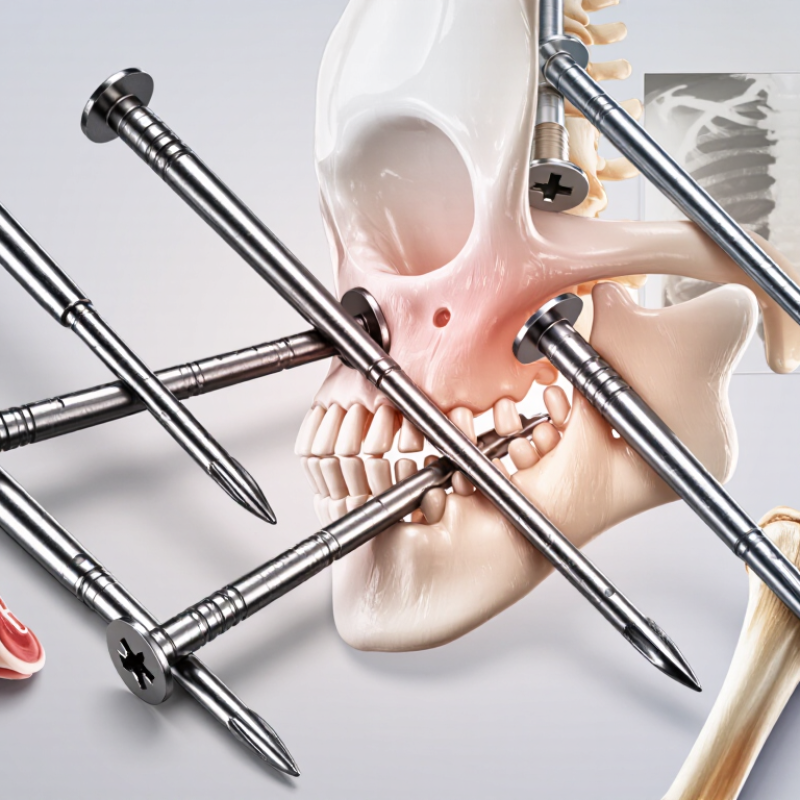
Choosing an intramedullary interlocking nail starts with the fracture, not the implant. Review X-rays for its location, direction, displacement, and distance from the ends of the bone. A simple midshaft break may offer stable contact between the fragments. A comminuted fracture, with several small pieces, can be less stable and may need careful control of length and rotation.
Details matter. When plain films leave key questions unanswered, additional imaging may help clarify the pattern. Still, an image cannot show every surgical concern, including soft-tissue condition or the patient’s overall health.
Treatment goals also shape the choice. Consider whether the aim is to restore alignment, allow early movement, or support gradual return to weight bearing. Fractures near a joint may require particular attention to nail fit and locking-screw placement, since controlling the shorter bone segment can be challenging. The patient’s bone quality, activity needs, and ability to follow rehabilitation guidance matter too.
No classification captures every messy fracture. A plan that looks tidy on paper may need adjustment in the operating room. The treating surgeon should weigh imaging, examination findings, and practical recovery goals together.
Intramedullary nails differ in diameter, material, and design, but reamed versus unreamed construction is a key clinical choice. Reaming can create room for a larger nail; the trade-off is added disturbance to the canal’s blood supply. In the SPRINT randomized trial, 1,319 adults with tibial shaft fractures received reamed or unreamed nails. The investigators found no significant overall difference in their primary outcome, while results differed between open and closed fractures (Canadian Orthopaedic Trauma Society, Journal of Bone and Joint Surgery, 2008). That evidence concerns tibial fractures, not every bone or patient. Fit matters.
Locking configuration controls how well the nail resists rotation, shortening, and bending. Static locking uses screws to restrict movement at both ends, often suiting length-unstable or comminuted patterns. Dynamic locking permits limited axial settling, which may help a stable fracture compress during healing; it is less suitable when the fragments could shorten or rotate. Count and position matter, too: screws should engage sound bone, and distal options must match the fracture’s location. A clean rule is tempting, but anatomy resists one. Surgeons compare fracture stability, bone quality, canal shape, and imaging before choosing a pattern. Even a well-locked nail can fail if the configuration does not match the fracture.
Matching nail dimensions to bone anatomy is more than choosing a length and diameter from a chart. The surgeon considers the bone’s shape, canal width, curvature, and the fracture’s location. A few millimeters can matter.
The canal may narrow or curve along its length, so one measurement does not describe the whole bone. Calibrated X-rays help estimate nail length and diameter; other imaging may be useful when anatomy is unclear. The nail must also allow locking screws to sit in suitable bone above and below the fracture. Too large a diameter can make insertion difficult or stress the cortex, while a poor fit may compromise stability.
Measurements are useful, not a perfect promise. A patient’s actual anatomy can differ from what an image suggests, and fracture alignment may change the practical choice. The treating orthopedic team weighs these details alongside bone quality and the specific injury. A careful fit matters. The final selection should be based on clinical assessment and the implant’s approved sizing guidance, not a general rule applied to every patient.
Material choice affects handling, imaging, and long-term performance. Titanium alloys are relatively lightweight and may produce less imaging artifact, while stainless steel offers different strength and cost characteristics. Neither is automatically best for every fracture. The treating team should consider the patient’s anatomy, bone quality, and the demands placed on the implant.
Small details matter. Confirm that nail length and diameter suit the medullary canal, and that locking screws match the nail’s holes and dimensions. A catalog match can still be wrong in practice if measurements or system components differ. Check the intended fracture pattern, locking options, and any need for reaming with a qualified orthopedic team.
Instrumentation deserves equal attention. Verify that targeting guides align reliably, and that drills, depth gauges, insertion handles, and extraction tools are available and compatible. A guide that shifts slightly can complicate screw placement. Review the device instructions and local sterilization procedures before surgery; missing tools or unclear steps can disrupt planning. Even careful checks have limits, so teams should document uncertainties and resolve them before the procedure.
How to Choose Intramedullary Interlocking Nails
Confirm the Choice Through Surgical Planning and Safety Checks
Confirm nail choice against the fracture pattern, canal diameter, and planned entry point. Review imaging in two planes; measure length and diameter, and check whether the fracture needs static or dynamic locking. Consider bone quality, soft-tissue condition, and the patient’s anatomy. A measurement can look convincing on a screen and still deserve a second check.
Planning must include the tools, not just the implant. Verify compatible reamers, targeting guides, locking screws, and backup sizes before the patient enters the operating room. Confirm that fluoroscopy can show the fracture, nail position, and distal locking trajectory. The WHO checklist study across eight hospitals reported complications falling from 11.0% to 7.0% after checklist introduction; mortality fell from 1.5% to 0.8% (Haynes et al., New England Journal of Medicine, 2009). These findings concern surgery broadly, not intramedullary nailing alone. Still, they support deliberate team checks.
Tips: Before incision, have the team confirm patient, side, fracture level, planned nail dimensions, and backup plan aloud. Small details matter. I would not treat a template measurement as a final answer; anatomy and imaging can disagree.
Use this checklist to structure surgical planning. Each bar marks a planning item to confirm; it does not represent a patient-specific measurement or clinical outcome. Final implant selection depends on the fracture, anatomy, imaging, and the treating surgical team’s judgment.
Reaming widens the bone canal to make room for a larger nail. It can also disturb the canal’s blood supply. Fit matters.
No. A randomized trial involving 1,319 adults with tibial shaft fractures found no significant overall difference in its primary outcome. Results differed between open and closed fractures, and the findings may not apply to every bone or patient.
Static locking restricts movement at both ends, which can suit unstable or comminuted fractures. Dynamic locking allows limited settling and may help a stable fracture compress during healing. Not always suitable.
The team considers canal width, bone curvature, fracture location, and bone quality. Calibrated X-rays can help estimate dimensions. A few millimeters can matter.
No. A patient’s anatomy may differ from the image, and alignment can change the practical choice. A chart can mislead.
Titanium alloys are relatively lightweight and may create less imaging artifact. Stainless steel has different strength and cost characteristics. Neither material is best for every fracture.
Screws need to match the nail’s holes and dimensions, then engage sound bone above and below the fracture. Their position matters.
The team should confirm that guides, drills, depth gauges, and insertion or extraction tools are compatible and available. A guide that shifts slightly can complicate screw placement. Checks have limits.
Choosing Intramedullary Interlocking Nails begins with understanding the fracture pattern and the goals of treatment, including the stability and alignment needed during healing. Different nail designs and locking configurations can provide different forms of support, so the choice should reflect the fracture’s location, complexity, and expected loading. Nail length and diameter should also be matched carefully to the patient’s bone anatomy to support proper fit and placement.
Material properties, compatibility with other surgical components, and the availability of suitable instruments are additional factors to assess. Before proceeding, the surgical plan should be reviewed to confirm the selected nail and locking approach are appropriate. Safety checks should consider imaging, insertion technique, and potential anatomical constraints. A systematic evaluation helps guide a well-informed selection while keeping the treatment plan tailored to the individual fracture and patient.