
Expert insights, surgical technique guides, and medical device updates from industry leaders.
Exploring advancements in joint arthroplasty, trauma management, and spinal systems.
Choosing reliable Large Fragment Locked Plates suppliers requires more than comparing catalog pages or product prices. These systems support fracture fixation where plate strength, screw stability, and accurate anatomical alignment matter. A practical review should examine manufacturing experience, material quality, design options, and documented quality controls.
This overview introduces ten suppliers with international visibility in orthopedic trauma care. The selection considers product portfolios, regulatory information, distribution reach, technical support, and evidence of consistent manufacturing practices. Where available, attention is given to titanium or stainless-steel options, locking screw compatibility, plate contouring, instrument trays, and sterile packaging procedures. These details can affect operating-room efficiency and surgeon confidence.
Small details matter.
Procurement teams should also review ISO 13485 certification, regional registrations, traceability systems, and post-market support. Certification alone does not prove superior clinical performance. Hospital requirements, surgeon preference, and local regulatory pathways can change the final decision. Public information is often incomplete. That limitation matters.
The suppliers discussed here should therefore be treated as candidates for careful evaluation, not automatic recommendations. Buyers may need to request technical files, material specifications, validation records, and independent clinical references before approval. A well-designed plate can still perform poorly when the wrong size, screw length, or surgical technique is selected. This introduction aims to provide a balanced starting point for comparing global manufacturers and understanding what separates established orthopedic suppliers from less transparent competitors.
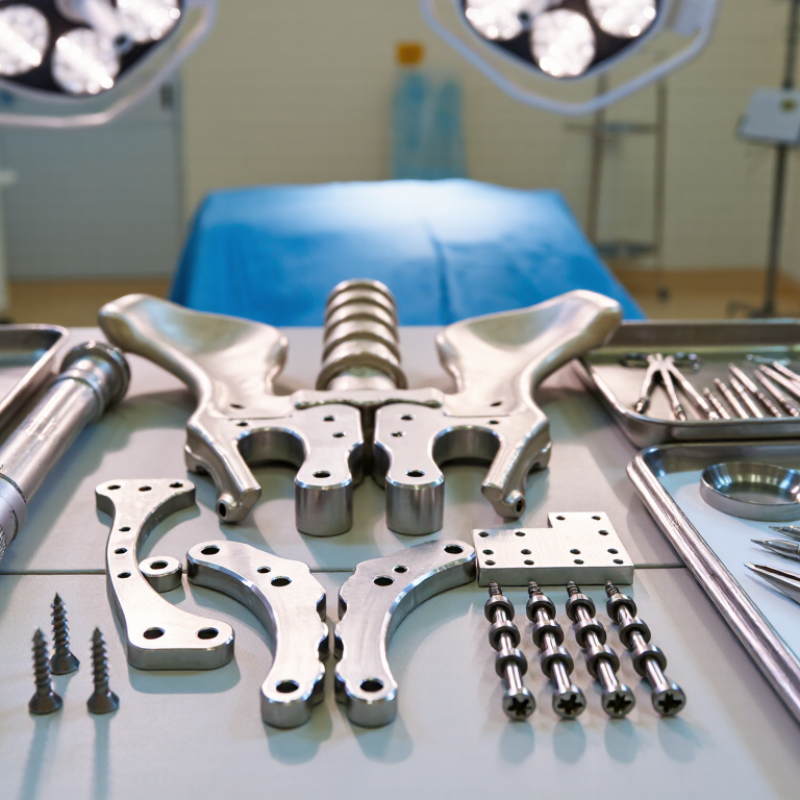
Large fragment locking plates are internal fixation devices designed for major bone fragments, often in the femur, tibia, humerus, and pelvis. “Large fragment” commonly describes systems using larger-diameter screws, although definitions vary by anatomy and manufacturer. Locking screws thread into plate holes, creating a fixed-angle construct. This design can improve stability in weak or fragmented bone.
Clinically, these plates help maintain alignment when conventional screw compression is difficult. They are useful for comminuted fractures, metaphyseal injuries, and selected osteoporotic cases. The plate may function as a bridge, preserving fracture biology while supporting controlled healing. However, the implant does not replace surgical judgment. Reduction quality, plate position, screw distribution, soft-tissue handling, and patient rehabilitation all influence results. A strong-looking construct can still fail if the working length is poorly planned. That deserves honest review.
Tips: Confirm the fracture pattern with appropriate imaging before selecting the plate. Match screw length carefully, especially near joints. Avoid excessive plate contact when soft-tissue preservation matters. Use intraoperative fluoroscopy to check alignment, rotation, and screw penetration. Document follow-up findings, including pain, callus formation, and hardware stability. Small technical errors can become visible months later.
| No. | Large-Fragment Plate Application | Typical Plate Configuration | Typical Screw Diameter | Primary Clinical Role | Common Indications | Important Design Consideration |
|---|---|---|---|---|---|---|
| 1 | Femoral shaft locking plates | Long, broad or narrow plates with multiple shaft holes and optional combination holes | 4.5 mm cortical or 5.0 mm locking screws | Bridge fixation that maintains alignment while preserving fracture-zone biology | Comminuted, segmental, peri-implant and selected nonunion fractures | Plate length and screw distribution should limit excessive construct stiffness |
| 2 | Distal femoral locking plates | Anatomically contoured lateral plates with multiple distal locking trajectories | 5.0 mm locking screws; 4.5 mm shaft screws | Fixed-angle support for metaphyseal and articular fracture fragments | Distal femur fractures, osteoporotic bone and periprosthetic fractures | Subchondral screw placement and avoidance of joint penetration are critical |
| 3 | Proximal tibial locking plates | Lateral or medial proximal tibial plates with rafting screw options | 4.5 mm cortical and 5.0 mm locking screws | Supports the tibial plateau and maintains metaphyseal alignment | Split, depression, bicondylar and metaphyseal proximal tibia fractures | Subchondral rafting and control of varus collapse are major objectives |
| 4 | Tibial shaft locking plates | Long narrow plates with proximal and distal fixation zones | 4.5 mm cortical or 5.0 mm locking screws | Provides bridge fixation when intramedullary nailing is unsuitable | Proximal or distal shaft fractures, metaphyseal extension and selected open injuries | Soft-tissue coverage and plate position must be considered carefully |
| 5 | Proximal humeral locking plates | Short or long anatomically contoured plates with multiple divergent head screws | 3.5 mm locking screws are common | Maintains humeral head alignment and supports osteoporotic cancellous bone | Complex proximal humerus fractures and selected fracture-dislocations | Calcar support, tuberosity fixation and avoidance of screw joint penetration are essential |
| 6 | Humeral shaft locking plates | Straight or contoured plates with compression and locking hole options | 4.5 mm or 5.0 mm screws; smaller systems may use 3.5 mm screws | Combines axial alignment, rotational control and optional interfragmentary compression | Transverse, short-oblique, comminuted and nonunion fractures | The radial nerve course and adequate proximal and distal fixation require attention |
| 7 | Distal humeral locking plates | Medial and lateral plates used independently or as a paired construct | 3.5 mm or 4.5 mm system-dependent screws | Creates a stable fixed-angle construct around a complex articular region | Intercondylar, supracondylar and osteoporotic distal humerus fractures | Parallel or perpendicular plate strategies depend on fracture morphology and bone quality |
| 8 | Pelvic and acetabular reconstruction locking plates | Pre-contoured or shapeable plates with variable-angle or fixed-angle locking options | 3.5 mm, 4.5 mm or 5.0 mm, depending on region | Maintains reduction in difficult-to-access pelvic and acetabular zones | Selected anterior column, posterior column and pelvic ring fractures | Screw trajectory must avoid the joint, neurovascular structures and pelvic organs |
| 9 | Periprosthetic fracture locking plates | Long plates with polyaxial locking holes, cable compatibility or attachment options | 4.5 mm and 5.0 mm screws are common | Bridges fractures around implants when conventional bicortical fixation is limited | Fractures adjacent to hip, knee or other large-joint prostheses | Fixation must account for implant position, remaining bone stock and stress concentration |
| 10 | Large-fragment osteotomy and nonunion plates | Compression-capable plates with locking holes for supplemental fixed-angle stability | 4.5 mm cortical and 5.0 mm locking screws | Provides compression, alignment correction and durable fixation in compromised healing environments | Corrective osteotomies, delayed unions, nonunions and bone-quality-compromised fractures | Biology, deformity correction, bone grafting and construct fatigue resistance should be assessed together |
Top 10 Large Fragment Locked Plates Suppliers Worldwide: Key Design Features and Material Standards
When comparing the top ten suppliers, focus on plate behavior, not catalog size. Large fragment locked plates usually combine locking holes with compression slots. This supports angular stability and controlled fracture compression. Many systems also provide limited-contact undersurfaces. These reduce periosteal contact, although clinical results depend on reduction quality and soft-tissue handling.
Material selection deserves equal attention. ISO 5832-3 defines requirements for wrought titanium alloy, while ASTM F136 covers titanium alloy for surgical implants. Cobalt-chromium options may offer higher stiffness, but they can complicate contouring. Titanium is lighter and more elastic. Neither choice is universally superior. Surgeon preference, fracture location, and load demand still matter.
Independent market research adds useful context. Grand View Research estimated the global orthopedic implants market at approximately USD 47 billion in 2023. This scale encourages wider supplier comparison, but it does not prove equal quality. Buyers should request fatigue testing, corrosion data, dimensional tolerances, and sterilization validation. FDA guidance also stresses evidence-based design controls and biocompatibility assessment. Look closely at screw-plate interface testing. Small failures can begin there. A practical review should include instrument ergonomics, hole visibility, and intraoperative contouring limits. These details are easy to overlook.
Top 10 Large Fragment Locked Plates Suppliers Worldwide
Global Market Criteria for Evaluating Plate Suppliers
Evaluating large fragment locked plate suppliers requires more than comparing catalog prices. Clinical experience shows that small design details can affect surgical handling and fracture stability. Review plate metallurgy, locking screw compatibility, hole geometry, and contour options. Ask for fatigue testing data, not only marketing claims. A polished brochure is not evidence.
Quality systems deserve close attention. Check manufacturing audits, lot traceability, inspection records, and sterilization-packaging controls. Reliable suppliers should explain how they manage dimensional variation. Request sample plates and instruments for practical assessment. Do the screws seat smoothly? Can the tools tolerate repeated use? These details matter in a busy operating room.
Market access also depends on documentation and service. Compare regulatory registrations, technical files, complaint handling, and post-market surveillance practices. Delivery performance should include realistic lead times and emergency stock policies. Speak with surgeons, distributors, and hospital procurement teams. Their feedback may expose weaknesses hidden in formal documents. No scorecard is perfect. My own evaluations can miss local training needs, especially where instrument support is limited. A balanced review should therefore measure evidence, usability, supply resilience, and supplier responsiveness across each target market.
Global Market Criteria for Evaluating Plate Suppliers
The chart presents a neutral procurement benchmark for evaluating large fragment locking plate suppliers. The weighting emphasizes implant quality, regulatory compliance, clinical evidence, manufacturing capability, and supply reliability. Relevant evidence may include ISO 13485 quality-system certification, ISO 14971 risk management, ISO 10993 biological evaluation, ASTM implant-material standards, sterilization validation, traceability, and post-market surveillance. The percentages are benchmark weights for assessment and do not represent company rankings or market share.
The top 10 large fragment locked plate suppliers worldwide usually compete through broad, clinically focused portfolios. Their ranges often include proximal humerus, distal radius, distal femur, proximal tibia, and olecranon plates. Many also provide clavicle and periarticular options for complex fractures. Plate lengths may vary from short metaphyseal designs to long bridge constructs. This helps surgeons match fixation to bone anatomy and fracture patterns.
Reliable suppliers typically combine plates with compatible locking screws, cortical screws, instruments, drill guides, and trial components. Some offer stainless steel and titanium versions, while others focus on low-profile contours and reduced soft-tissue irritation. Strong portfolios also include minimally invasive tools, sterile packaging options, and detailed surgical technique guides. These details matter during demanding procedures. A missing instrument can delay the entire case.
Worldwide distribution is another practical differentiator. Established suppliers often support regional warehouses, multilingual documentation, technical training, and responsive service teams. Their quality systems should include traceability, material verification, dimensional testing, and post-market monitoring. Certifications alone are not enough. Hospitals should review clinical evidence, implant compatibility, lead times, and return procedures before purchasing.
Not every portfolio fits every hospital. Some systems appear extensive but offer limited size availability. Others provide excellent plates but weak educational support. Procurement teams should compare actual case requirements, surgeon feedback, and long-term supply stability. A careful review may reveal gaps that product brochures do not show.
Top 10 Large Fragment Locked Plates Suppliers Worldwide
Quality, Regulatory, and Distribution Considerations
Ranking large-fragment locking plate suppliers requires more than comparing prices or catalog sizes. Quality begins with validated titanium or stainless-steel materials, precise thread geometry, and consistent plate contouring. ISO 13485 certification supports controlled processes, but it does not guarantee perfect clinical performance. The OECD Health at a Glance 2023 report notes that about one in ten hospital patients experiences harm. Implant traceability therefore matters. Lot records, sterilization evidence, complaint handling, and post-market surveillance should be reviewed before supplier approval.
Regulatory readiness separates established suppliers from attractive but risky alternatives. Buyers should verify device classification, technical files, biocompatibility testing, and market-specific registrations. In Europe, Regulation (EU) 2017/745 requires stronger clinical evidence and post-market monitoring. In the United States, clearance pathways and substantial-equivalence documentation require careful review. Distribution also affects quality. The 2023 Resilient Supply Chain Benchmarking Report from the Healthcare Industry Distributors Association highlights the importance of inventory visibility and contingency planning. Regional warehouses, documented temperature controls, and reliable instrument-set replenishment reduce surgical delays. Still, delivery claims deserve verification. A spreadsheet is not evidence.
Tips: Request three recent audit records. Check implant and instrument compatibility. Confirm emergency stock levels. Ask for recall-response timelines. Visit a manufacturing site when practical. A perfect scorecard is unrealistic; independent surgeon feedback may reveal weaknesses that certificates hide.
Compare metallurgy, locking screw compatibility, hole geometry, plate contours, and fatigue testing data. Catalog price is only one piece.
Useful ranges often cover proximal humerus, distal radius, distal femur, proximal tibia, olecranon, and clavicle fractures. Length options should match different fracture patterns.
Matching drill guides, screwdrivers, trial components, and instruments can prevent operating-room delays. A missing tool may interrupt an entire procedure.
Review audit records, lot traceability, inspection results, material verification, and sterilization controls. Request sample plates for hands-on checking.
Check whether screws seat smoothly and instruments tolerate repeated use. Plate contouring should feel predictable, though personal preferences may differ.
Verify device classifications, technical files, biocompatibility testing, registrations, and clinical evidence. Certification alone does not prove perfect performance.
Check realistic lead times, regional stock, emergency inventory, instrument replenishment, and return procedures. Delivery promises need verification.
Speak with surgeons, distributors, and procurement teams. Their comments may expose training gaps or limited sizes. My own review could miss local needs.
Probably not. Balance evidence, usability, supply resilience, and responsiveness across each target market. Some weaknesses appear only after repeated use.
Large Fragment Locked Plates are specialized orthopedic implants designed to stabilize complex fractures involving substantial bone fragments, particularly in areas exposed to high mechanical loads. Their locking screw interfaces create a fixed-angle construct that can improve stability, preserve alignment, and support healing while reducing the need for extensive soft-tissue compression. Important design considerations include anatomical contouring, hole configuration, plate strength, corrosion resistance, and compatibility with standardized surgical instruments. Common material expectations include high-quality implant-grade metals with suitable biocompatibility, fatigue resistance, and manufacturing consistency.
When evaluating worldwide suppliers, healthcare organizations should consider clinical application coverage, engineering capabilities, product reliability, quality management systems, regulatory compliance, traceability, and distribution support. A strong supplier portfolio may include plates for different anatomical regions, fracture patterns, and surgical approaches, supported by clear technical documentation and training resources. Consistent inspection, sterilization guidance, responsive logistics, and dependable post-market support are also essential. Together, these factors help hospitals and surgeons select safe, effective, and clinically appropriate Large Fragment Locked Plates for demanding trauma procedures.