CE Certified Clavicle Reconstruction Plates Exporter & Exporters
Engineered Orthopedic Fixation Systems for Midshaft, Lateral & Superior Fracture Reconstruction
Featured Surgical Implants & Reconstruction Systems
Explore our CE-compliant orthopedic portfolio, manufactured to international clinical precision standards for hospital networks and global distributors.
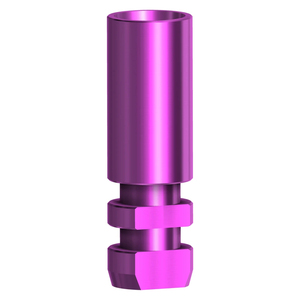
Reliable Digital Analog Replacement for Multiple Implant Systems
Comprehensive Clinical & Engineering Overview of Clavicle Reconstruction Plates
Clavicle fractures account for approximately 2.6% to 5% of all adult fractures, with midshaft fractures comprising nearly 80% of these presentations. Historical reliance on conservative non-operative management often led to unacceptable rates of symptomatic malunion, nonunion, shortenings exceeding 15–20 mm, and chronic residual shoulder girdle dysfunction. Over the past decade, advancements in biomechanical engineering have transformed the clinical management of midshaft, distal, and lateral clavicle fractures toward operative internal fixation using anatomical locking compression plates.
As a leading CE certified clavicle reconstruction plates exporter & global supplier, our engineering framework merges patient anatomical mapping with high-tier metallurgy. Reconstruction plates must deliver a precise balance between rigid primary stability—to facilitate early postoperative functional mobilization—and elastic strain distribution, preventing stress shielding and implant fatigue failure.
Information Gain Benchmark: Modern superior and anterior-inferior clavicle plating systems require anatomical pre-contouring matched to the S-shaped curvature of the human clavicle, eliminating the need for intraoperative bending that compromises metallic fatigue life.
1. Biomechanical Architecture: Superior vs. Anterior-Inferior Plating
Operative fixation of the clavicle requires meticulous consideration of structural load vectors. The clavicle acts as a strut connecting the axial skeleton to the upper extremity, subjected to complex axial, bending, and torsional forces during arm elevation and rotation.
Superior Plating Dynamics
Placing the plate along the tension band (superior border) provides optimal resistance against downward displacement forces caused by the weight of the arm. It allows longer screw purchase in the sagittal plane.
Anterior-Inferior Plating Dynamics
Anterior-inferior positioning directs screws from anterior to posterior, directing hardware away from vital subclavian neurovascular structures, significantly reducing symptomatic hardware prominence.
Variable Angle Locking
Integrated combi-holes allow surgeons to alternate between polyaxial locking angles (up to 15° off-axis) for targeted fragment fixation and dynamic compression for primary cortical contact.
2. Metallurgical Specifications & Material Biocompatibility
Clavicle reconstruction plates manufactured for international export are available in two primary biocompatible medical materials: Titanium Alloy (Ti-6Al-4V ELI conforming to ASTM F136 / ISO 5832-3) and Cold-Worked Stainless Steel (316LVM conforming to ASTM F138 / ISO 5832-1).
Mechanical Property
Titanium Alloy (Ti-6Al-4V ELI)
Stainless Steel (316LVM)
Clinical Advantage
Elastic Modulus (GPa)
110 GPa
200 GPa
Titanium closer to cortical bone (10-30 GPa); reduces stress shielding.
Tensile Strength (MPa)
≥ 860 MPa
≥ 890 MPa
High strength prevents structural deformation under high torsional loads.
Biocompatibility Profile
Passivated TiO2 Oxide Layer
High-Chromium Passive Film
Minimizes metal ion release and inflammatory tissue response.
MRI Compatibility
High (Minimal Artifacts)
Moderate (Noticeable Artifacts)
Titanium allows clear post-operative MRI imaging of adjacent brachial plexus.
Sharma Orthopedic India Limited has spearheaded advancements in musculoskeletal implant production since 1992. Located in the industrial hub of Vadodara, Gujarat, our dedicated 62,391 square foot manufacturing complex integrates modern 5-axis CNC machining centers, sliding head Swiss-turn lathes, automated surface passivation facilities, and ISO Class 7 cleanroom packaging systems.
As a global enterprise exporting to over 50 countries, quality assurance is embedded in every stage of our supply chain. Every batch of clavicle reconstruction plates undergoes comprehensive non-destructive testing, dimensional verification via coordinate measuring machines (CMM), micro-hardness evaluation, and fatigue resistance testing in alignment with ASTM F382 standards.
ISO 13485:2016 Certified
Audited Quality Management Systems tailored specifically to medical device design, manufacturing, and international distribution compliance.
CE Mark Compliance
Products possess CE certification under applicable European Medical Device Directives, enabling seamless entry into European and Latin American healthcare markets.
Cleanroom Sterilization
Implant packaging processed inside validated cleanroom environments using Gamma Irradiation or ethylene oxide (EtO) sterilization channels.
Global Sourcing Trends & Future Directions in Clavicle Reconstruction Plating (2025–2030)
The global orthopedic trauma fixation market is undergoing a rapid evolution driven by demographic shifts, increasing sports-related injuries, rising high-energy traffic accidents in emerging economies, and demand for reduced operative duration. Hospital procurement committees and medical device importers must anticipate several key structural shifts over the coming decade:
1. Shift Towards Pre-Contoured Anatomical Specificity
Generic straight reconstruction plates requiring extensive manual contouring with bending irons are increasingly considered obsolete. Intraoperative bending induces micro-fractures within the metallic lattice, creating localized stress concentrations that compromise implant fatigue life. Modern hospital tenders explicitly specify anatomical pre-contoured plates customized to left/right and superior/anterior anatomies based on 3D CT statistical morphological databases.
2. Transition to Minimally Invasive Plate Osteosynthesis (MIPO)
Surgical techniques are shifting toward MIPO procedures for clavicular reconstruction. MIPO preserves periosteal blood supply, minimizes soft tissue stripping, reduces postoperative wound complications, and yields faster bone union rates. Implants built for MIPO feature tapered plate tips, rounded profile edges, and low-profile screw heads to slide smoothly within subcutaneously prepared tunnels.
3. Low-Profile Contour Design to Reduce Hardware Removal Rates
Due to the thin subcutaneous tissue covering the anterior and superior surfaces of the clavicle, symptomatic hardware prominence remains one of the leading causes for secondary implant removal operations (ranging from 10% to 30% in clinical literature). Future export-grade plates incorporate sub-millimeter low-profile edges and flush-fitting countersunk locking screws, reducing tissue irritation and secondary surgical costs.
Frequently Asked Questions (FAQ) — Global Procurement & Export
Q: What regulatory documentation is supplied with international shipments of Clavicle Reconstruction Plates?
Every export dispatch includes a comprehensive technical file dossier containing ISO 13485 certificates, CE Declaration of Conformity, Raw Material Batch Mill Test Certificates (conforming to ASTM F136/F138), Sterilization Validation Reports, and Certificate of Analysis (CoA) verified by our QA/RA department.
Q: Do you support OEM/ODM customized branding and private labeling for regional distributors?
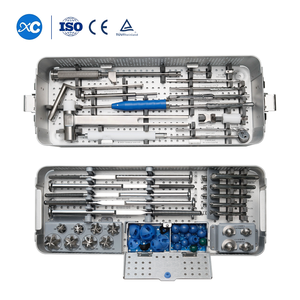
Yes. We provide complete OEM/ODM solutions including laser-marking of distributor brand logos, specialized laser anodization color-coding (for implant size identification), custom tray design, and private label sterile packaging solutions adhering to local regulatory labeling requirements.
Q: What are the available screw options for your Clavicle Reconstruction Locking Plates?
Our systems accept 2.7mm, 3.5mm, and 4.0mm cortex screws and locking screws. The combi-hole technology allows placement of standard cortex screws for compression or angular-stable locking screws within the same plate hole.
Q: What is the standard production lead time for bulk international procurement orders?
For standard catalog SKUs, dispatch timelines typically range between 2 to 4 weeks depending on order volume and packaging specifications (sterile vs. non-sterile). Custom OEM orders require 4 to 6 weeks, inclusive of quality validation processes.
Q: How do you ensure product fatigue resistance under high cyclic loading conditions?
Implant designs are validated using Finite Element Analysis (FEA) software during development and subjected to 1,000,000 cycle mechanical bending fatigue tests in compliance with ASTM F382 protocols prior to commercial mass production.
Why Partner with Sharma Orthopedic India Limited?
Selecting the right orthopedic manufacturing partner is critical for hospital networks, government health ministries, and global medical device importers. Sharma Orthopedic India Limited offers a distinct combination of manufacturing scale, regulatory compliance, engineering innovation, and competitive factory-direct pricing.
Experienced Team
Over 100 dedicated production staff, 10 quality control inspectors, and 8 regulatory compliance experts managing seamless international trade operations.
Dedicated R&D Lab
In-house biomechanical research & development team collaborating with trauma surgeons to engineer next-generation internal fixation devices.
Reliable Global Logistics
Established freight partnerships across 50+ countries guaranteeing safe, temperature-controlled, and customs-cleared delivery of surgical sets.
Partner with India's leading CE certified clavicle reconstruction plates exporter. Contact our international trade desk today for product specifications, pricing tiers, and OEM evaluation samples.