
Explore our CE & ISO 13485 certified orthopedic trauma and joint replacement solutions engineered for optimal surgical outcomes and patient recovery.
Humeral shaft and proximal humeral fractures present complex challenges to orthopedic trauma surgeons. Choosing the right internal fixation device requires balancing anatomical conformability, torsional stiffness, and axial stability while minimizing soft-tissue disruption. As a premier CE Certified Humeral Intramedullary Nails Supplier, our mission is to deliver biomechanically optimized, clinically verified intramedullary systems that standardise surgical execution and dramatically improve fracture healing rates.
Information Gain Key Takeaway: Modern humeral intramedullary nailing has evolved beyond simple load-bearing rods. Today's CE-marked systems incorporate multi-planar proximal locking options, dynamic distal compression slots, and anatomic retroversion angles designed to prevent rotator cuff impingement while enabling immediate post-operative mobilization.
Historically, open reduction and internal fixation (ORIF) with extramedullary locking plates was considered the primary intervention for humeral fractures. However, clinical literature and extensive Finite Element Analysis (FEA) demonstrate that intramedullary nails (IMN) offer distinct biomechanical advantages, particularly in osteoporotic bone and complex multi-fragmentary shaft fractures:
High-grade Ti-6Al-4V titanium alloy provides superior torsional rigidity without excessive rigidity, preventing stress shielding while resisting torsional displacement during physical therapy.
Precision 5° proximal Herzog bend or lateral offset allows insertion through the avascular zone of the rotator cuff insertion, eliminating articular cartilage damage.
Threaded proximal screw holes feature internal nylon ring caps or oblique locking paths to prevent screw back-out in low-density metaphyseal bone.
As an established humeral intramedullary nails manufacturer certified to ISO 13485 and European CE compliance standards, our products undergo rigorous material characterization. Implants are forged from medical-grade Titanium Alloy (Ti-6Al-4V ELI conforming to ASTM F136 / ISO 5832-3) or Implant-Grade Stainless Steel 316LVM (ASTM F138 / ISO 5832-1).
| Technical Parameter | Titanium Alloy (Ti-6Al-4V ELI) Specification | Stainless Steel 316LVM Specification | Clinical Benefit |
|---|---|---|---|
| Tensile Strength (Ultimate) | ≥ 860 MPa | ≥ 1,000 MPa | High fatigue resistance under dynamic physiological cycles |
| Yield Strength (0.2% Offset) | ≥ 795 MPa | ≥ 690 MPa | Prevents permanent deformation under high bending loads |
| Modulus of Elasticity | 110 GPa (Close to cortical bone) | 200 GPa | Reduces stress shielding and promotes rapid callus formation |
| Surface Treatment | Type II Anodization (Color Coded) | Electropolished Clean Surface | Enhances wear resistance and minimizes tissue adhesion |
| System Diameter Range | Ø 7.0mm to 10.0mm (1.0mm Increments) | Ø 7.0mm to 10.0mm (1.0mm Increments) | Custom fits narrow or wide humeral medullary canals |
| System Length Range | 180mm to 320mm (15mm Increments) | 180mm to 320mm (15mm Increments) | Accommodates varying patient humerus anatomical lengths |
The global orthopedic trauma devices market is undergoing significant technological and regulatory consolidation. Hospitals, surgical centers, and international medical distributors must navigate evolving clinical expectations and strict regulatory frameworks. Key trends shaping procurement include:
Modern healthcare systems favor modular intramedullary nail designs that function seamlessly for both antegrade (shoulder insertion) and retrograde (elbow insertion) surgical approaches. Universal systems streamline hospital inventory, reduce surgical kit footprint by up to 40%, and lower capital expenditure for procurement teams.
With the full implementation of the European Union Medical Device Regulation (EU MDR 2017/745), uncertified suppliers are being eliminated from key European, Middle Eastern, and Latin American procurement channels. Sourcing from accredited manufacturers with fully transparent Technical Documentation Files (STED/eCTD) and continuous post-market clinical follow-up (PMCF) is essential.
Distal locking remains one of the most time-consuming and radiation-heavy steps in intramedullary nailing. Next-generation systems feature carbon-fiber radiolucent aiming arms and magnetic guidance attachments, allowing precise freehand-free distal screw placement while significantly reducing intraoperative X-ray exposure for surgical staff.
Established in 1992, Sharma Orthopedic India Limited is a globally recognized manufacturer and exporter operating from a state-of-the-art 62,391 sq. ft. facility in Vadodara, Gujarat. We support international medical brands, regional distributors, and hospital networks with custom OEM/ODM solutions.
Partner with a trusted global supplier for custom nail dimensions, surface treatments, and branded surgical instrument sets.
Request B2B QuoteAddressing critical technical, regulatory, and supply chain queries for healthcare purchasers and distributors.
Our complete trauma implant portfolio—including humeral intramedullary nails, locking plates, and cortical screws—is manufactured under strict ISO 13485:2016 Quality Management Standards and holds valid CE certification. Technical documentation (STED) and biocompatibility test reports are readily available for regulatory registration in over 50 countries.
Yes, our system features dual-contoured anatomical geometry designed for both antegrade (proximal shoulder) and retrograde (distal supracondylar) approaches. Dedicated proximal and distal targeting jigs are provided in the surgical instrument set to ensure millimeter-accurate screw placement regardless of approach.
Cannulated nails feature a central hollow core allowing insertion over a guide wire (typically Ø 2.0mm or Ø 2.5mm), making them ideal for reamed procedures and minimally invasive surgery (MIS). Solid nails are designed for unreamed insertion in traumatic acute cases, maximizing cross-sectional strength in smaller medullary diameters (Ø 7.0mm and Ø 8.0mm).
For optimal biomechanical performance, Titanium Alloy Ti-6Al-4V ELI (ASTM F136) is recommended due to its lower elastic modulus (which reduces stress shielding) and outstanding fatigue strength. Stainless Steel 316LVM (ASTM F138) remains an excellent, cost-effective alternative with superior rigidity for specific traumatic indications.
Our proximal locking screw holes incorporate precision-machined threads and internal locking mechanisms. When paired with our low-profile locking screws, this threaded engagement provides angular stability and prevents post-operative axial migration or back-out, even in osteopenic cancellous bone.
Yes. Backed by 30+ years of manufacturing experience and 62,391 sq. ft. of production infrastructure in Gujarat, India, we offer complete OEM/ODM services. This includes custom nail lengths, specialized diameter options, laser-etched branding, custom color anodization, and sterile cleanroom packaging tailored to your brand identity.
Standard stock SKUs are typically dispatched within 10 to 14 business days. Bulk OEM orders requiring specialized laser etching or sterile pouching generally ship within 4 to 6 weeks. Express air freight and consolidated sea cargo shipping arrangements are fully managed by our dedicated international exports team.
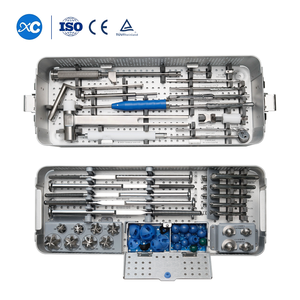
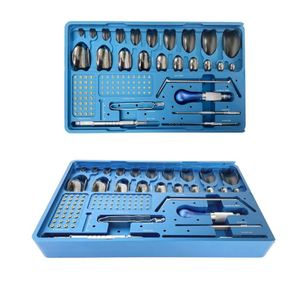
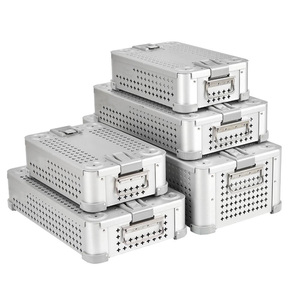
Our comprehensive instrument kit includes radiolucent proximal targeting arms, tissue protectors, awls, cannulated drill bits, reaming shafts, depth gauges, hex screwdrivers, sliding hammers for extraction, and trocar assemblies—all housed in an autoclavable double-layer aluminum container.
Looking for a certified, reliable humeral intramedullary nails supplier for your hospital network or distribution partnership? Contact our global export specialists today for sample kits, surgical manuals, and regulatory dossiers.
Contact Us