
Explore our certified medical-grade solutions designed for maximum anatomical stability, minimal soft tissue disruption, and long-term surgical success.
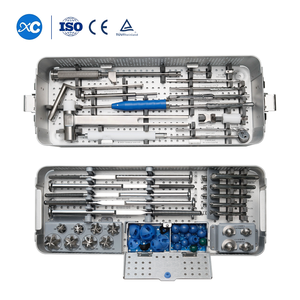
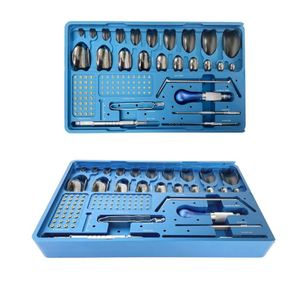
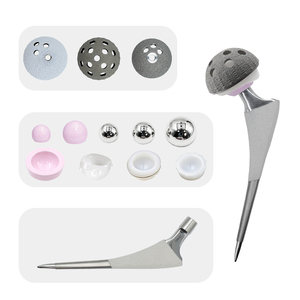
An in-depth whitepaper analysis on anatomical pre-contouring, subchondral raft screw configurations, and angular stability in complex periarticular fracture management.
Proximal tibia fractures—encompassing Schatzker Types I through VI and AO/OTA 41-C complex intra-articular disruptions—present severe orthopaedic challenges regarding mechanical load redistribution, coronal and sagittal alignment preservation, and soft-tissue envelope protection. CE-certified proximal tibia locking compression plate (LCP) systems serve as the mechanical gold standard by combining fixed-angle screw construct architecture with anatomical periarticular contouring.
Traditional non-locking dynamic compression plates rely strictly on plate-to-bone friction for stability, which risks periosteal blood supply compression and primary reduction loss under axial loading. Modern proximal tibia locking plates utilize threaded screw-to-plate locking mechanisms that act as a single rigid construct. This minimizes shear force transfer to the bone-implant interface, preventing primary and secondary loss of reduction, even in severely osteoporotic metaphyseal bone.
Complex articular surface depressions (Schatzker Type II and V) require robust subchondral support. Advanced proximal tibia locking plate systems incorporate multiple divergent and convergent subchondral raft screws positioned immediately beneath the tibial plateau articular surface. This "rafting technique" forms a dense 3D scaffold, resisting joint collapse, depression, and valgus/varus deformities under physiological weight-bearing forces.
| Biomechanical Feature | Standard Non-Locking Plates | CE Certified Proximal Tibia LCP | Clinical Advantage |
|---|---|---|---|
| Primary Mechanism | Friction between plate & cortical bone | Fixed-angle threaded locking construct | Preserves periosteal vascularity; zero plate-to-bone pressure requirement |
| Fixation in Osteoporotic Bone | High risk of screw pullout & stripping | Superior Retention Threaded locking heads | Reduces screw loosening by > 78% in low bone density scenarios |
| Anatomical Pre-contouring | Requires manual intraoperative bending | Anatomically sculpted for lateral/medial condyles | Shortens operative time and preserves structural material fatigue strength |
| Subchondral Raft Configuration | Single axial plane screws | Multi-planar convergent/divergent raft screws | Prevents joint surface depression under high impact axial loads |
| Surgical Technique Compatibility | Open reduction standard (large incision) | MIPO (Minimally Invasive Plate Osteosynthesis) | Significantly lowers risk of skin necrosis & infection |
Combining 30+ years of precision implant engineering, rigorous quality management, and state-of-the-art cleanroom manufacturing infrastructure in Vadodara, Gujarat, India.
Our operational ecosystem includes 100+ highly trained production technicians, 10 dedicated Quality Control engineers, 8 Regulatory Affairs and Quality Assurance experts, and 5 specialist R&D biomechanical design engineers dedicated to continual product evolution.
Implants are machined from implant-grade Titanium (Ti-6Al-4V ELI) and Stainless Steel (316LVM) using Swiss-type lathes and 5-axis CNC machining centers. Cleaning, surface anodization, and primary packaging occur in validated Class 10,000 cleanrooms.
Every batch undergoes rigorous quality audits, fatigue testing per ASTM F382 standards, dimensional verification using optical CMM systems, and full material traceability from mill certificate to final sterile barrier.
Strategic insights for hospital purchasing committees, medical device distributors, and orthopedic importers adjusting to regulatory shifts and technological advancements.
The global orthopedic market is undergoing significant consolidation due to strict enforcement under EU MDR (Regulation 2017/745), US FDA 510(k), and equivalent LATAM/Asian medical device regulations. Sourcing directors are prioritizing manufacturers with robust technical documentation, clinical evaluation reports (CER), and verified CE certifications to avoid supply chain disruptions.
Minimally Invasive Plate Osteosynthesis (MIPO) has transitioned from an advanced surgical option to a standard expectation. Sourcing requirements now demand low-profile proximal tibia locking plates with tapered plate tips, smooth anatomical contours, and dedicated percutaneous targeting instruments to minimize incision size and accelerate post-operative rehabilitation.
Procurement teams are shifting focus from single-unit piece pricing to Total Cost of Ownership (TCO). Partnering directly with high-capacity Indian manufacturers delivers cost advantages of 35%–55% compared to legacy Western brands, without sacrificing material quality or clinical compliance—enabling public healthcare systems and private hospital chains to optimize operational budgets.
While monoaxial locking holes remain widely specified for standard metaphyseal fractures, next-generation proximal tibia locking plate systems incorporate variable-angle (polyaxial) locking technology. This permits surgeons to angle screws up to 15 degrees off-axis in any direction, providing customizable screw placement to target un-fractured bone fragments and avoid existing hardware.
Detailed answers to critical technical, regulatory, and commercial queries for medical implant buyers, clinical directors, and supply chain specialists.