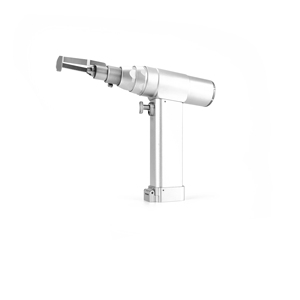
Dual-Speed Autoclavable Sternum Saw Unit
- 0–15,000 CPM High-speed oscillation
- Li-ion battery & pneumatic options
- 134°C steam sterilization resistant

Our flagship surgical sternotomy saw systems integrate high-frequency oscillation, ergonomic balance, and medical-grade sterilization durability. Engineered for adult and pediatric median sternotomy procedures.
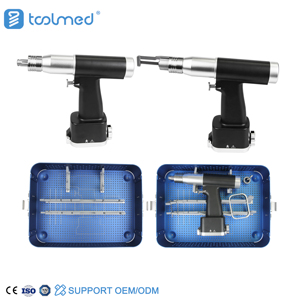
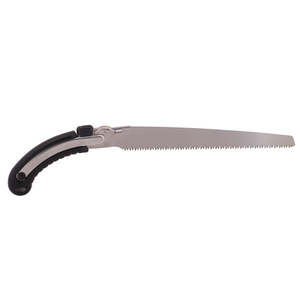
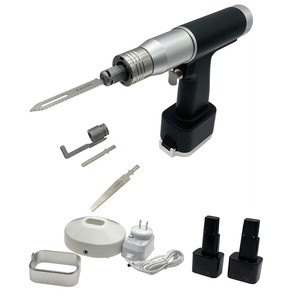
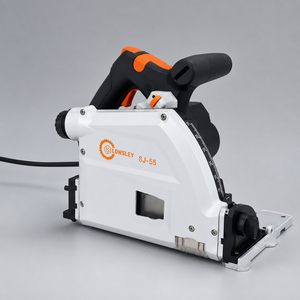
Combining over three decades of precision surgical instrument forging with state-of-the-art 5-axis CNC machining, automated cleanroom assembly, and rigorous bio-compatibility validation.
Every sternum saw system undergoes multi-stage non-destructive testing (NDT), dynamic load balancing, and thermal emission profiling. Our strict adhere to ISO 13485 and CE Medical Devices Directive ensures maximum patient safety and mechanical reliability during emergency cardiothoracic procedures.
Utilizing high-grade German and Japanese CNC milling infrastructure within our 62,391 sq. ft. campus, we manufacture internal gearbox components with micron-level tolerances. This eliminates gear slip and reduces thermal buildup during high-speed sternal re-entry.
We provide full-service white-label manufacturing for international surgical tool brands. From specialized blade stroke length customization (ranging from 3.0mm to 5.5mm) to custom sterilization tray design and localized regulatory dossier support (STED format), our R&D engine accelerates your product launch timeline.
An authoritative engineering analysis on osteotomy efficiency, thermal necrosis prevention, kerf width optimization, and power transmission in median sternotomy.
In cardiothoracic surgery, maintaining cortical bone viability during a median sternotomy is paramount for postoperative sternal stability and low non-union rates. Bone tissue undergoes irreversible cellular damage when exposed to temperatures exceeding 47°C for more than 60 seconds. Our surgical sternum saw systems incorporate high-torque, low-friction oscillating transmissions that minimize kinetic friction at the blade-bone interface.
By coupling custom-engineered blade stroke lengths (typically 3.2mm to 4.5mm) with aggressive teeth geometry and narrow kerf thickness (0.6mm–0.8mm), our saw systems slice cleanly through the manubrium and body of the sternum without inducing localized heat buildup. The integration of continuous internal cooling channels further assists in thermal dispersion during rapid surgical access.
Procurement officers and hospital bio-medical departments must weigh the trade-offs between electric battery-operated systems and compressed gas (pneumatic) surgical tools. Below is an engineering evaluation matrix detailing operational efficiency and lifecycle costs:
| Engineering Specification | Lithium-Ion Battery Powered System | Pneumatic (Compressed Air) System |
|---|---|---|
| Power Output / Torque Stability | Constant voltage control; zero torque degradation during operation. | Requires stable 6.0–7.0 bar supply; slight pressure drop risks torque loss. |
| Mobility & Ergonomics | 100% Cordless freedom; no restrictive air hoses over sterile field. | Tethered by heavy-duty high-pressure hose; increased drag on wrist. |
| Sterilization Cycle Durability | Handpiece & Battery Casing withstand 1,000+ Autoclave cycles (134°C). | Motor withstands 1,500+ cycles; air line connectors require regular O-ring replacement. |
| Total Cost of Ownership (5 Yrs) | Lower initial infrastructure investment; battery replacement at Year 3. | Higher initial operating theatre piping cost; minimal motor wear over time. |
| Noise Level (dBA) | Ultra-quiet brushless motor (< 62 dBA). | Moderate exhaust sound (> 74 dBA); requires exhaust muffler filters. |
Choosing between sagittal oscillating saw blades and linear reciprocating sternum saw systems depends primarily on surgeon preference, procedure speed, and soft tissue protection requirements:
Our premium CE-marked sternum saw systems feature an advanced detachable sternal guard attachment forged from Grade 5 Titanium alloy. Designed with smooth anatomical curvature, the guard glides behind the posterior sternal cortex, isolating the heart and great vessels while guiding the blade along the exact anatomical midline.
Request Technical Whitepaper & Spec SheetKey macroeconomic and technological forces shaping how healthcare systems, GPOs, and medical equipment importers source thoracic surgical equipment globally.
Traditional brushed motors are rapidly being phased out across international healthcare facilities. Modern sternum saw procurement mandates brushless DC (BLDC) motors due to their friction-free architecture, zero carbon-dust emission in sterile environments, and 40% higher torque-to-weight efficiency. Future-focused factories are embedding smart microprocessors within the saw handle to dynamically adjust torque based on bone density resistance.
Hospitals are demanding unified modular power tool ecosystems to reduce capital expenditure. Modern sternum saw drive units are increasingly designed as multi-modular platforms capable of instantly swapping saw heads—converting from a high-frequency sternum saw to an oscillating orthopedic saw or cannulated bone drill in seconds via quick-connect couplings.
With the full enforcement of the European Union Medical Device Regulation (EU MDR 2017/745), procurement teams are actively migrating away from non-compliant suppliers. Sourcing agents must verify that factories possess full technical dossiers, post-market surveillance (PMS) data, and valid CE certificates issued by accredited Notified Bodies for Class IIa/IIb surgical power instruments.
Everything hospital procurement managers, biomedical engineers, and medical device distributors need to know regarding technical specs, sterilization, warranty, and factory audits.
Our manufacturing facilities operate strictly under ISO 13485:2016 quality management systems. All sternum saw models carry valid CE certification conforming to global medical device regulations, ensuring seamless regulatory registration in Europe, Asia, Latin America, and Middle Eastern markets.
The main saw handpiece, sternal guards, and blade attachments are fully autoclavable and withstand repeated steam sterilization at 134°C (273°F) under 0.22MPa pressure. For battery-powered units, we supply aseptic transfer ring kits allowing non-sterile batteries to be loaded cleanly into pre-sterilized handpiece housings without compromising OR sterility.
We manufacture saw handpieces equipped with universal quick-locking coupling mechanism compatible with standard cross-pin and AO-style blade shanks. Additionally, we manufacture a wide range of CE-approved stainless steel sternum saw blades offering customized pitch, kerf thickness, and length to fit our systems or existing hospital power setups.
Our medical-grade Lithium-ion battery packs deliver continuous operational runtime of 45 to 60 minutes under heavy clinical cutting loads—far exceeding the duration required for standard sternotomy access. Batteries are rated for over 500 charge-recharge cycles before capacity degrades past 80%.
We provide a comprehensive 12-month factory warranty on all drive handpieces and gearboxes, and a 6-month warranty on battery units. We offer complete spare part kits, technical repair manuals, video troubleshooting protocols, and rapid air-freight replacement service for our international distributor network.
Yes, we welcome sample orders and trial evaluations for hospital biomedical departments and qualified importers. We also provide full facility access for third-party factory audits, virtual live tours of our cleanroom manufacturing lines, and complete STED regulatory documentation support.
Streamline your hospital procurement or brand portfolio with factory-direct pricing, guaranteed CE regulatory compliance, and precision-forged surgical power tools. Speak with our international trade specialists today.