China Best ACL Reconstruction Implants Manufacturers & Factories

Global B2B Procurement Whitepaper: Orthopedic Biomaterials, OEM/ODM Capabilities, & Next-Gen Arthroscopic Fixation Systems

Featured Surgical Portfolio

Precision Orthopedic & Arthroscopy Implants

High-performance biomechanical systems engineered for tissue fixation, joint reconstruction, and structural stabilization.
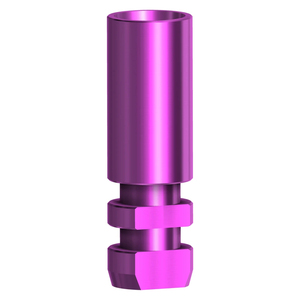
Digital Analog Replacement Implant

Reliable Digital Analog Replacement for Multiple Implant Systems

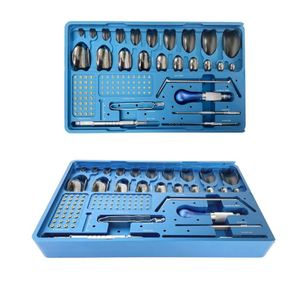
Stainless Steel Total Hip Replacement Set

Stainless Steel Total Hip Prosthesis Joint Replacement Instrument Set

Small Animal Hip Replacement Set

Small Animal Total Hip Replacement Veterinary Orthopedic Pedicle Screw Set

Cementless Artificial Acetabulum Prosthesis

Cementless Artificial Acetabulum Total Hip Joint Prosthesis System

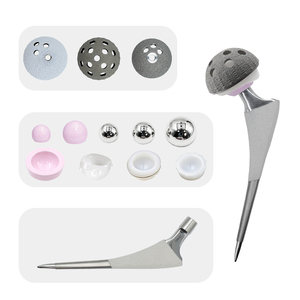
Titanium Hip Joint Prosthesis Implant

Orthopedic Titanium Hip Joint Prosthesis Implant Surgical System

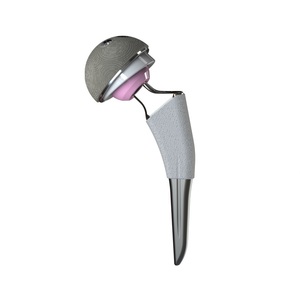
Hip Joint Prosthesis Essential Collection

Stainless Steel Hip Joint Prosthesis Replacement Essential Collection

Artificial Knee Joint CoCrMo Implant

CE Certified Arthroplasty Artificial Knee Joint CoCrMo Alloy Primary Kit

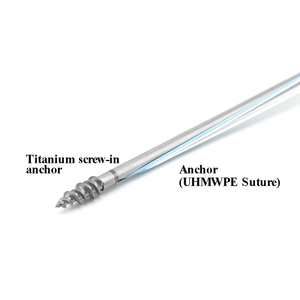
Shoulder Repair Knotless Suture Anchor

Factory Orthopedic Shoulder Repair Reconstruction Knotless Titanium Anchor

Operational Capabilities

Why Global Healthcare Buyers Source from Premier Chinese Manufacturers

Combining three decades of manufacturing engineering, advanced 5-axis CNC machining, and ISO 13485-certified ultra-clean environments to deliver world-class ACL reconstruction devices.

30+
Years Manufacturing Heritage
62,000+
Sq. Ft. ISO Cleanroom Facility
50+
Export Nations Worldwide
10,000+
Certified Orthopedic SKUs
Precision 5-Axis CNC Machining

Utilizing multi-axis Integrax machine tools and Swiss-type automatic lathes, achieving sub-micron tolerances for complex interference threads and titanium cortical button geometries.

Complete Quality Management

Full traceability from raw medical-grade titanium (Ti-6Al-4V ELI) and PEEK polymer bars to final gamma-sterilized packaging under stringent ISO 13485 standards.

Scalable OEM/ODM Contract Production

Dedicated R&D engineering teams capable of rapid prototyping, custom mold design, surgical instrumentation customization, and private-label packaging.

Technical Whitepaper: Biomaterial Science & Fixation Biomechanics in Modern ACL Reconstruction

Anterior Cruciate Ligament (ACL) reconstruction represents one of the most frequently performed arthroscopic procedures globally, with over 300,000 surgeries performed annually in North America and Europe alone, alongside accelerating clinical volume across Asia-Pacific healthcare markets. The primary goal of ACL reconstruction is to restore native knee kinematics, joint stability, and rotational integrity by anchoring an autograft, allograft, or synthetic graft within meticulously reamed femoral and tibial bone tunnels.

Over the past decade, Chinese orthopedic manufacturers have transformed from volume suppliers into advanced biomaterial innovators. By investing heavily in precision engineering, finite element analysis (FEA), and advanced polymer science, Chinese factories produce fixation devices that compete with top-tier global brands while providing significant economic efficiencies for hospital networks and international medical device distributors.

Key Engineering Metric: Primary Fixation Strength
The mechanical success of an ACL implant depends on its ability to withstand physiological forces ranging from 150 N during passive motion to over 450 N during strenuous rehabilitation. Modern Chinese-manufactured interference screws and cortical button systems consistently exhibit ultimate pull-out strength metrics exceeding 850 N, preventing slippage during the critical initial 6-to-12-week biological tendon-to-bone healing phase.

1. Material Science Breakdown: Metallic vs. Polymeric vs. Biocomposite Implants

Fixation implants utilized in modern arthroscopic knee reconstruction are predominantly categorized into three distinct material classes, each engineered to address specific anatomical and clinical scenarios:

Titanium Alloys (Ti-6Al-4V ELI)

Fitted with exceptional fatigue resistance and biocompatibility, medical-grade titanium remains the gold standard for cortical suspensory fixation (adjustable and fixed-loop buttons) and metallic interference screws. Modern surface anodization enhances osseointegration while maintaining zero risk of elemental toxicity.

PEEK (Polyetheretherketone)

Non-absorbable thermoplastic offering an elastic modulus (approx. 3.5 to 4.1 GPa) closely matching human cortical bone. PEEK interference screws eliminate artifact interference during postoperative Magnetic Resonance Imaging (MRI) scans and permit simplified revision surgery without complex metal removal.

Biocomposites (HA/PLLA)

Formulated from a synergistic blend of Poly-L-Lactic Acid (PLLA) and micro-dispersed Hydroxyapatite (HA) or Beta-Tricalcium Phosphate (β-TCP). These screws undergo gradual, controlled bio-absorption while releasing osteoconductive minerals that promote native bone ingrowth and tunnel filling over 24 to 36 months.

2. Biomechanical Fixation Mechanisms: Suspensory vs. Aperture Fixation

Modern surgical protocols often employ a hybrid fixation technique combining femoral suspensory fixation with tibial aperture fixation to maximize graft stiffness and minimize the "bungee cord" or "wiper-motion" laxity effects:

Aperture Fixation (Interference Screws): Designed with rounded, non-cutting thread profiles to prevent graft tissue laceration during insertion. The inner taper design ensures uniform radial compression along the entire length of the bone tunnel. Chinese manufacturers utilize advanced cold-forging and high-precision thread cutting to guarantee smooth drive torque and high resistance to thread stripping.

Cortical Suspensory Fixation (Adjustable & Fixed-Loop Buttons): Cortical buttons redistribute tension across the outer anterolateral femoral cortex. Next-generation adjustable-loop buttons feature self-locking friction knots fabricated from Ultra-High Molecular Weight Polyethylene (UHMWPE) braided sutures. These loops allow surgeons to completely draw the graft into the femoral socket and re-tension the construct post-tibial fixation, ensuring zero structural elongation under cyclic loading.

Information Gain Highlight: Surface Topography & Tissue Attachment
Leading Chinese research labs have integrated plasma spray hydroxyapatite coatings and micro-textured threading onto titanium suture anchors and interference devices. Micro-textured surfaces create a 20-50 μm roughness profile that encourages osteoblast adhesion, shortening the bio-integration phase by up to 25% in clinical evaluations.

Global B2B Procurement Trends & Market Forecast (2025–2030)

The global orthopedic sports medicine device market is undergoing a major structural transformation. Procurement departments, hospital group purchasing organizations (GPOs), and international medical distributors are actively shifting their supply chain strategies to address rising healthcare costs, regulatory updates, and supply continuity challenges.

1. Expansion of Contract Manufacturing & OEM Partnership Models

International medical device brand owners are increasingly outsourcing high-precision machining and cleanroom packaging to specialized Chinese manufacturers. Factory-direct OEM integration offers significant advantages:

  • Capital Expenditure Optimization: Eliminates the need for costly multi-million dollar investments in 5-axis CNC machining centers and ISO Class 7 cleanrooms.
  • Custom Tooling & Rapid Iteration: In-house mold-making capabilities reduce development timelines for novel anchor geometries from 18 months to less than 16 weeks.
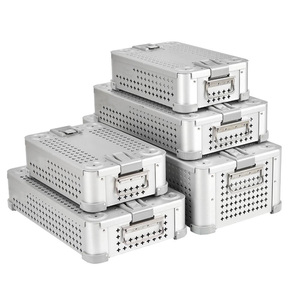
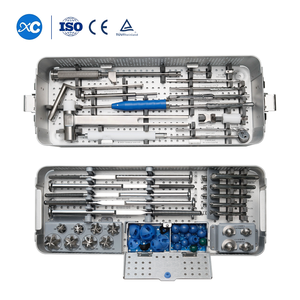
  • Modular Surgical Kits: Chinese factories offer comprehensive turn-key systems combining implants with customized reamers, drill guides, tensioners, and sterilization trays.

2. Stringent Regulatory Compliance & Quality System Harmonization

Historically, global buyers approached Asian supply chains with caution regarding regulatory approvals. However, the top tier of Chinese ACL implant manufacturers now operates under rigorous international quality frameworks:

EU MDR (2017/745) Compliance

Transitioning from MDD to strict MDR standards, leading manufacturers conduct extensive clinical evaluation reports (CER), post-market clinical follow-ups (PMCF), and comprehensive biocompatibility testing (ISO 10993 series).

US FDA 510(k) Clearances

Substantial equivalence certifications allow seamless market entry for distributors across North America, Latin America, and middle-eastern jurisdictions recognizing FDA credentials.

Automated 100% Optical Inspection

Implementation of high-speed vision inspection systems and coordinate measuring machines (CMM) guarantees that every thread pitch, drive socket, and suture hole conforms to approved CAD specifications.

3. Sustainability and Value-Based Healthcare Buying

Public health systems are under immense pressure to deliver high surgical success rates while containing procedures cost. High-value Chinese manufacturers bridge this gap by streamlining supply chains, stripping away excessive marketing markups, and delivering hospital-ready, sterile-packaged ACL reconstruction kits at costs 30% to 50% lower than legacy Western brands.

B2B Procurement FAQ: Technical & Supply Chain Insights

Q What critical regulatory certifications should buyers verify when sourcing ACL implants from China?
B2B buyers must verify ISO 13485 (Medical Devices Quality Management System) certification issued by an accredited Notified Body. Additionally, products intended for international clinical use should carry CE Marking (preferably under EU MDR 2017/745) or US FDA 510(k) clearance. Raw materials must have mill test certificates confirming compliance with ASTM F136 / ISO 5832-3 for Titanium alloy or ASTM F2026 for PEEK polymer.
Q How do bioabsorbable HA/PLLA interference screws compare to PEEK screws regarding degradation rate and bone healing?
HA/PLLA biocomposite screws degrade gradually through hydrolysis over 24 to 36 months. The addition of Hydroxyapatite (HA) buffers the acidic byproduct of PLLA degradation, mitigating inflammatory tissue responses while actively encouraging osteoconductive bone formation within the tunnel. In contrast, PEEK is bio-inert and non-absorbable; it maintains permanent mechanical strength and allows artifact-free MRI monitoring without degrading over time.
Q What are the standard Minimum Order Quantities (MOQs) for OEM private label manufacturing?
Standard production MOQs for customized or private-labeled ACL fixation devices typically range from 50 to 200 units per SKU, depending on material complexity and packaging requirements. For established distribution partners, factories often offer flexible batching across varying screw diameters (e.g., 7mm to 11mm) and length combinations to optimize inventory investment.
Q What sterilization modalities are recommended for Chinese-supplied arthroscopic implants?
Implants are available either as non-sterile bulk packages (to be steam-autoclaved at the hospital facility according to validated parameters) or as sterile, single-use double-blister Tyvek packaging sterilized via Gamma Irradiation or Ethylene Oxide (EtO) gas, delivering a validated Sterility Assurance Level (SAL) of 10^-6.
Q Can Chinese factories manufacture customized surgical instrument sets for ACL/PCL reconstruction?
Yes. Leading manufacturers feature dedicated tooling divisions capable of producing complete surgical instrument trays. This includes tibial drill guides, femoral tunnel reamers, graft preparation boards, tendon strippers, and driver shafts engineered to interface seamlessly with proprietary or standard interference screws and button constructs.
Q What pull-out strength metrics should be specified in technical quality agreements?
Technical quality specifications should require a minimum static pull-out load of 700 N for femoral cortical suspensory buttons and a minimum of 650 N for tibial interference screws when tested in high-density polyurethane bone foam models according to ASTM F543 / ASTM F2500 testing standards.
Q How do Chinese manufacturers guarantee consistent driver-to-screw socket engagement?
High-grade factories employ CNC broaching or electrical discharge machining (EDM) to construct star-drive (Torx-type) or hex-drive sockets. This ensures tight driver fitment, minimizes stripping risks under high insertion torque, and allows even stress distribution during dense bone insertion.
Q What is the typical production lead time for global OEM shipments?
Standard OEM production cycles range from 30 to 45 business days following final drawing approval and sample sign-off. Expedited delivery schedules can be accommodated for high-volume contract orders with pre-allocated raw material inventory.

Partner with China's Premier Orthopedic Manufacturers

Accelerate your sports medicine product lineup with ISO 13485 certified, high-precision ACL reconstruction implants, suture anchors, and customized arthroscopic instrument kits.