
Explore our certified portfolio of lumbar interbody fusion cages, arthroplasty prostheses, and trauma reconstruction systems manufactured under stringent medical-grade quality management.
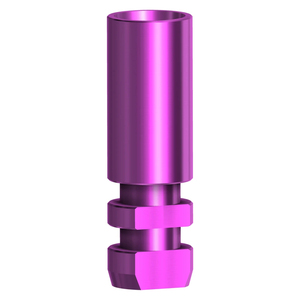
High-precision digital analog components crafted from medical stainless steel and titanium alloy, fully compatible with leading surgical and restorative implant platforms.
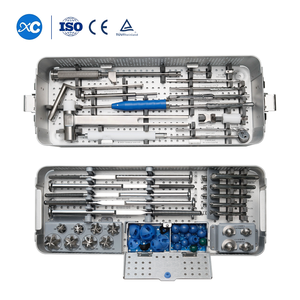
Complete 4#-10# orthopedic instrument suite for joint replacement, utilizing passivated stainless steel designed for durability and repetitive sterilization cycles.
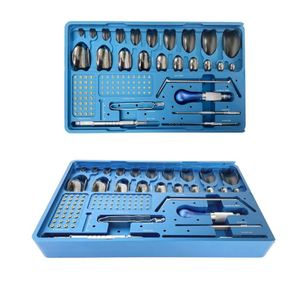
Specialized veterinary hip replacement system incorporating micro pedicle screws, acetabular cups, and femoral stems engineered for anatomical stability.
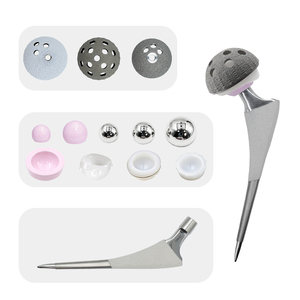
Advanced porous-coated cementless acetabular cup designed to facilitate biological bone ingrowth and long-term joint fixation performance.
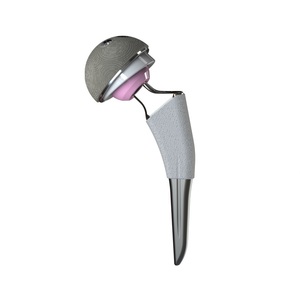
Biocompatible Ti6Al4V ELI alloy hip replacement stem engineered for optimal stress distribution and reduced risk of stress shielding in orthopedic surgery.
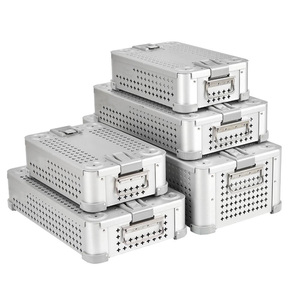
Factory-direct surgical instrument collection featuring ergonomic handles, precision reamers, and trialing components for primary hip reconstruction.
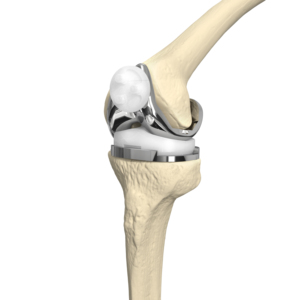
High-flexion primary total knee replacement kit utilizing Cobalt-Chromium-Molybdenum (CoCrMo) alloy and ultra-high-molecular-weight polyethylene (UHMWPE).
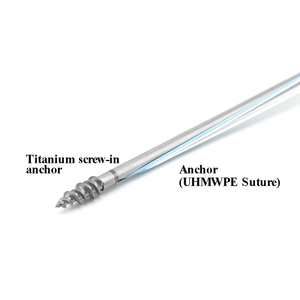
Arthroscopic shoulder reconstruction system featuring knotless titanium suture anchors designed for rapid, secure soft tissue-to-bone reattachment.
Spinal interbody fusion has undergone a paradigm shift over the past two decades. As degenerative disc disease (DDD), spondylolisthesis, lumbar spinal stenosis, and structural spinal deformities increase globally due to an aging population, the demand for high-performance lumbar interbody fusion cages has accelerated dramatically. China has emerged as the premier global manufacturing hub for spinal devices, blending state-of-the-art additive manufacturing (3D printing) with precision CNC machining and rigorous regulatory alignment.
Modern interbody cages serve three fundamental biomechanical objectives: restoring physiological intervertebral disc height, maintaining lumbar lordosis, and providing immediate structural stability to facilitate osseous integration between adjacent vertebral bodies. Leading Chinese original equipment manufacturers (OEMs) now leverage advanced biomaterials, such as 3D-printed porous Ti6Al4V ELI alloy and radiolucent PEEK-OPTIMA® polymer, to overcome legacy challenges like implant subsidence, stress shielding, and pseudarthrosis.
Clinical trials indicate that interbody cages possessing an elastic modulus near that of human cancellous bone (approx. 1.5–4 GPa) reduce subsidence rates by up to 64% compared to solid titanium implants. Advanced Chinese manufacturers utilize selective laser melting (SLM) to engineer diamond lattice structures that mimic natural trabecular architecture.
Spinal surgeons choose interbody fusion techniques based on patient pathology, anatomical access windows, and surgeon preference. Chinese manufacturers produce comprehensive cage configurations tailored for all standardized surgical approaches.
Inserted via a posterior surgical trajectory, PLIF cages are typically implanted in pairs to restore bilateral intervertebral disc height. Modern Chinese PLIF cages feature bulleted nose tips to streamline insertion through narrow neural foramina, reducing nerve root retraction trauma. Available in lordotic angles from 0° to 12° with expansive central graft windows for autologous or allogeneic bone packing.
Unilateral TLIF cages offer a less invasive posterior approach, placing a single curved ("banana" shape) or rectangular cage across the anterior column. Chinese precision manufacturing ensures variable radius geometries that self-rotate into position across the dense apophyseal ring, providing superior load-bearing support and reducing surgical intervention time.
Accessed retroperitoneally from the front, ALIF cages feature broad footprints that span the entire cortical margin of the vertebral body. Premium Chinese ALIF systems integrate zero-profile integrated titanium screws or locking mechanisms, eliminating the necessity for supplementary anterior plating and minimizing vascular interference at L5-S1.
Lateral transmuser Cages pass through the psoas muscle, preserving anterior and posterior longitudinal ligaments. Chinese lateral cages offer extended lengths (up to 60mm) and wide widths to rest firmly on the dense lateral apophyseal rim, maximizing indirect decompression of neural elements.
Navigating the oblique corridor between the peritoneum and psoas muscle, OLIF cages bypass major retroperitoneal neural structures. Chinese engineered OLIF cages feature self-guiding bevel angles and specialized insertion instrumentation tailored for minimally invasive spinal surgery (MISS).
Representing the apex of spinal mechanical engineering, Chinese expandable cages are inserted at a collapsed profile and continuously expanded post-placement. This allows surgeons to restore height and lordosis custom-tailored to patient anatomy while minimizing nerve root retraction.
Selecting the appropriate biomaterial is critical for primary stability, long-term fusion success, and radiographic follow-up accuracy.
| Biomaterial Parameter | 3D Printed Porous Ti6Al4V | PEEK-OPTIMA® Polyetheretherketone | Titanium-Coated PEEK (Hybrid) |
|---|---|---|---|
| Elastic Modulus (GPa) | 1.5 – 3.0 GPa (Controlled Lattice) | 3.5 – 4.0 GPa (Near cortical bone) | 3.5 GPa Core / Titanium Surface |
| Bone-Implant Interface | Biological Osseointegration (3D Ingrowth) | Fibrous Encapsulation / Mechanical Interlock | Direct Surface Bone Adhesion |
| Radiolucency (CT / MRI) | Minor artifacting; controlled via geometry | 100% Radiolucent (Requires Tantalum Markers) | Radiolucent Core with thin Ti layer |
| Compressive Strength | Exceeds 180 MPa (Ultra-High Fatigue Limit) | 160 – 170 MPa | 170 MPa |
| Hydrophilicity & Cell Adhesion | High Surface Energy (Superhydrophilic) | Hydrophobic (Requires surface treatment) | High Hydrophilicity on Ti Boundary |
| Manufacturing Precision | Selective Laser Melting (SLM 10-micron precision) | 5-Axis CNC Precision Swiss Milling | Plasma Spray / Dual Material Processing |
As medical device procurement teams, hospital consortiums, and orthopedic distributors evaluate Chinese supply chains, key technology and regulatory trends are reshaping strategic sourcing decisions.
Conventional solid PEEK cages are rapidly losing market share to 3D-printed additive titanium cages. The industry shift is driven by the clinical superiority of connected porous structures (pore sizes optimized between 600 μm and 800 μm with 70-80% porosity). This micro-topology allows native osteoblasts to migrate, proliferate, and vascularize directly inside the cage body, achieving true bony fusion without relying solely on packed graft materials.
Pre-operative DICOM data from CT scans is now seamlessly ingested by Chinese OEM design software to manufacture patient-specific interbody fusion cages. Custom lordotic angles, height gradients, and endplate matching geometries are produced on-demand for complex deformity corrections, severe scoliosis, and revision spinal surgeries.
To overcome the inert nature of traditional polymers, modern procurement contracts increasingly demand Hydroxyapatite (HA) plasma spraying or nano-textured surface treatments on PEEK cages. Chinese bio-surface laboratories lead in atomic layer deposition (ALD), applying nano-scale titanium dioxide layers that enhance cell signaling while maintaining radiolucency.
Global healthcare providers require suppliers to demonstrate complete traceability. Premier Chinese manufacturers maintain raw material certifications (ASTM F136 for Titanium, ASTM F2026 for PEEK), ISO 13485 quality systems, cleanroom packaging (Class 10,000 / ISO Class 7), and full technical documentation packages (STED) to expedite FDA 510(k) and EU MDR registrations.
With over 30 years of specialized expertise in medical device production, our manufacturing campus combines Swiss-type precision CNC turning, multi-axis milling, cleanroom processing, and automated inspection to yield implant systems trusted by surgeons worldwide.
Every lumbar fusion cage batch undergoes rigorous mechanical fatigue testing in compliance with ASTM F2077 (Static and Dynamic Compression/Torsion Testing) and ASTM F2267 (Measuring Load-Induced Subsidence).
Find answers to common questions regarding minimum order quantities, customization, regulatory documentation, and quality control protocols.
We exclusively utilize medical-grade materials sourced from accredited international suppliers. Our metal cages and 3D printed implants are fabricated from Ti6Al4V ELI (ASTM F136 / ISO 5832-3). Our polymeric cages utilize implant-grade PEEK-OPTIMA® (ASTM F2026) supplied by Invibio, complemented by radiopaque marker pins made of Tantalum (ASTM F560).
We provide end-to-end OEM/ODM services. This includes industrial product design, finite element analysis (FEA), 3D lattice generation, prototype rapid printing, clinical instrument customization, custom laser marking (UDI compliance), and branded sterile packaging.
Our facility operates strictly under an ISO 13485:2016 certified Quality Management System. We provide complete Technical Dossiers (STED format), biocompatibility testing reports (ISO 10993 series), cleanroom validation, EO sterilization validation (ISO 11135), and ASTM mechanical fatigue test reports necessary for worldwide registration.
For standard catalog cage geometries, our baseline MOQ starts at 20 to 50 pieces per size. Lead times for standard orders range from 2 to 4 weeks. Custom OEM orders requiring new tooling or custom 3D printing parameters typically require 6 to 8 weeks including prototype approval.
Yes. Every cage system (PLIF, TLIF, ALIF, LLIF, OLIF) is supported by a dedicated, color-coded surgical instrument kit. Kits include trial cages, rasps, insertion drivers, slap hammers, and disc prep instruments housed in heavy-duty aluminum sterilizing trays.
Our 3D printed cages undergo optimized post-processing stress relief and hot isostatic pressing (HIP). This eliminates micro-porosity defects within the titanium matrix, resulting in fatigue limits that equal or exceed traditional CNC-machined titanium alloys under ASTM F2077 cyclic compression-shear testing exceeding 5,000,000 cycles.
Request a full product catalog, technical dossier, or custom OEM quote today. Connect directly with our international regulatory and engineering support teams.