
Engineered in ISO 13485 certified cleanrooms with medical-grade PEEK, Titanium, and Cobalt-Chromium alloys for optimum surgical performance.
The global sports medicine and arthroscopic surgery landscape has undergone a monumental shift from traditional partial meniscectomy toward total meniscal preservation. Meniscal cartilage plays a crucial biomechanical role in load transmission, joint stability, and shock absorption across the tibiofemoral joint. Preserving the native meniscal tissue through mechanical fixation prevents premature knee osteoarthritis and preserves joint kinematics for long-term clinical efficacy.
As a leading China meniscal repair devices factory and global exporter, our manufacturing campus bridges advanced biomechanical engineering with micro-precision CNC machining. The modern demand for minimally invasive sports medicine solutions has positioned Chinese orthopedic manufacturers as critical supply chain partners for international medical device brands, hospital networks, and orthopedic distributors across Europe, North America, Latin America, and the Asia-Pacific region.
Clinical trials confirm that preserving as little as 20% of native meniscal tissue reduces tibiofemoral peak contact stress by over 50%. Consequently, all-inside suture repair devices featuring low-profile PEEK anchors and non-absorbable Ultra-High Molecular Weight Polyethylene (UHMWPE) sutures have surpassed traditional open inside-out repair techniques as the gold standard in modern arthroscopy.
Selecting the optimal meniscal fixation technique depends on tear location, vascularity zones (Red-Red, Red-White, or White-White), tear configuration (bucket-handle, radial, longitudinal, or flap), and surgical accessibility. Our production facility yields specialized instrumentation and implants customized for all three major repair techniques:
Utilizes pre-loaded needle delivery systems with dual micro-anchors (PEEK or Bio-absorbable PLLA) connected by a sliding self-locking knot of UHMWPE suture. Eliminates additional counter-incisions, dramatically reducing operative time and neurovascular risks in posterior horn repairs.
Considered the clinical reference standard for middle-third and anterior meniscus tears. Flexible double-arm stainless steel needles pass through cannulated guards, allowing high-density stitch configurations with high ultimate load to failure strength (>120 N).
Ideal for anterior horn meniscal tears where anterior needle trajectories are straightforward. Uses micro-cannulas and wire loops to shuttle non-absorbable sutures, providing excellent tactile control and cost-efficient implant utilization.
A meniscal repair construct must withstand rigorous cyclic mechanical forces during post-operative knee flexion and weight-bearing rehab protocols. Peak forces across the meniscus during initial knee flexion can reach 80 N to 150 N. Therefore, high failure load, minimal tissue creep, and tissue-friendly implant profiles are non-negotiable parameters in our manufacturing process.
| Device Category | Material Composition | Fixation Mechanism | Ultimate Failure Load | Primary Clinical Indication |
|---|---|---|---|---|
| All-Inside Meniscal Fixator | PEEK Anchor / UHMWPE #2-0 Suture | Self-locking Sliding Knot T-Anchor | > 110 N | Posterior & Middle Body Meniscal Tears |
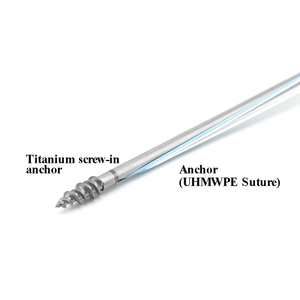
| Knotless Suture Anchor | Titanium Ti-6Al-4V / PEEK | Interference Thread / Expansion Bushing | > 220 N | Meniscal Root Repair & Labral Reconstruction |
| Inside-Out Suture System | 316L Stainless Steel / UHMWPE | Manual Vertical / Horizontal Mattress | > 140 N | Complex Bucket-Handle Meniscal Tears |
| Bio-Absorbable Anchor | PLLA / β-TCP Composite | Osteoconductive Degradable Anchor | > 95 N | Pediatric & Soft Tissue-to-Bone Reattachments |
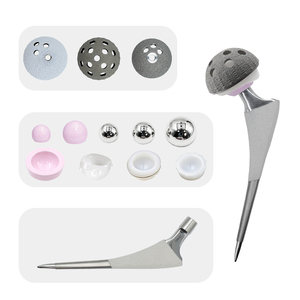
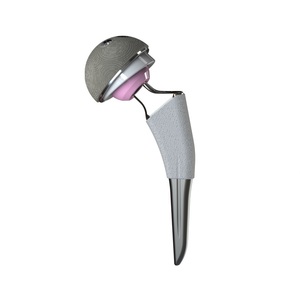
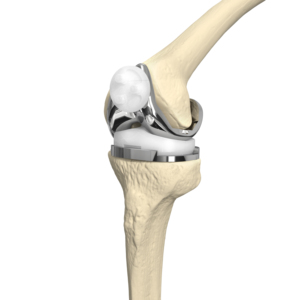
| Total Joint Arthroplasty Kit | CoCrMo Alloy / UHMWPE Insert | Cemented / Press-fit Modular Stem | > 2500 N Static Load | End-Stage Knee / Hip Osteoarthritis |
The global meniscal repair device market is projected to expand at a compound annual growth rate (CAGR) of over 6.8% through 2030, driven by an aging active population, rising incidence of sports-related ligamentous and meniscal injuries, and expanding access to arthroscopic surgery in emerging markets. As procurement managers and hospital buyers review their global vendor matrix, several key technological and economic trends are transforming the supply chain:
Surgeons are moving away from traditional knotted anchors to prevent joint friction and knot slippage. Knotless systems allow precise tension adjustment post-deployment, improving healing rates while eliminating intra-articular knot bulk.
Integration of Tricalcium Phosphate (β-TCP) into bio-absorbable PLLA matrix accelerates bone ingrowth at root repair sites. Future device designs will also incorporate growth factor coatings to promote vascularity in white-white zone repairs.
International brands are increasingly consolidating manufacturing with verified Chinese factories capable of providing full turnkey services—from mold design and 5-axis CNC machining to EO sterilization, custom blister packaging, and CE/MDR regulatory dossiers.
China's medical manufacturing infrastructure has evolved from basic mechanical fabrication to ultra-precision medical engineering. Factories equipped with Swiss 5-axis longitudinal lathes, automated cleanroom packaging lines, and rigorous inline laser measurement systems ensure batch-to-batch consistency that meets or exceeds western regulatory standards.
With over 30 years of medical device engineering expertise, our factory represents the highest tier of medical implant manufacturing in China. Spanning a state-of-the-art 62,000+ square foot production facility, we operate integrated manufacturing ecosystems designed for demanding surgical applications.
All implant assembly, suture braiding, pre-loading, and primary blister packaging take place inside certified 100,000-class and 10,000-class cleanrooms, ensuring micro-bioburden control and zero particulate contamination prior to Ethylene Oxide (EO) sterilization.
Our machine park includes top-tier Japanese Tsugami Swiss-type lathes and DMG MORI 5-axis CNC machining centers capable of maintaining dimensional tolerances within ±0.003 mm—essential for micro PEEK implants and suture anchor thread sharpness.
Every raw material batch undergoes spectral analysis, tensile testing, and fatigue analysis. We strictly enforce ISO 13485 quality systems, providing full Device History Records (DHR) and international certificate validation for every shipment.
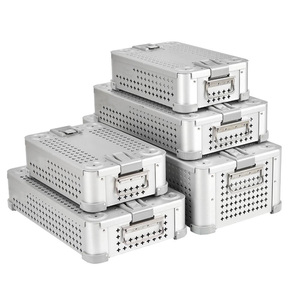
Our in-house R&D team consists of senior orthopedic bio-engineers, metallurgists, and surgical consultants who collaborate directly with hospital clients to manufacture customized implants, specialized instrument trays, and novel suture delivery systems suited for global market demands.
Detailed answers to technical, regulatory, and commercial queries for meniscal repair devices and orthopedic implant procurement.
Looking for direct factory pricing, reliable OEM production, or exclusive regional distribution rights? Contact our international medical export team today for technical catalogs, product samples, and quotation details.