
Engineered with high-grade Titanium Alloy (Ti-6Al-4V ELI) and Pure Titanium for superior osteosynthesis, angular stability, and anatomical alignment.
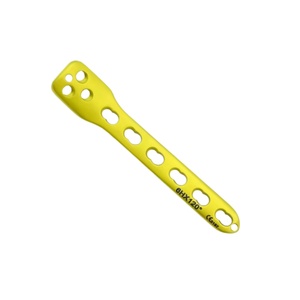
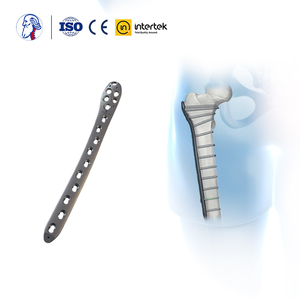
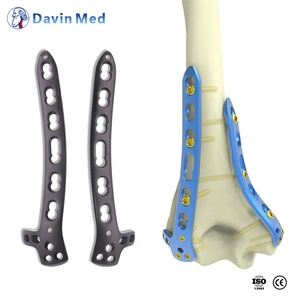
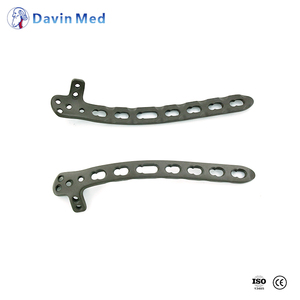
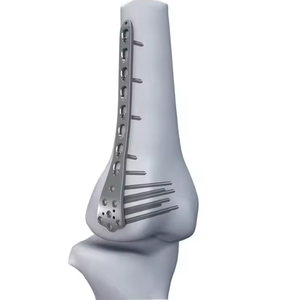
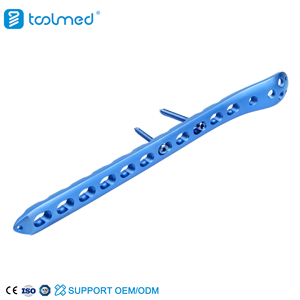
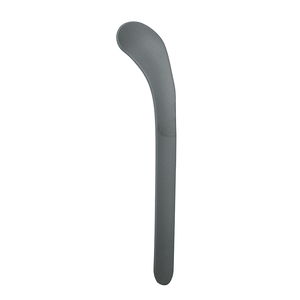
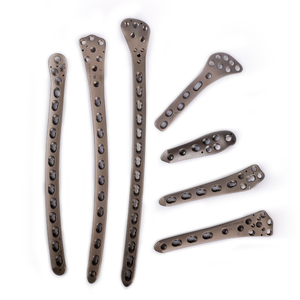
Proximal humerus fractures account for approximately 5% to 6% of all adult fracture cases, occurring with high frequency among elderly osteoporotic populations and young trauma patients. The clinical management of 2-part, 3-part, and complex 4-part proximal humerus fractures has undergone a paradigm shift due to the introduction of Anatomical Proximal Humerus Locking Compression Plates (LCP). Designed around the established PHILOS (Proximal Humeral Interlocking System) principles, contemporary plates manufactured by leading Chinese orthopedic OEMs combine rigid fixation with biomechanical dynamic stability.
The core challenge in proximal humerus fracture fixation lies in avoiding screw pull-out, avascular necrosis (AVN) of the humeral head, and loss of reduction (varus collapse). Chinese trauma implant manufacturers have addressed these challenges through several key engineering breakthroughs:
Placement of inferomedial calcar screws is crucial for preventing postoperative varus collapse. Modern proximal humerus plates incorporate specific targeted screw hole trajectories that direct 3.5mm locking screws directly into the dense inferomedial bone matrix of the humeral head, restoring the medial biomechanical column.
Plates are precision-machined with peripheral suture holes along the proximal head boundary. These eyelets enable orthopedic surgeons to anchor the subscapularis, supraspinatus, and infraspinatus tendons directly to the plate using non-absorbable sutures, neutralizing muscle traction forces on tuberosity fragments.
Furthermore, the transition from conventional pure titanium to ultra-high-grade Ti-6Al-4V ELI (Extra Low Interstitial) Titanium Alloy has increased fatigue resistance by over 35%. This high fatigue strength prevents plate breakage during early post-operative mobilization and functional physical therapy.
Key market shifts shaping global hospital group purchasing, medical device distribution, and B2B OEM manufacturing contracts through 2030.
Fixed-angle monoaxial locking plates are increasingly being superseded by Variable-Angle (VA) polyaxial locking systems. Buyers are seeking plates that permit up to 15°–30° of screw trajectory trajectory adjustments within the locking hole. This allows surgeons to tailor screw paths around localized bone voids or pre-existing hardware without sacrificing locking torque strength.
With the European Union enforcing strict EU MDR 2017/745 guidelines and the US FDA standardizing 510(k) clearances, hospital buyers are consolidating vendor lists toward top-tier Chinese manufacturers possessing full technical documentation, clinical evaluations (CER), and automated batch-traceability systems.
Additively manufactured titanium implants tailored via pre-operative CT modeling are shifting from niche custom solutions into standardized volume manufacturing. Top Chinese factories are adopting electron beam melting (EBM) and direct metal laser sintering (DMLS) to produce porous trabecular titanium surfaces that promote rapid osseointegration.
Understanding the mechanical attributes of different implant materials is essential for medical device distributors and hospital procurement committees evaluating Chinese manufacturing suppliers.
| Specification Parameter | Ti-6Al-4V ELI (Grade 5 Titanium) | Commercially Pure Titanium (CP Grade 4) | Stainless Steel 316LVM (ISO 5832-1) |
|---|---|---|---|
| Tensile Strength (MPa) | ≥ 860 MPa | ≥ 550 MPa | ≥ 690 MPa |
| Yield Strength (MPa) | ≥ 795 MPa | ≥ 480 MPa | ≥ 460 MPa |
| Modulus of Elasticity (GPa) | 110 GPa (Closer to cortical bone) | 105 GPa | 200 GPa (Higher stress shielding risk) |
| MRI / CT Compatibility | Minimal Imaging Artifacts | Extremely Low Artifacts | Moderate to Severe Artifacts |
| Surface Treatment | Type II Anodization (Anti-galling) | Standard Anodization | Electropolished Passivation |
| Primary Clinical Indication | High-load anatomical plates & screws | Low-profile mini plates & CMF | Cost-sensitive pediatric / trauma plates |
As a global leader in orthopedic implant manufacturing, our state-of-the-art 62,391 sq. ft. industrial complex in Vadodara, Gujarat (supported by advanced Chinese machining technology and international joint-venture engineering) sets the benchmark for quality assurance, production throughput, and global regulatory compliance.
Direct answers regarding product certifications, OEM customization, minimum order quantities (MOQ), and shipping logistics.
Our manufacturing facilities operate strictly under ISO 13485:2016 Quality Management Systems for Medical Devices. Our trauma implant lines, including proximal humerus and distal humerus locking plates, carry full CE Mark certificates (MDR 2017/745 compliant) and ISO 9001 certification. Technical Files (STED format) are readily available for national health registration (e.g., US FDA 510(k), COFEPRIS, ANVISA, SFDA).
Yes. We specialize in contract manufacturing for multinational medical device brand owners and regional distributors. Our OEM services include custom laser etching (logo, SKU number, lot traceability barcodes), customized color anodization (gold, blue, green, magenta for anatomical identification), custom surgical container/tray design, and custom sterile packaging solutions.
Our proximal humerus plates feature double-threaded locking holes (LCP dynamic compression design). As the 3.5mm locking screw is engaged, the threaded screw head locks directly into the internal thread of the plate hole. This creates a fixed-angle construct that acts as a single structural unit, preventing screw toggle, back-out, or secondary loss of reduction, even in bone with compromised mineral density.
For standard catalog items (regular lengths and hole configurations), our MOQ starts at just 10 to 20 units per size to support distributor stock initialization. Standard stock orders ship within 7–14 business days. For customized OEM production runs, typical lead time ranges from 30 to 45 days depending on raw material forging and tooling requirements.
Yes, we manufacture complete, fully autoclavable graphic instrument sets corresponding to each plate system. The proximal humerus locking plate instrument set includes drill guides, threaded drill sleeves, depth gauges, torque-limiting screwdrivers (1.5Nm / 2.0Nm), bent plate benders, and holding forceps, packaged in customized anodized aluminum sterilization trays.
Products are available in two supply modes: Non-Sterile bulk packaging (individual protective poly-bags inside cleanroom cartons with user manuals) or Pre-Sterilized packaging (double Tyvek peel pouches sterilized via Gamma Irradiation or Ethylene Oxide / ETO, offering a validated 5-year shelf life).
Contact our international engineering sales team today to request product catalogs, sample plates, technical compliance files, or factory audit schedules.