
Explore our export-grade orthopedic pin systems manufactured with 316LVM surgical stainless steel and Ti-6Al-4V ELI titanium alloys. Designed for rigid skeletal traction, temporary joint stabilization, and external fixation assembly.
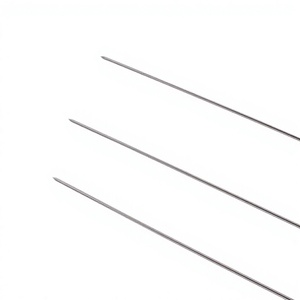
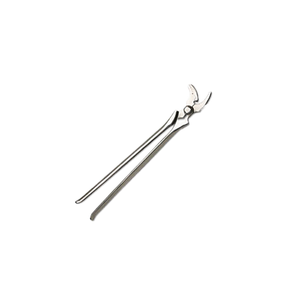
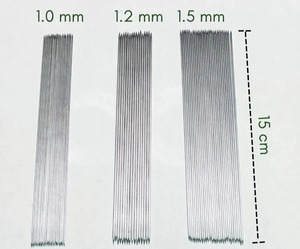
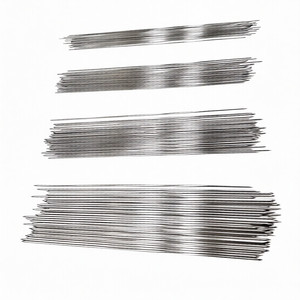
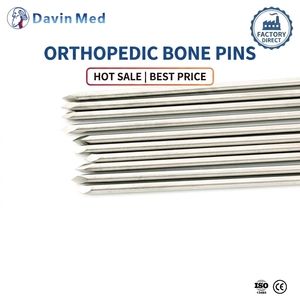
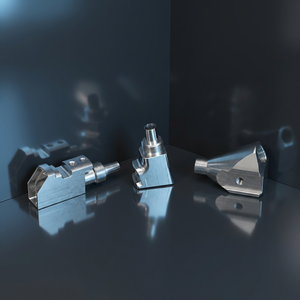
Backing your supply chain with over 30 years of industrial mastery, advanced multi-axis CNC Swiss turning centers, and exhaustive quality management systems designed for zero-defect production.
Our manufacturing campus houses ultra-precision 5-axis CNC machining complexes and Swiss-type automatic turning lathes. This guarantees dimensional tolerances within ±0.005mm for micro-threaded and diamond-point Steinmann pins.
Operated by 18 dedicated RA/QA and QC specialists, our testing protocol includes optical profile projection, spectral material analysis, bio-burden testing, and 100% axial strain verification prior to cleanroom packaging.
With an active distribution footprint across 50+ countries, we provide complete technical dossiers (STED), Certificate of Analysis (CoA), material traceability (MTR), and localized OEM labeling for global tender submissions.
A comprehensive technical analysis of Steinmann pins, Kirschner wires, and guide pins engineered for optimal biomechanical engagement and reduced thermal necrosis risk during orthopedic insertion.
In orthopedic trauma and external fixation, the selection of metallic raw materials directly dictates flexural rigidity, fatigue lifespan, and tissue compatibility. As a premier China exporter, our production strictly utilizes medical-grade certified alloys:
| Mechanical Property | 316LVM Surgical Stainless Steel | Ti-6Al-4V ELI Titanium Alloy | Surgical Impact / Clinical Benefit |
|---|---|---|---|
| Density (g/cm³) | 7.95 g/cm³ | 4.43 g/cm³ | Titanium reduces overall weight in multi-pin external constructs. |
| Elastic Modulus (GPa) | 193 - 200 GPa | 110 - 114 GPa | Lower modulus reduces stress shielding at pin-bone interfaces. |
| Tensile Strength (MPa) | 1000 - 1350 MPa | 860 - 960 MPa | 316LVM offers higher load-bearing capacity during traction. |
| Corrosion Resistance | High (Pitting Resistance Equivalent ≥ 26) | Exceptional (Passivated TiO₂ Oxide Layer) | Eliminates heavy metal ion leaching during prolonged fixation. |
| Tip Geometries Available | Trocar, Diamond, Threaded, Flat End | Trocar, Diamond, Threaded Tip | Optimizes self-drilling efficiency and reduces thermal friction. |
The cutting efficiency of a Steinmann pin determines heat generation during bone cortical penetration. Temperatures exceeding 47°C for over 1 minute cause osteocyte death (thermal necrosis). Our CNC ground Trocar and Diamond tips feature acute relief angles that cut bone cleanly, minimizing torque requirements and preserving bone structure integrity.
Smooth Steinmann pins permit axial micro-sliding, suitable for traction or temporary joint pinning. Conversely, centrally or end-threaded pins engage bone cortices via precision pitch threads (0.8mm - 1.25mm), dramatically increasing pin pull-out strength and preventing pin migration under cyclic walking load vectors.
All finished pins undergo automated ultrasonic chemical cleaning and nitric/citric passivation per ASTM F86 standards. This process forms an impermeable chromium-oxide or titanium-oxide surface film, yielding surface roughness values of Ra < 0.2 µm to inhibit bacterial adhesion and biofilm formation.
Key technological shifts shaping global tender requirements, hospital procurement strategies, and manufacturing innovations through 2026-2030.
While 316LVM remains the workhorse for temporary skeletal traction, next-generation pediatric trauma and sports medicine procurement is moving toward high-purity magnesium alloys (WE43). These pins provide temporary fixation and naturally resorb within 6-12 months, eliminating secondary hardware removal procedures.
Surgical robotics demand sub-millimeter tolerances on guide wire straightness and tip eccentricity. Modern purchasing departments prioritize manufacturers utilizing laser-guided dial indicator testing to ensure wire runout stays below 0.02mm over a 300mm length for flawless optical navigation tracking.
Global health systems are enforcing strict decarbonization mandates. B2B contracts increasingly require eco-friendly, non-toxic chemical passivation processes ("Blush/Green Passivation") and recyclable sterile blister packaging that complies with EU MDR 2017/745 environmental guidelines.
A step-by-step evaluation framework designed for medical device importers, hospital procurement officers, and B2B distributors to verify manufacturing integrity.
When selecting an OEM/ODM manufacturing partner in China, technical buyers must scrutinize raw material origin, machining infrastructure, and cleanroom packaging capabilities. Use our standardized 4-tier verification protocol:
Demand Mill Test Certificates (MTC) matching heat numbers for every stainless steel or titanium batch. Verify compliance with ASTM F138 (316LVM) or ASTM F136 (Ti-6Al-4V ELI) chemical compositional specs via independent spectrographic analysis.
Inspect the manufacturer's centerless grinding machinery. Steinmann pins must maintain absolute roundness and axial straightness to prevent wobbling during drill insertion, which can enlarge the bone tunnel and cause pin loosening.
Verify that final washing, double PE pouch sealing, and packaging take place in a certified ISO Class 7 (Class 10,000) cleanroom. Request validated EO (Ethylene Oxide) or Gamma irradiation sterilization reports per ISO 11135 / ISO 11137 standards.
Direct answers to common questions raised by hospital purchasing committees, medical device distributors, and OEM brand owners.
Partner with China's leading orthopedic exporter. Contact our engineering and sales desk today to receive complete technical specification sheets, compliance dossiers, and wholesale volume pricing.