
Explore our ISO 13485 and CE certified surgical solutions engineered for trauma, arthroplasty, and reconstructive procedures worldwide.
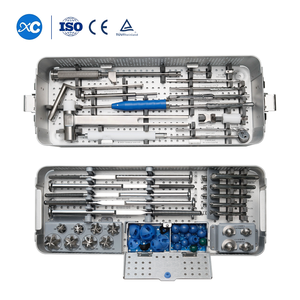
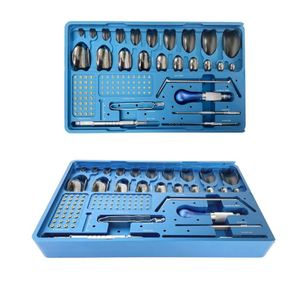
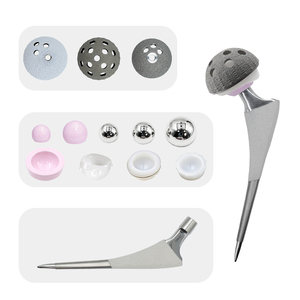
In complex trauma stabilization, periprosthetic fracture fixation, and open reduction internal fixation (ORIF) procedures, the execution of circumferential or tension-band wiring demands meticulous surgical technique. As a specialized instrument exporter and manufacturer, we analyze the structural dynamics, tissue manipulation mechanics, and procurement logistics of high-grade surgical wire passers.
Precision-contoured semi-circular shafts enable seamless subperiosteal passage around femoral, humeral, and tibial shafts. The cannulated design minimizes soft tissue dissection, protecting the periosteal blood supply during cerclage wire placement.
Forged from ultra-pure, vacuum-arc remelted (VAR) medical-grade stainless steel. Exceptional yield strength resists mechanical deformation under torsional stress when maneuvering around thick cortical bone structures.
Hand-polished bullet tips reduce micro-trauma to adjacent vascular structures and muscle bodies. Integrated eyelet notches hold 1.0mm to 1.8mm monofilament or braided cable wire securely during retrograde positioning.
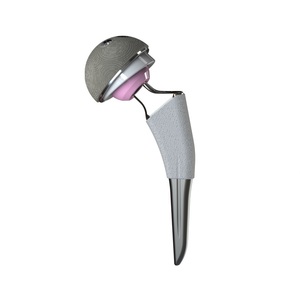
During revision total hip arthroplasty (THA) for periprosthetic fractures (Vancouver Type B1/B2), bone stock compromise is common. Conventional instruments often struggle to pass wires behind expanded cementless femoral stems. Advanced China-manufactured wire passers feature a variable-radius curve (ranging from 45mm to 75mm curvature radii) allowing orthopedic surgeons to navigate the narrow posterior cortex without impinging upon pre-existing stem interfaces.
Comparing surgical instrument material grades, tip configurations, and clinical application fields for global wholesale buyers:
| Instrument Class | Material Standard | Wire Diameter Compatibility | Tip Curvature Radius | Target Clinical Surgical Application |
|---|---|---|---|---|
| Standard Femoral Passer | AISI 316LVM / ISO 5832-1 | 1.0mm - 1.8mm Wire / Cable | 65mm Semi-Circular | Adult Femoral Shaft Fractures & Revision THA |
| Mini / Pediatric Passer | AISI 316L / ISO 7153-1 | 0.8mm - 1.2mm Monofilament | 35mm Compact Curve | Pediatric Trauma, Forearm & Tibial Cerclage |
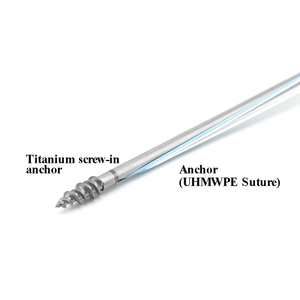
| Arthroscopic Cable Guide | Ti6Al4V ELI (ASTM F136) | Flexible Suture & 1.0mm Cable | 45mm Angled Guide Channel | Rotator Cuff Repair & Acromioclavicular Joint Fixation |
| Heavy-Duty Trochanteric Passer | Martensitic Stainless Steel 420 | 1.5mm - 2.0mm Heavy Wire | 80mm Deep Arc | Greater Trochanteric Reattachment & Pelvic Reconstruction |
Analysis of shifting global supply chains, regulatory convergence, and technological shifts governing Chinese orthopedic instrument exports over the next decade.
Global medical device distributors are shifting from single-source buying to multi-regional hub sourcing. Chinese wholesale exporters are establishing bonded warehouse inventory buffers in Europe, South America, and the Middle East, reducing lead times from 45 days down to under 72 hours for high-volume SKUs.
With the transition from MDD to EU MDR (2017/745) and strict FDA 510(k) auditing standards, Tier-1 Chinese exporters are heavily investing in total technical documentation. Procurement managers now demand comprehensive raw material trace reports, passivation validation, and mechanical fatigue test protocols with every bulk delivery.
Distributors are moving away from stock generic catalog items toward custom-branded, procedure-specific instrument sets. 5-Axis CNC machining and rapid laser marking enable factory direct customization of handle ergonomics, curve radiuses, and laser etched scale markings for OEM partner brands.
How metallurgical engineering and surface chemistry are revolutionizing orthopedic instrument longevity and intraoperative safety.
Advanced citric and nitric passivation treatments form a dense chromium oxide coating ($\text{Cr}_2\text{O}_3$), resisting pitting corrosion caused by repeated high-temperature steam sterilization (autoclaving at 134°C).
Integration of Nickel-Titanium (Nitinol) super-elastic internal cores into thin-gauge wire passers allows the tip to deform slightly around complex anatomical obstacles without permanent plastic deformation.
Physical Vapor Deposition (PVD) titanium nitride coatings provide non-glare, tactile grip surfaces that prevent surgeon hand fatigue during lengthy revision joint reconstruction procedures.
Next-gen systems feature modular quick-coupling handles that accept multiple detachable wire passer tips, streamlining OR instrument trays and reducing sterilization overall pack weight.
Combining over 30 years of manufacturing heritage with state-of-the-art automated machining to power hospital networks across 50+ nations.
Our manufacturing campus utilizes multi-axis CNC Swiss lathes, 5-axis DMG MORI milling centers, and high-precision wire EDM (Electrical Discharge Machining) to guarantee sub-micron tolerances across all wire passer tips and handle mechanisms.
Every batch undergoes strict quality inspection, including coordinate measuring machine (CMM) dimensional checks, tensile stress testing, metallurgical spectro-analysis, and 100% optical inspection for micro-burrs prior to cleanroom packaging.
We supply full Technical Files (STED format), ISO 13485 quality system documentation, Certificate of Analysis (CoA) for raw materials, and sterilizer compatibility validation data to ensure rapid national regulatory approvals for our importers.
Key considerations regarding minimum order quantities, customization, shipping logistics, and compliance certificates for orthopedic wire passers.
We manufacture wire passers primarily from medical-grade Stainless Steel (AISI 316LVM / ISO 5832-1) for superior tensile strength and corrosion resistance. For specialized arthroscopic or lightweight sets, high-grade Titanium Alloy (Ti6Al4V ELI) options are available upon custom contract request.
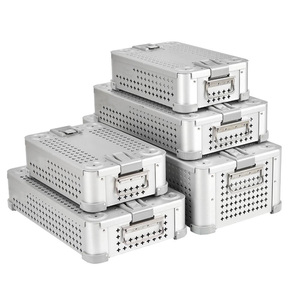
Yes. We offer complete OEM/ODM solutions. We can laser-etch your company logo, catalog SKU numbers, and lot traceability codes directly onto the instrument body. Packaging options include individually pouch-sealed non-sterile, gamma-sterile pouches, or custom stainless steel sterilization cassettes.
For standard stock wire passer designs, our baseline wholesale MOQ starts at 20 units per SKU. Custom OEM orders typically require 50 to 100 units. Standard production lead time ranges from 15 to 30 business days depending on batch volume and surface finish specifications.
Our facility operates under a audited ISO 13485 Quality Management System. Raw titanium and stainless steel billets are sourced with full mill test certificates (MTC). Automated CMM inspection and optical profile projectors inspect every single tip geometry to prevent intraoperative failure.
All export orders are delivered with a comprehensive export documentation package, including: Certificate of Conformity (CoC), Material Traceability Certificates, ISO 13485 Factory Audit Certificates, CE Compliance Certificates, and Passivation Test Reports.
Absolutely. Our instrument tip eyelets and cannulated channels are engineered to accept all standard monofilament orthopaedic wires and braided cables ranging from 0.8mm up to 2.0mm outer diameter, ensuring seamless integration into existing hospital surgical trays.
Gain competitive advantage through direct factory pricing, ISO 13485 certified quality, and rapid OEM/ODM manufacturing. Request a customized B2B quotation or technical catalog today.