Explore our CE-certified total knee replacement tibial components, total hip prostheses, spinal systems, and arthroscopic surgical sets engineered for global distributors and hospitals.
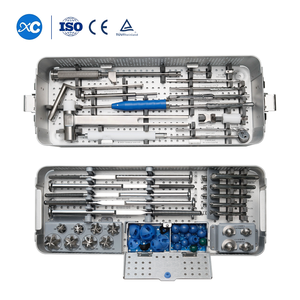
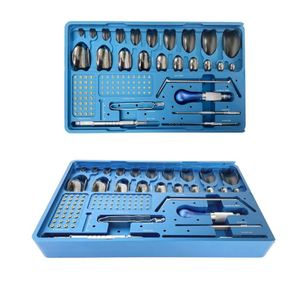
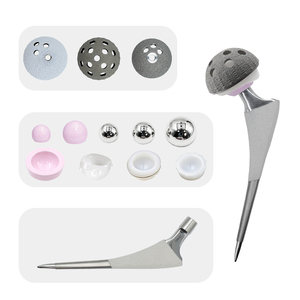
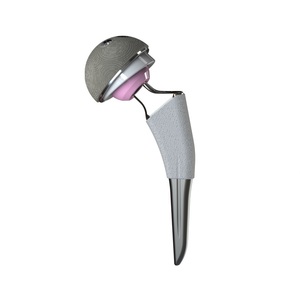
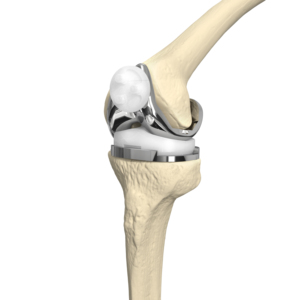
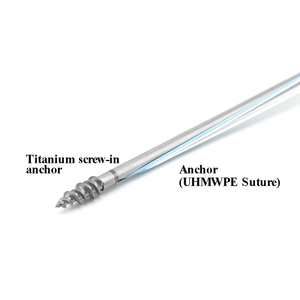
In modern total knee arthroplasty (TKA), the Tibial Component Implant serves as the structural foundation that bears, distributes, and transfers multi-axial weight-bearing forces from the femoral condyles to the proximal tibia. As a premier China wholesale tibial component implants factory and exporter, our engineering paradigm synthesizes strict biomechanical constraints with state-of-the-art metallurgical refinement to reduce aseptic loosening, micro-motion, and stress shielding.
Primary tibial baseplates are constructed predominantly from clinical-grade Cobalt-Chromium-Molybdenum (CoCrMo per ASTM F75 / ISO 5832-4) or Titanium-6Aluminum-4Valadium (Ti-6Al-4V ELI per ASTM F136 / ISO 5832-3) alloys. CoCrMo alloys yield exceptional stiffness and mirror-polished surface finishes (Ra < 0.02 µm) for modular tray-locking mechanisms, preventing backside wear when mating with Highly Cross-linked Polyethylene (XLPE) inserts. Conversely, Ti-6Al-4V components possess a elastic modulus significantly closer to human cortical bone (approx. 110 GPa vs. 210 GPa for CoCrMo), minimizing proximal tibial stress shielding and accelerating biological integration in cementless TKA procedures.
Anatomically contoured asymmetric tibial trays maximize cortical coverage of the resected tibial plateau by up to 98% without overhang, minimizing rotationally induced patellofemoral strain.
Cruciform and I-beam stem extensions distribute shear stresses deeper into the diaphyseal canal, essential for managing varus/valgus deformities and bone defects during primary or revision knee arthroplasty.
Precision 5-axis micro-machined perimeter rim locks combined with central anti-rotation pins achieve sub-micron tolerances, effectively eliminating micromotion-induced osteolysis.
| Material Standard | Tensile Strength (MPa) | Yield Strength (MPa) | Elastic Modulus (GPa) | Primary Clinical Application |
|---|---|---|---|---|
| Ti-6Al-4V ELI (ASTM F136) | ≥ 860 | ≥ 795 | 110 - 114 | Cementless Tibial Baseplates, Porous Biological Fixation |
| CoCrMo Alloy (ASTM F75) | ≥ 655 | ≥ 450 | 210 - 230 | Cemented Tibial Trays, Femoral Condyle Components |
| UHMWPE / XLPE + Vit E (ASTM F2695) | ≥ 40 | ≥ 21 | 0.8 - 1.2 | Tibial Insert Bearings (Fixed & Rotating Platform) |
| Porous Plasma Spray Ti Coating | Shear Strength ≥ 30 | Bond Strength ≥ 50 | Micro-porous Structure | Biological Osseointegration Layer (30-50% Porosity) |
The global total knee reconstruction market is experiencing a structural paradigm shift driven by demographic shifts, expanding healthcare access in emerging economies, and technological breakthroughs. Overseas healthcare procurement departments, medical device importers, and OEM brand owners must adapt to four transformative trends shaping the China wholesale orthopedic manufacturing ecosystem:
Driven by younger, more active knee replacement patient cohorts, demand for cementless porous-coated tibial components is growing at a CAGR exceeding 9.4%. Vacuum Plasma Sprayed (VPS) titanium and 3D additive manufactured trabecular titanium matrices enable direct bone ingrowth, eliminating PMMA cement degradation issues.
To virtually eliminate wear-debris-induced osteolysis, modern wholesale tibial implants increasingly integrate second-generation Highly Cross-linked Polyethylene infused with Vitamin E (α-tocopherol). This formulation maintains long-term mechanical ductility while resisting oxidative degradation in vivo.
Global surgical centers are moving toward Patient-Specific Instrumentation (PSI) and robotic surgical systems. Modern tibial baseplates feature digitally registered fiducial markers and standardized instrument interfaces compatible with optical and electromagnetic navigation systems.
From an economic and supply chain perspective, high-volume procurement officers are shifting away from localized small-batch vendors toward fully vertically integrated manufacturing factories in Asia. By consolidating raw material melting, 5-axis forging, CNC precision milling, surface passivation, cleanroom packaging, and EO sterilization under one ISO 13485-certified umbrella, international buyers reduce landed unit costs by 35% to 50% while guaranteeing lot-to-lot regulatory compliance.
Operating out of a modern 62,391 sq. ft. manufacturing campus in Waghodia, Gujarat, our facility represents the convergence of heavy precision engineering and sterile medical manufacturing. As a proven leader among global orthopedic implant manufacturers and exporters since 1992, our operational structure is meticulously built upon international regulatory frameworks including ISO 13485:2016, EU Medical Device Regulation (MDR 2017/745), and US FDA QSR 21 CFR Part 820.
Equipped with multi-axis Integrax machines, 5-axis DMG MORI CNC milling centers, and high-precision sliding-head automatic lathes capable of maintaining tight tolerances within ±0.005 mm on complex tibial tray geometries and locking rims.
Automated titanium plasma spraying and Hydroxyapatite (HA) coating chambers ensure controlled micro-porosity (pore sizes 100–400 µm) optimized for rapid osteoblast attachment and osteointegration.
Environmentally controlled cleanrooms dedicated to ultrasonic cleaning, final assembly, and primary pouch sealing, minimizing bioburden prior to Ethylene Oxide (EO) or Gamma Irradiation sterilization.
Our operational workforce includes 100 dedicated production staff, supported by a 10-person Quality Control team, 8 Regulatory Affairs specialists, and a 5-engineer R&D team using CMM and optical profilometry.
Direct answers to essential technical, regulatory, and commercial queries raised by OEM buyers, medical device distributors, and hospital procurement boards.
Elevate your orthopedic portfolio with precision-engineered, ISO 13485 certified tibial components, total knee systems, and custom OEM manufacturing solutions. Contact our export engineering team today for technical specs, bulk quotation tiers, and distributor partnerships.