
Standard and customizable surgical implants engineered to rigorous ISO 13485 and CE standards for global distribution.
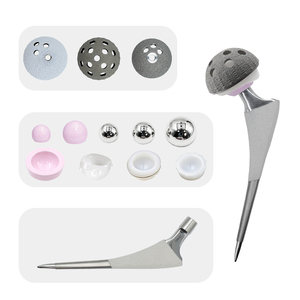
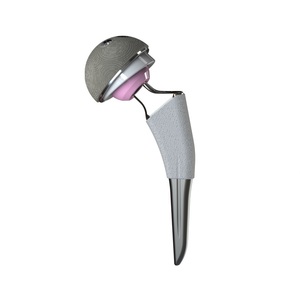
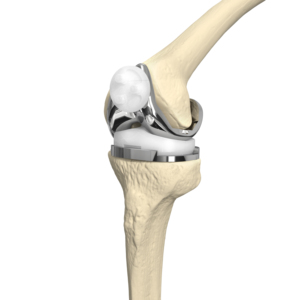
Total Hip Arthroplasty (THA) remains one of the most clinically successful procedures in modern reconstructive orthopedics. However, as surgical techniques transition toward minimally invasive approaches (Direct Anterior, SuperPath) and patient demographics range from high-demand young adults to osteoporotic geriatric populations, global orthopedic medical device brands face an urgent imperative: sourcing high-performance, precision-manufactured custom OEM femoral stem implants that deliver optimal primary stability and long-term osteointegration.
As a premier qualified B2B OEM contract manufacturer and global supplier, Sharma Orthopedic India Limited bridges the critical gap between complex biomechanical design and cost-effective, scalable production. With over 30 years of ISO 13485-certified manufacturing heritage, our Vadodara engineering facility produces OEM femoral stem solutions across cementless press-fit, cemented, modular revision, and customized patient-specific geometries.
Selection criteria for OEM partners based on proximal-distal load transfer mechanisms:
Understanding material dynamics, fatigue endurance limits, and surface modification science essential for global B2B procurement standardizations.
Custom OEM femoral stems require raw materials with uncompromising purity and biocompatibility. We process premium-grade Ti-6Al-4V ELI (ASTM F136 / ISO 5832-3) for cementless stems to optimize elastic modulus match with human cortical bone, reducing proximal stress shielding. For cemented applications, high-nitrogen CoCrMo Alloy (ASTM F75 / ISO 5832-4) and vacuum-arc remelted 316LVM Stainless Steel (ISO 5832-1) provide superior fatigue limits under high cyclic bending moments.
Primary mechanical press-fit must rapidly transition to secondary biological fixation. Our automated robotic plasma spray lines deposit Plasma-Sprayed Hydroxyapatite (HA) (ISO 13779) with controlled crystallinity (>62%) and porosity (>20%), alongside Vacuum Plasma Sprayed (VPS) Titanium Mesh Coatings. This creates an interconnected porous matrix (Ra 4.0–7.5 µm) that stimulates trabecular osteoblast migration and long-term implant survival.
Every OEM femoral stem design undergoes rigorous finite element modeling (FEA) and physical testing per ISO 7206-4 (endurance properties of stemmed femoral components under cyclic load) and ISO 7206-6 (neck region fatigue testing). Stems are subjected to 5 million cycles at load levels exceeding 2.3 kN, ensuring structural resilience against fatigue fracture even under high BMI patient loading scenarios.
| Implant Material Grade | Standard Specification | Tensile Strength (MPa) | Yield Strength 0.2% (MPa) | Modulus of Elasticity (GPa) | Primary Clinical Application |
|---|---|---|---|---|---|
| Ti-6Al-4V ELI | ASTM F136 / ISO 5832-3 | ≥ 860 | ≥ 795 | 110 - 114 | Cementless Press-Fit Stems, HA Coated Stems |
| CoCrMo Alloy (Cast) | ASTM F75 / ISO 5832-4 | ≥ 665 | ≥ 450 | 210 - 230 | Cemented Stems, Modular Heads |
| CoCrMo Alloy (Forged) | ASTM F1537 / ISO 5832-12 | ≥ 1000 | ≥ 700 | 220 - 240 | High-Stress Revision Stems & Monoblock Stems |
| Stainless Steel 316LVM | ASTM F138 / ISO 5832-1 | ≥ 860 | ≥ 690 | 190 - 200 | Veterinary Stems & Cost-Sensitive Trauma THA |
From 3D anatomical DICOM data conversion to cleanroom packaging: Our vertical integration guarantees rapid product launch cycles for global medical device suppliers.
Our dedicated R&D team transforms client specifications, CT scan segmentation data, or legacy implants into optimized parametric CAD models. Advanced Finite Element Analysis (FEA) simulates stress concentration at the neck-stem junction and proximal coating boundaries to eliminate micro-motion risk prior to tooling.
Utilizing multi-axis Integrax Swiss CNC machining centers and 5-axis DMG MORI milling machines, stem geometries, Morse taper angles (12/14, 11/13), and broach teeth profiles are produced with micron-level tolerances (±0.005 mm). For complex porous structures, Direct Metal Laser Sintering (DMLS) or Electron Beam Melting (EBM) is deployed.
Stems undergo automated ultrasonic cleaning, micro-bead blasting for controlled surface roughness, and automated plasma spray coating. Passivation in nitric acid baths per ASTM F86 removes free iron contamination, enhancing corrosion resistance in physiological environments.
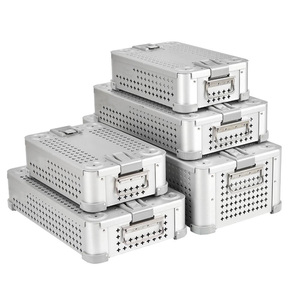
Final cleanroom assembly (ISO Class 7) guarantees low bio-burden levels. We provide fully validated primary blister packaging with Tyvek seals, inner/outer protective boxes, laser marking (UDI barcode compliance), and Gamma Irradiation or ETO sterilization services ready for retail distribution.
The global joint reconstruction market is experiencing a structural pivot. Medical device brand owners, hospital purchasing groups, and regional distributors are re-evaluating single-region supply chains in favor of resilient, high-capacity manufacturing partners located in established precision engineering hubs like India.
How Sharma Orthopedic guarantees zero-defect manufacturing across batch productions for international private label partners.
Coordinate Measuring Machines (CMM) with touch-trigger probes and optical vision systems inspect 100% of critical stem dimensions. Neck taper angles, offset distances, broach tooth pitch, and stem lengths are verified against master CAD specifications.
Using contact profilometers, surface roughness parameters (Ra, Rz, Rmax) are quantified across smooth polished neck zones (Ra < 0.05 µm to eliminate fretting wear) and proximal grit-blasted areas (Ra 4–7 µm) prior to HA deposition.
Chemical cleanliness validation per ISO 19227 ensures total organic carbon (TOC) and particulate residues are removed. Biocompatibility testing complies with ISO 10993 (cytotoxicity, systemic toxicity, sensitization, and pyrogenicity screening).
Addressing technical, regulatory, operational, and commercial questions for B2B medical device buyers and distributors.
Established in 1992, Sharma Orthopedic India Limited has grown into one of South Asia’s premier medical device manufacturers. Operating from our modern **62,391 sq. ft.** manufacturing complex in Vadodara, Gujarat, India, we combine European-caliber CNC technology with cost-effective production economics.
Our facility houses advanced multi-axis CNC machines, 5-axis DMG MORI machining centers, robotic plasma spray coating lines, automated passivation plants, and ISO Class 7 cleanrooms. With a dedicated team of over 100 skilled production technicians, 10 QC engineers, 8 RA/QA specialists, and 5 senior R&D design engineers, we empower global brands to scale their orthopedic product lines with speed, safety, and regulatory peace of mind.
Whether you are seeking custom OEM stem development, private label hip arthroplasty sets, or scalable contract manufacturing, our global engineering team is ready to evaluate your CAD specifications and RFQ requirements.