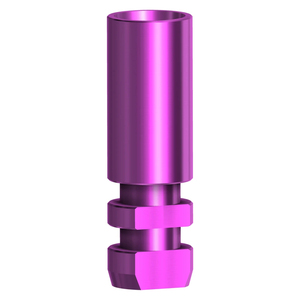
Reliable Digital Analog Replacement for Multiple Implant Systems
- High-grade Titanium / Stainless Steel
- Micron-level OEM dimensional tolerances
- Compatible with leading international brands

Explore our core medical-grade implants and instrument collection. Manufactured via 5-axis CNC high-precision grinding from biocompatible Stainless Steel (316LVM) and Titanium Alloy (Ti6Al4V ELI).
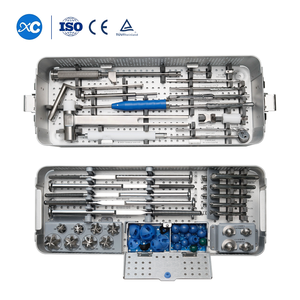
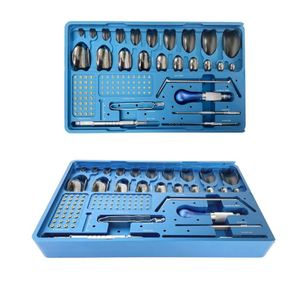
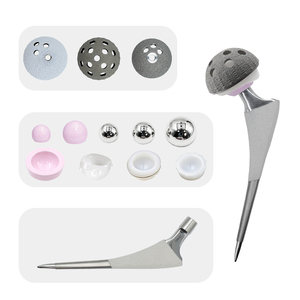
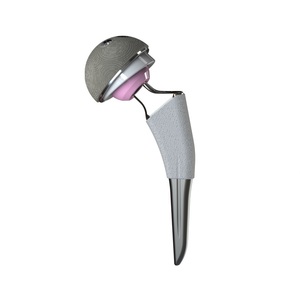
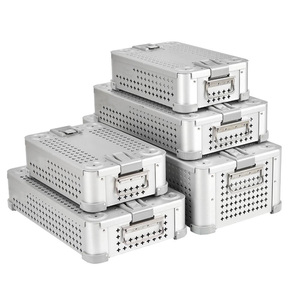
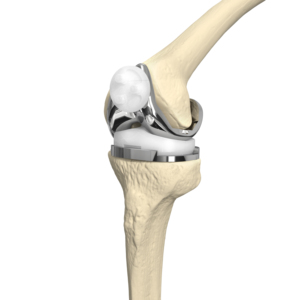
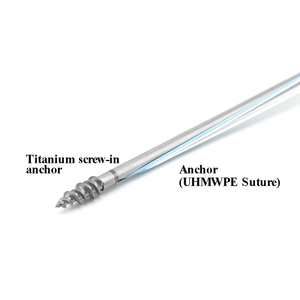
Kirschner Wires (K-wires) serve as fundamental transfixation pins in modern trauma, orthopedic, and pediatric bone surgery. As a primary manufacturer supplying OEM distributors worldwide, maintaining precise mechanical behavior, pin stiffness, and biocompatibility is paramount.
Information Gain Summary: Unlike standard surgical wires, custom OEM Kirschner Wires manufactured by our facility feature zero-burr electrolytic tip shaping, high torsional stiffness to prevent intraoperative drill-wobble, and controlled axial sharpness to minimize thermal necrosis during high-RPM bone penetration.
Medical-grade Vacuum Arc Remelted (VAR) stainless steel offers maximum corrosion resistance and enhanced micro-structural purity. Ideal for temporary skeletal fixation, cannulated drill guiding, and external traction pins where high tensile fracture resistance is mandated.
For long-term semi-permanent fixation or MRI-compatible pediatric procedures, our Ti6Al4V ELI Kirschner Wires provide a lower modulus of elasticity closer to cortical bone, significantly reducing stress shielding while offering superior biocompatibility.
Engineered for minimally invasive procedures requiring curved insertion vectors. Superelastic Nitinol Kirschner wires deliver remarkable flexural recovery without permanent deformation, facilitating complex joint reconstruction.
The following engineering data represents our standard OEM manufacturing parameters for orthopedic Kirschner wires and fixation pins:
| Material Specification | Standard Diameter Range (mm) | Tensile Strength (MPa) | Yield Strength (MPa) | Surface Passivation | Primary Clinical Application |
|---|---|---|---|---|---|
| 316LVM VAR Stainless Steel (ASTM F138) | 0.7 mm – 3.5 mm (0.028" – 0.138") | 1100 – 1400 MPa | ≥ 950 MPa | ASTM F86 Electro-passivated | Trauma Fixation, Fracture Pinning, K-Wire Traction |
| Titanium Ti6Al4V ELI (ASTM F136) | 1.0 mm – 3.0 mm (0.039" – 0.118") | ≥ 860 MPa | ≥ 790 MPa | Type II Anodization / Acid Etched | MRI-Sensitive Procedures, Pediatric Orthopedics |
| CoCrMo Super-alloy (ISO 5832-4) | 1.2 mm – 3.2 mm | ≥ 1250 MPa | ≥ 820 MPa | Mirror Mirror-Polish / Passivated | High Load-Bearing Joint Alignment Guides |
| Nitinol (Ni-Ti Shape Memory) (ASTM F2063) | 0.8 mm – 2.0 mm | 800 – 1100 MPa | 100 – 200 MPa (Superelastic) | Chemical Pickling / Oxide Layer | Minimal Invasive Curved Insertion Vectors |
As a specialized OEM/ODM medical device manufacturer based in Vadodara, Gujarat, we operate a 62,391 sq. ft. campus equipped with multi-axis Swiss CNC grinding stations, automated micro-deburring, and laser-marking machinery.
Three-sided precision point ground at engineered attack angles (15° to 22.5°). Delivers superior axial penetration through hard cortical bone with minimal thrust force, reducing drilling temperature.
Four-bevel cut point geometry designed for self-centering drill accuracy. Eliminates pin skiving across smooth cortical surfaces, making it ideal for percutaneous pin placement under fluoroscopy.
Fully customizable partially threaded or fully threaded K-wire tips. Micro-pitch threads prevent pin migration post-fixation, enhancing axial stability in cancellous bone structures.
High-contrast, non-degrading laser etchings at 10mm calibration intervals. Allows surgeons to accurately verify insertion depth and calculate reamer distances under live radiographical guidance.
Products are washed via automated ultrasonic solvent degreasing and packed inside Class 7 cleanrooms in protective peel pouches or autoclavable dispenser tube cartridges.
Custom laser logos, proprietary catalog numbering, customer-specific EAN/GS1 barcodes, and regulatory documentation packs customized for global hospital contract tenders.
Understanding user intent and clinical requirements allows us to optimize wire rigidity, ductility, and tip sharpness for specific anatomical regions and surgical techniques.
In pediatric supracondylar humerus fractures and growth-plate-sparing procedures, Kirschner wires serve as the gold standard. Smooth 1.5mm and 2.0mm K-wires offer temporary rigid fixation without causing premature physeal closure.
Metacarpal, phalangeal, and distal radius intra-articular fractures demand micro-diameter wires (0.8mm – 1.2mm) with trocar or diamond points that allow precise percutaneous insertion without splintering bone fragments.
Parallel K-wire placement combined with 316LVM cerclage wire converts tensile separation forces into compressive stabilizing forces across avulsion fracture lines in the patella and olecranon.
In Total Knee Replacement (TKR) and Total Hip Replacement (THR) procedures, non-threaded K-wires function as essential pilot alignment guides for cutting jigs, intramedullary reamers, and acetabular positioning instruments.
Established in 1992, Sharma Orthopedic India Limited has grown into one of Asia's premier manufacturers and global exporters of orthopedic implants and surgical instruments. Supplying healthcare institutions in over 50 countries, we combine surgical design expertise with rigorous regulatory oversight.
Factory Overview: Located in Waghodia, Vadodara, Gujarat, our facility operates 5-axis CNC grinding machines, automated passivating lines, robotic surface coating systems, and cleanroom packaging bays compliant with ISO 13485:2016 and international CE standards.
As global orthopedic procurement shifts toward value-based care and outpatient ambulatory surgery centers (ASCs), the demand for high-performance, cost-effective pin fixation systems is evolving rapidly.
Eliminating secondary surgeries for pin removal is a key focus. Emerging bioresorbable magnesium K-wires provide structural temporary stability while gradually degrading in vivo into non-toxic biological metabolites over 12-24 weeks.
Pin-tract infection remains a common complication in percutaneous fixation. Next-generation OEM K-wires incorporate nanostructured silver-ion or hydroxyapatite-antimicrobial coatings to dramatically reduce bacterial colonization along the pin tract.
With surgical robotics becoming standard in joint replacement and spine navigation, K-wires are now manufactured with enhanced dimensional tolerances (±0.005mm) and specialized optical tracking markers for precise robotic positioning.
Detailed answers to key commercial, technical, and regulatory questions asked by medical device distributors and hospital purchasing managers.