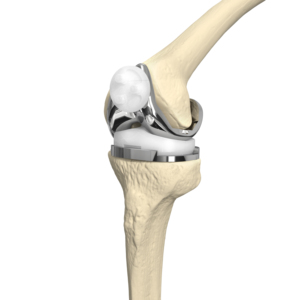
OEM & ODM Medical Grade Implants

Custom OEM Sacroiliac Joint Fusion Implants Manufacturer & Supplier

Global contract manufacturing of ISO 13485 & CE certified Sacroiliac (SI) joint arthrodesis implants, 3D porous titanium systems, and precision orthopaedic instrumentation.

Portfolio Overview

Featured OEM Orthopaedic Implants & Instrumentation

Engineered for surgical precision, biomechanical durability, and accelerated osseointegration across global markets.

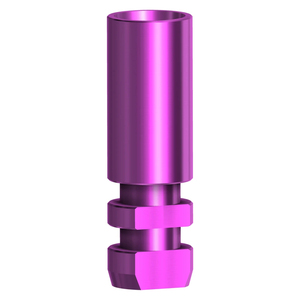
Reliable Digital Analog Replacement for Multiple Implant Systems

Reliable Digital Analog Replacement System

Inquire Now
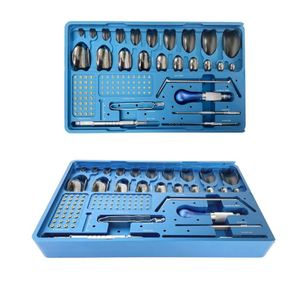
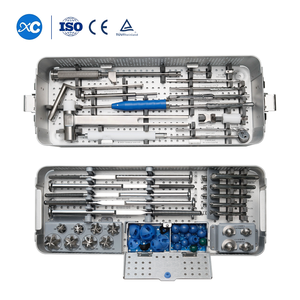
Stainless Steel Total Hip & Joint Replacement Surgical Instrument Set

Stainless Steel Total Joint Instrument Set

Inquire Now
Small Animal & Human Total Hip Replacement Pedicle Screw Instrument Set

Total Hip & Pedicle Screw Instrument Set

Inquire Now
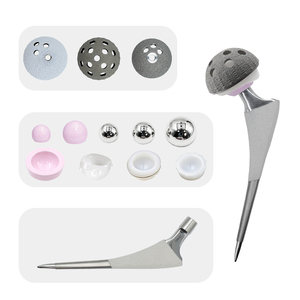
Cementless Artificial Acetabulum Total Hip Joint Prosthesis System

Cementless Artificial Joint Prosthesis System

Inquire Now
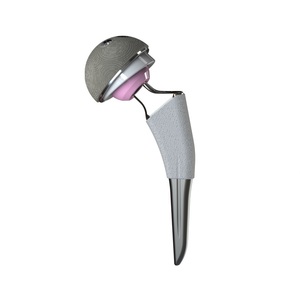
Orthopedic Titanium Hip & SI Joint Prosthesis Implant

Orthopedic Titanium Joint Prosthesis Implant

Inquire Now
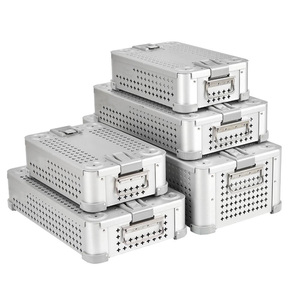
Essential Surgical Implants & Instrument Collection

Essential Surgical Implants Instrument Collection

Inquire Now
Arthroplasty Artificial Joint CoCrMo Alloy Orthopedic Implants Kit

Arthroplasty CoCrMo Alloy Joint Replacement Kit

Inquire Now
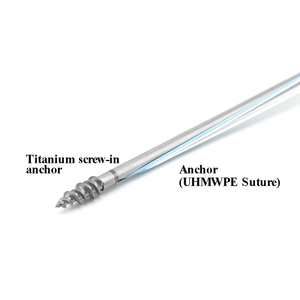
Orthopedic Shoulder & Joint Reconstruction Knotless Titanium Suture Anchor System

Knotless Titanium Suture Anchor System

Inquire Now
Manufacturing Authority

Sharma Orthopedic India Limited — Global OEM/ODM Infrastructure

Over 30 years of medical device engineering excellence, serving orthopedic brands and healthcare providers in 50+ countries.

Founded in 1992, Sharma Orthopedic India Limited (SOIPL) has established itself as one of the premier OEM contract manufacturers and global suppliers of spinal, sacroiliac, trauma, and total joint arthroplasty implants. Operating from a state-of-the-art 62,391 sq. ft. manufacturing campus in Vadodara, Gujarat, our infrastructure combines ultra-precision multi-axis CNC Swiss machining, 3D additive manufacturing, cleanroom packaging, and rigorous metallurgical laboratory testing.

"As a trusted B2B partner for international orthopedic brand owners and hospital networks, Sharma Orthopedic maintains over 10,000 active SKUs, supported by a multidisciplinary team of 100+ production personnel, 10 quality control specialists, 8 regulatory affairs engineers, and dedicated R&D design specialists."

Our OEM/ODM manufacturing capability for Sacroiliac Joint Fusion Implants encompasses the full product lifecycle: from initial DICOM-based anatomical modeling and biomechanical FEA (Finite Element Analysis) simulation to custom CNC machining of Ti-6Al-4V ELI (ASTM F136) titanium alloy, surface modification (Plasma Spray Hydroxyapatite and Trabecular Porous Mesh), and cleanroom packaging complying with ISO 11607.

30+
Years of Manufacturing Heritage
50+
Global Export Countries
10,000+
Certified Product SKUs
62.3K
Sq. Ft. ISO Cleanroom Facility

5-Axis CNC & Swiss Machining

State-of-the-art multi-axis CNC lathe turning and high-speed milling equipment ensuring sub-micron dimensional accuracy for complex SI joint cannulated screws and triangular fusion implants.

Additive 3D Titanium Printing

Direct Metal Laser Sintering (DMLS) producing interconnected porosity (60-70% pore ratio, 300-500µm pore size) mirroring human cancellous bone to promote rapid vascularization and osseointegration.

ISO Class 7/8 Cleanroom Packaging

Controlled environmental manufacturing, ultrasonic multi-stage cleaning, endotoxin testing, and validated double-sterile blister packaging compatible with ETO and Gamma irradiation sterilization.

Request Contract Manufacturing Dossier
Technical Whitepaper

Architectural Engineering of OEM Sacroiliac Fusion Implants

Decoupling shear stresses, maximizing bone-implant contact area, and ensuring rotational stability across the SI joint line.

The sacroiliac joint is the largest axial joint in the human body, transmitting massive multi-directional shear forces between the spine and the pelvic girdle. Sacroiliac joint dysfunction—resulting from degenerative sacroiliitis, post-traumatic disruption, or adjacent segment disease following lumbar spinal fusion—demands structural implants capable of immediate mechanical stabilization followed by rapid biological arthrodesis.

As a specialized contract manufacturer, Sharma Orthopedic engineers customized OEM Sacroiliac Joint Fusion Implants designed around three foundational biomechanical principles:

  • Anti-Rotational Geometric Profiles: Triangular cross-sections and dual-pitch aggressive threads resist torsional shear loads far superior to standard cylindrical bone screws, preventing micro-motion at the joint interface.
  • Through-Hole Graft Windows (Internal Autograft Packing): Large lateral fenestrations allow bone graft, autologous blood aspirate, or demineralized bone matrix (DBM) to be packed directly through the body of the implant, enabling continuous trans-iliac bone bridge formation.
  • Bio-Engineered Surface Micro-Texture: Plasma-sprayed porous Hydroxyapatite (HA) or direct 3D-printed trabecular titanium coatings accelerate osteoblast adhesion, significantly shortening the postoperative recovery timeline.

Triangular Cross-Section Implants

Engineered with a unique 3-sided geometry that increases structural contact area by over 300% compared to smooth cylindrical pins. Distributes compressive loads evenly across both the ilium and sacrum.

MIS Cannulated Threaded Systems

Equipped with self-tapping flutes, guide-wire cannulation for fluoroscopic or navigation-guided placement, and integrated helical threads for controlled joint compression and stabilization.

Data Visualization

OEM SI Joint Implants Specification Matrix

Comparative engineering benchmark for hospital procurement committees and MedTech OEM product managers.

Implant System Type Material Composition Surface Finish / Coating Primary Fixation Mechanism Ideal Surgical Trajectory Custom OEM Options
Triangular Porous SI Fusion Dowel Ti-6Al-4V ELI (ASTM F136) DMLS Trabecular Porous Mesh (300-500µm) Interference fit & micro-textured press-fit Trans-iliac lateral approach Custom lengths (30mm - 70mm), custom pore density
Cannulated Lag Compression Screw Titanium Alloy / 316LVM Stainless Steel Anodized Type II / Plasma HA Coating Dual-pitch thread joint compression Posterolateral / Trans-iliac line Self-drilling/tapping flutes, custom drive heads
Hybrid Hydroxyapatite Coated Pin Medical Titanium ASTM F136 Titanium Plasma Spray + Hydroxyapatite (HA) Osteoconductive chemical & mechanical bond Lateral trans-sacral approach Color anodization, laser etched sizing marks
Patient-Specific Custom SI Plate ASTM F136 Titanium Alloy Bead-blasted satin or polished surface Multi-axial locking screws to sacrum & ilium Direct posterior surgical access DICOM-based 3D anatomical contouring
Download Full CAD & STEP Files
Strategic Market Analysis

Future Procurement & Global Trends in SI Joint Fusion (2025–2030)

Key technological shifts driving global demand for OEM contract manufacturing and localized supply chain resilience.

The global Sacroiliac Joint Fusion market is experiencing rapid expansion, projected to compound at over 14.5% CAGR through 2030. This growth is accelerated by heightened clinical awareness of SI joint pathobiology, expanding insurance coverage, and the rapid shift toward outpatient Ambulatory Surgical Centers (ASCs). Healthcare buyers, medical device brands, and OEM distributors must navigate several critical industry trends:

1. Dominance of Minimally Invasive Surgery (MIS)

Surgeons are moving away from open arthrodesis toward MIS lateral approaches using 3D navigation and robotic guidance. OEM implants must feature precision cannulation, high radio-opacity, and instrument sets calibrated for intraoperative navigation arrays.

2. Additive 3D Trabecular Titanium Supremacy

Traditional smooth machined implants are being rapidly phased out in favor of 3D additive porous titanium structures. These biologically active surface geometries promote cellular migration and early osseointegration, reducing revision rates.

3. Supply Chain Realignment to India

Global MedTech companies are actively diversifying OEM contract manufacturing outside traditional European centers. Indian manufacturers like Sharma Orthopedic offer high-precision, cost-optimized manufacturing supported by robust ISO 13485 and CE MDR regulatory compliance.

Procurement Intelligence

Frequently Asked Technical Procurement Questions

Addressing critical quality, regulatory, manufacturing, and logistics considerations for OEM buyers.

Q1 What medical-grade raw materials are used in Sharma Orthopedic's custom SI joint fusion implants?
We strictly utilize premium biocompatible materials sourced with full mill certificates. Our Sacroiliac implants are primarily forged and machined from Titanium Alloy Ti-6Al-4V ELI (Extra Low Interstitial) conforming to ASTM F136 / ISO 5832-3 standards. For specialized instrument components, we use surgical grade Stainless Steel 316LVM (ASTM F138) and custom biocompatible polymers such as PEEK (ASTM F2026) and Radel®.
Q2 Can Sharma Orthopedic manufacture customized OEM SI Joint Implants based on proprietary CAD models?
Yes. We offer complete OEM/ODM contract manufacturing services. Our engineering team works directly with your STP, STEP, or IGES CAD files. We conduct DFM (Design for Manufacturability) analysis, tooling optimization, prototype machining, biomechanical FEA testing, and mass production while enforcing strict NDA non-disclosure protection.
Q3 What international regulatory certifications do your manufacturing facilities hold?
Sharma Orthopedic operates under a fully certified Quality Management System complying with ISO 13485:2016, ISO 9001:2015, and Good Manufacturing Practice (GMP). Our products hold CE Certifications and are registered with national drug control authorities across 50+ countries in Europe, Asia, Latin America, and Africa.
Q4 What static and dynamic mechanical testing is performed on SI fusion implants prior to market dispatch?
Implants undergo rigorous mechanical evaluation under relevant ASTM standards, including ASTM F2193 (Standard Specifications and Test Methods for Components Used in the Surgical Fixation of the Spinal System) and ASTM F543 (Axial Pullout and Torsional Fatigue Testing for Medical Bone Screws). We verify ultimate static load resistance, fatigue limit endurance over 5 million cycles, and rotational shear resistance.
Q5 What surface modification options are available for custom OEM SI joint products?
We offer advanced surface engineering including Type II Color Anodization (titanium color-coding for size identification), Vacuum Plasma Sprayed Hydroxyapatite (HA) coating (providing a bio-conductive calcium phosphate layer), sandblasting/bead-blasting micro-roughening, and 3D additive porous titanium lattice structures.
Q6 What is the standard Minimum Order Quantity (MOQ) and production lead time for OEM contract orders?
Standard OEM MOQs vary depending on implant complexity. For standard customized titanium screws and SI dowels, initial pilot production batches start at 50 to 100 units per SKU. Prototype lead times range from 2 to 4 weeks, while full-scale production runs are completed within 6 to 8 weeks after final sample approval.
Q7 Do you supply matching surgical instrument sets for SI joint fusion procedures?
Yes. We design and manufacture comprehensive, ergonomic surgical instrument trays for SI Joint Fusion. Trays include Steinman pin locators, tissue retractors, joint decortication broaches, drill sleeves, depth gauges, cannulated drills, torque-limiting drivers, and custom stainless steel sterilization containers.
Q8 How is sterile packaging handled for international private labeling?
We provide both non-sterile bulk shipment options and cleanroom-sealed, sterile-ready double blister packaging featuring Tyvek® lids. Packaging is validated for Ethylene Oxide (ETO) or Gamma Irradiation sterilization according to ISO 11607 standards, complete with private labeling, customized barcodes, IFUs (Instructions for Use), and patient tracking stickers.
Consult Our Technical Engineering Team
Zero-Defect Commitment

Rigorous Quality Assurance & Traceability

Every single SI joint implant undergoes 100% optical dimensional verification and material traceability.

At Sharma Orthopedic India Limited, patient safety and surgeon confidence drive our zero-defect quality management policy. Operating within our Vadodara manufacturing headquarters, our 10-member Quality Control Department executes stringent multi-stage inspections:

Coordinate Measuring Machine (CMM)

High-precision Zeiss 3D optical coordinate measuring machines verify complex geometries, thread pitches, and surface tolerances to within sub-micron accuracy.

Full Material Traceability

Every single production batch is assigned a unique laser-etched Lot Code linked to raw material heat numbers, CNC machine parameters, operator logs, and cleanroom sterilization records.

Global OEM & ODM Partnership

Accelerate Your Orthopaedic Portfolio with Sharma Orthopedic

Partner with India's leading ISO 13485 certified contract manufacturer. Experience competitive factory pricing, uncompromised biological performance, and reliable global delivery.
Inquire Now