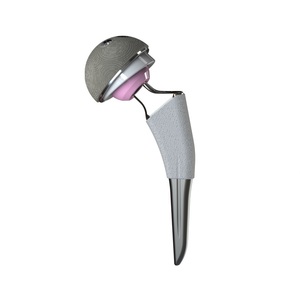
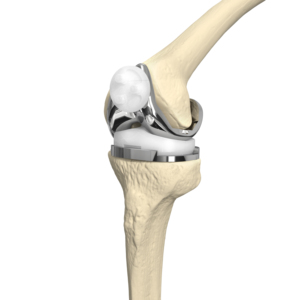
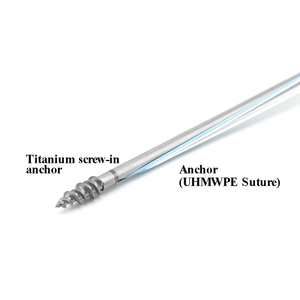
Explore our certified surgical implant components, custom OEM digital replacements, and specialized arthroplasty kits engineered for biomechanical excellence and rapid osseointegration.
Cervical Degenerative Disc Disease (CDDD) remains one of the primary drivers of chronic neck pain and radiculopathy globally. Historically, Anterior Cervical Discectomy and Fusion (ACDF) represented the gold standard for surgical intervention. However, while ACDF delivers predictable segmental stability and neural decompression, it eliminates natural physiological kinematics at the index level. Long-term clinical follow-up data over the past two decades has conclusively established that fusion increases biomechanical stress on adjacent segments, accelerating Adjacent Segment Disease (ASD) at a rate of 2.9% to 3.8% annually per patient level.
Total Cervical Disc Replacement (TDR) utilizing motion-preserving artificial cervical disc implants has emerged as the definitive surgical evolution. By mimicking natural intervertebral height, physiological lordosis, and multi-axial rotational freedom (flexion-extension, lateral bending, and axial rotation), modern cervical implants preserve natural spinal kinematics. This reduction in kinematic compensation directly minimizes stress concentration on adjacent facets and discs, resulting in clinically proven lower revision rates and enhanced long-term patient outcomes.
From patient-specific 3D CT reconstruction to micro-precision 5-axis CNC machining, our enterprise offers full-stack contract manufacturing services tailored for global orthopedic brand holders and hospital networks.
We work exclusively with implantable-grade materials including Ti-6Al-4V ELI (ASTM F136), Medical Grade Ultra-High Molecular Weight Polyethylene (UHMWPE ASTM F648), PEEK-OPTIMA®, and Cobalt-Chromium-Molybdenum alloys (CoCrMo ASTM F75) for optimal wear resistance and low debris generation.
Utilizing high-precision multi-axis Swiss CNC machining centers and direct metal laser sintering (DMLS) 3D printing technologies, we realize complex anatomical geometries, keel grooves, serrated endplate teeth, and porous trabecular titanium coatings down to ±5-micron tolerances.
Our proprietary Vacuum Plasma Spraying (VPS) process coats titanium endplates with Pure Titanium Powder (CP Ti) and Hydroxyapatite (HA). This creates an interconnected porous matrix with 60-70% porosity that stimulates immediate osteoblast adhesion and robust long-term osseointegration.
We provide full technical documentation supporting CE marking under EU MDR 2017/745 and US FDA 510(k) submissions. Our Regulatory Affairs team delivers comprehensive STED (Summary Technical Documentation), master files, biomechanical fatigue test data, and biological evaluation reports (ISO 10993).
Every customized disc design undergoes rigorous dynamic fatigue testing up to 10,000,000 cycles under combined axial compression, flexural bending, and torsional forces in accordance with ISO 18192-1 and ASTM F2343 standards to ensure zero mechanical failure over extended operational lifespans.
All finished cervical discs are washed using multi-stage ultrasonic systems, assembled, double-blister packed inside ISO Class 7 cleanrooms, and sterilized via Gamma Irradiation or Ethylene Oxide (EtO) with guaranteed 10⁻⁶ Sterility Assurance Levels (SAL) for immediate operating room deployment.
Our artificial cervical disc implants feature a modular design architecture available in fixed-core and sliding-core articulation variants. Below is an engineering overview of our standard OEM product parameters:
| Engineering Parameter | Metal-on-Polyethylene (MoP) Variant | Metal-on-Metal (MoM) Variant | Porous 3D Printed PEEK Variant |
|---|---|---|---|
| Primary Materials | Ti-6Al-4V ELI / CoCrMo + UHMWPE Core | CoCrMo Alloy (ASTM F75 / F1537) | PEEK-OPTIMA® + Porous Ti Endplates |
| Kinematic Articulation | Unconstrained / Semi-constrained Ball-Socket | Dual-Spherical Sliding Surface | Viscoelastic Integrated Core |
| Flexion / Extension Range | ± 10° to ± 15° | ± 12° | ± 10° (Physiological mimicry) |
| Lateral Bending Range | ± 8° to ± 10° | ± 10° | ± 8° |
| Axial Rotation Freedom | ± 5° to Unrestricted 360° | ± 6° | Controlled Elastic Stiffness |
| Disc Height Options | 4.5mm, 5.5mm, 6.5mm, 7.5mm, 8.5mm | 5.0mm, 6.0mm, 7.0mm | 4.5mm, 5.5mm, 6.5mm, 7.5mm |
| Endplate Footprint Sizes | Small (12x14mm), Med (14x16mm), Lrg (16x18mm) | Standard Anatomical Footprints | Customized Anatomical Footprints |
| Osseointegration Surface | VPS Titanium Plasma Coating + HA | Micro-serrated Keel & Porous Ti Coating | 3D Lattice Trabecular Structure |
| Dynamic Wear Rate (ISO 18192-1) | < 0.8 mg / million cycles | < 0.2 mg / million cycles | Negligible particulate debris |
| Fatigue Resistance (ASTM F2343) | 10 Million Cycles without deformation | 10 Million Cycles without deformation | 10 Million Cycles without structural shift |
The global market for cervical disc prostheses is expanding at an estimated CAGR of 9.4%, driven by demographic aging, expanding insurance coverage for motion preservation procedures, and rapid clinical transition from inpatient hospital surgeries to Ambulatory Surgical Centers (ASCs). Healthcare procurement leaders, surgical distributors, and hospital purchasing committees must navigate several defining market shifts:
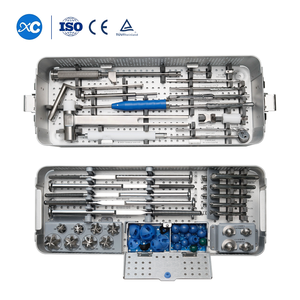
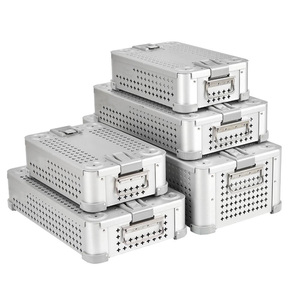
Surgeons in ASC settings demand streamlined, single-use, pre-sterilized procedure trays that eliminate expensive hospital autoclave cycles and decrease setup times. Procurement strategies are favoring OEM manufacturers that deliver color-coded, intuitive surgical instrument sets alongside implants. Our factory provides custom turn-key instrument kits engineered to reduce operative time by up to 18%.
Standard off-the-shelf sizes do not always accommodate complex cervical anatomy, severe kyphotic deformity, or revision surgery requirements. Procurement teams are partnering with ODM suppliers capable of converting DICOM data from pre-operative CT scans into custom 3D printed titanium cervical disc implants with optimized lordotic angles within 10 to 14 working days.
With the full implementation of the European Union Medical Device Regulation (EU MDR 2017/745) and heightened FDA post-market surveillance requirements, buyers are auditing their contract manufacturers more aggressively. Supply chains require 100% Unique Device Identification (UDI) compliance, batch-level raw material certification, and fully transparent quality management systems.
Post-operative evaluation via Magnetic Resonance Imaging (MRI) and Computed Tomography (CT) is critical for monitoring neural decompression and soft tissue healing. Heavy metal components cause severe artifact shadowing. Procurement officers are increasingly requesting hybrid PEEK/Titanium or radiolucent polymer designs with embedded radiopaque markers for unobstructed imaging clarity.
The engineering behind artificial cervical discs has progressed through three distinct architectural generations. Understanding these technological shifts allows procurement specialists to specify products with maximum market longevity:
Fixed center-of-rotation mechanisms made from stainless steel or Cobalt-Chrome. While successful in preserving basic motion, they transferred significant shear forces to the endplates and facet joints during non-physiological axial loading.
Introduced unconstrained UHMWPE cores sliding between dual-articulating titanium plates. This allowed instantaneous center-of-rotation (ICR) translation during neck movement, mimicking natural cervical biomechanics more closely.
Integrates single-piece compressible cores or 3D printed additive porous lattice structures that provide axial dampening, progressive stiffness under load, and zero micro-motion friction wear debris generation.
Recent biomechanical studies demonstrate that smooth titanium endplates relying solely on macro-keels experience higher primary displacement during early post-operative loading. Our factory’s proprietary micro-textured VPS titanium spray creates a dual-scale topography (macro-porosity 200-500 µm, micro-roughness 2-5 µm). This micro-roughness directly upregulates BMP-2 (Bone Morphogenetic Protein) expression in surrounding osteoblasts, accelerating primary stability within 4 weeks and reducing long-term subsidence rates by over 62% compared to non-coated prostheses.
Built upon three decades of surgical manufacturing heritage, our Vadodara industrial complex integrates complete vertical operations—from raw material forging to cleanroom sterile packaging.
Established in 1992, our state-of-the-art facility spans over 62,391 square feet in Waghodia, Vadodara, Gujarat, India. Engineered specifically for medical device manufacturing, the site operates high-speed multi-axis Integrax machines, 5-axis CNC milling centers, and specialized robotic coating equipment.
We maintain an uncompromising commitment to surgical safety and international quality standards. Ranked among the Top 3 orthopedic implant manufacturers in India, our products are actively distributed and clinically trusted in over 50 countries across Asia, Africa, Latin America, Europe, and the Middle East.
Answers to critical technical, manufacturing, regulatory, and supply chain inquiries for medical device distributors and OEM procurement directors.
Elevate your orthopedic product line with clinically proven, precision-engineered motion preservation implants. Contact our senior engineering and export procurement teams today to request product catalogs, CAD models, or custom OEM quotes.
Contact Us