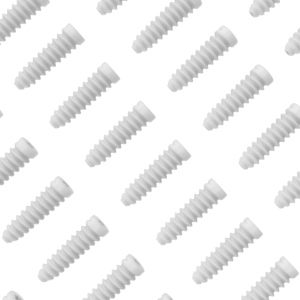
PLGA Bioabsorbable

Engineered for ACL/PCL reconstruction, tendon graft fixation, and sports medicine arthroscopy. Fully customizable for OEM contract manufacturing and global distribution.
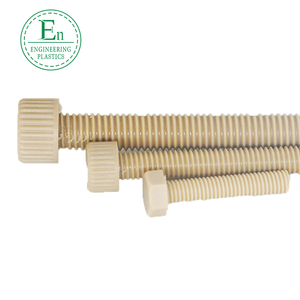
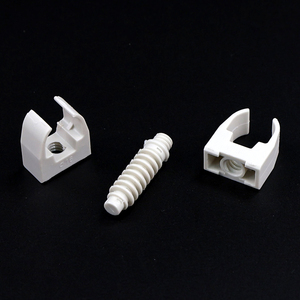
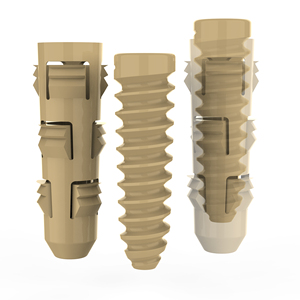
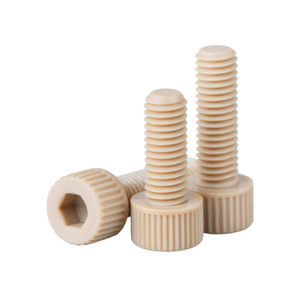
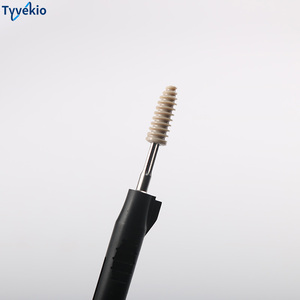
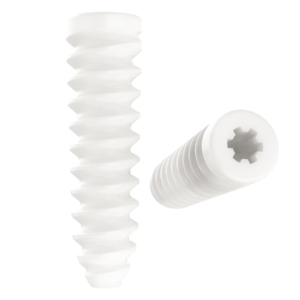
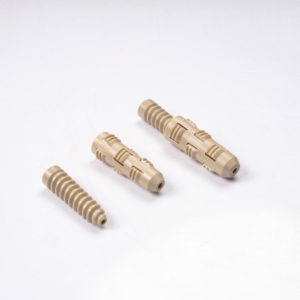
Anterior Cruciate Ligament (ACL) and Posterior Cruciate Ligament (PCL) reconstructions represent the cornerstone of modern sports medicine procedures. Achieving early knee stability and robust biological integration hinges entirely on the efficacy of tunnel fixation devices. Historically, metallic interference screws (comprising Titanium or Stainless Steel alloys) provided excellent initial pull-out strength. However, metallic implants introduced permanent artifacts in post-operative Magnetic Resonance Imaging (MRI), complicated potential revision surgeries requiring hardware removal, and risked graft laceration during intra-operative insertion.
The clinical shift toward bioabsorbable interference screws solved these challenges by providing immediate mechanical stability during early rehabilitation, while gradually degrading via bulk hydrolysis to allow complete bone substitution. As an established OEM/ODM bioabsorbable interference screw manufacturer, our material formulations balance immediate pull-out resistance with controlled degradation profiles designed to prevent foreign-body giant cell reactions and tunnel widening.
Selecting the optimal polymer matrix is the core determinant of implant longevity, mechanical integrity, and biological safety. OEM sourcing partners must align material choices with specific surgical preferences and localized healing timelines:
| Material Variant | Chemical Composition | In-Vivo Degradation Profile | Mechanical Modulus | Primary Clinical Application |
|---|---|---|---|---|
| PLGA | Poly(lactic-co-glycolic acid) [85:15 / 75:25] | 12 to 24 Months (Hydrolytic mass loss) | 3.2 - 4.5 GPa | Standard ACL/PCL Soft-Tissue & BTB Graft Fixation |
| PLLA-HA / β-TCP | 70% PLLA + 30% Hydroxyapatite / Tricalcium Phosphate | 24 to 36 Months (Osteoconductive substitution) | 5.0 - 7.2 GPa | High-Load Tunnel Fixation requiring Osteo-replacement |
| Medical Grade PEEK | Polyether ether ketone (Non-absorbable) | Permanent Hydrophobic Inertness | 3.6 GPa (Matched to Cortical Bone) | High-stress revision surgeries, non-absorbable preference |
PLGA Hydrolytic Cleavage Mechanism: PLGA degrades through ester bond cleavage into non-toxic lactic acid and glycolic acid monomers, which are subsequently metabolized via the Krebs cycle into carbon dioxide and water. Our precision extrusion and molding processes regulate monomer chain length and crystallinity, eliminating localized acidic bursts that historically contributed to osteolysis and aseptic inflammation.
Biocomposite Osteoconduction (PLLA-HA): By incorporating micro-particulate Hydroxyapatite (HA) or Beta-Tricalcium Phosphate (β-TCP) uniformly throughout the PLLA matrix, our biocomposite screws buffer acidic degradation by-products while presenting an osteoconductive scaffold that encourages osteoblast migration and structural trabecular replacement within the bone tunnel.
Interference screw geometry must generate sufficient friction between the bone graft (either Soft Tissue Quad/Hamstring or Bone-Patellar Tendon-Bone) and the femoral or tibial tunnel wall without disrupting collagen bundle integrity. Key structural innovations include:
Leveraging over 30 years of surgical manufacturing heritage, our 62,391 sq. ft. ISO 13485 certified facility delivers end-to-end contract manufacturing for global medical device brands.
In-house CAD/CAM engineering tailored to proprietary screw thread pitches, drive geometry, and cannulation diameters.
Cleanroom micro-injection molding and Swiss-turn 5-axis CNC machining dedicated to sensitive bioabsorbable polymers.
100% optical dimensional verification, torsional yield testing, and real-time degradation simulation per ASTM F2502 standards.
ISO Class 7 cleanroom pouching, custom private labeling, EtO validation, and full technical documentation support for CE/FDA filing.
As global healthcare procurement shifts toward value-based surgical outcomes, hospital chains and medical brand distributors must anticipate key technological paradigms:
First-generation bioabsorbable polymers were inert. Next-generation procurement focuses on biocomposites infused with Strontium, Magnesium micro-particles, or Silicated Hydroxyapatite. These additives actively stimulate osteogenesis and vascularization within the bone tunnel, reducing total remodeling cycles from 3 years down to under 12 months.
Geopolitical realignments and stringent EU MDR compliance costs have pushed multinational medical suppliers to establish secondary contract manufacturing hubs in qualified nations like India. Low manufacturing overhead combined with ISO 13485 certification offers high margin protection without regulatory compromises.
While bioabsorbable polymers dominate soft-tissue graft procedures, high-demand revision arthroscopy is leaning toward 3D printed porous PEEK screws. Incorporating interconnected pore sizes (300–500 µm) allows cellular ingrowth into non-absorbable substrates, combining biomechanical strength with long-term biological anchorage.
Comprehensive answers regarding raw material sourcing, regulatory compliance, testing protocols, and contract manufacturing logistics.
ISO 13485 quality management systems backed by rigorous Class 10,000 cleanroom manufacturing ensure every screw meets international surgical standards.
High-precision machining handles complex bio-polymer geometries with sub-micron tolerances, ensuring zero flash and structural perfection.
Exporting to over 50 nations across Europe, Asia, Latin America, and Africa with reliable lead times, full batch traceability, and dedicated account managers.
Partner with a premier ISO 13485 certified orthopedic implants manufacturer. Connect with our engineering and export desk for product samples, customized branding, and bulk pricing.