OEM/ODM Titanium Cannulated Screws Factories & Exporter

Global Contract Manufacturing, Precision Metallurgy, and ISO 13485 Certified Orthopedic Trauma Implants

Featured Implants & Surgical Instruments

Precision Orthopedic Implants Catalog

Explore our CE & ISO 13485 certified titanium and stainless steel orthopedic systems, crafted for superior osteosynthesis and biomechanical stability.
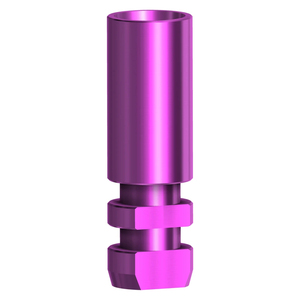
Reliable Digital Analog Replacement for Multiple Implant Systems

Reliable Digital Analog Replacement for Multiple Implant Systems

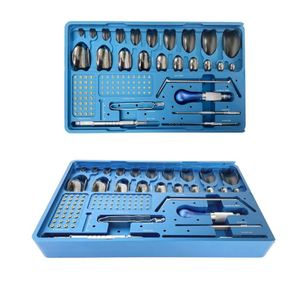
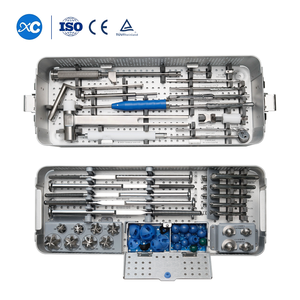
Stainless Steel Total Hip Prosthesis Joint Replacement Instrument Set

Stainless Steel Total Hip Prosthesis Joint Replacement Instrument Set

Small Animal Total Hip Replacement Veterinary Orthopedic Implants

Small Animal Total Hip Replacement Veterinary Orthopedic Implants Set

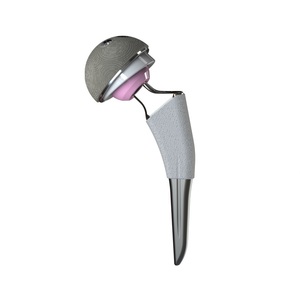
Cementless Artificial Acetabulum Total Hip Joint Prosthesis System

Cementless Artificial Acetabulum Total Hip Joint Prosthesis System

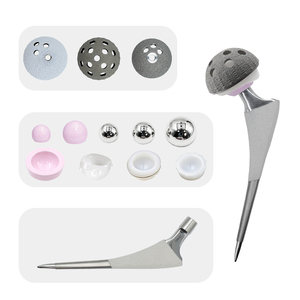
Orthopedic Titanium Hip Joint Prosthesis Implant Replacement

Orthopedic Titanium Hip Joint Prosthesis Implant Replacement Set

Essential Stainless Steel Hip Joint Prosthesis Replacement Collection

Essential Stainless Steel Hip Joint Prosthesis Replacement Collection

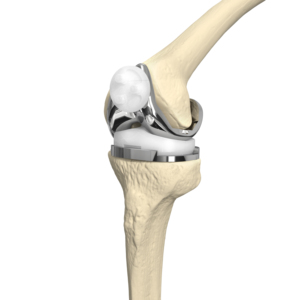
Arthroplasty Artificial Knee Joint CoCrMo Alloy Primary Replacement Kit

Arthroplasty Artificial Knee Joint CoCrMo Alloy Primary Replacement Kit

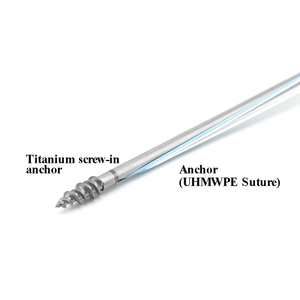
Shoulder Repair Knotless Titanium Suture Anchor Screw-in Needle System

Shoulder Repair Knotless Titanium Suture Anchor Screw-in Needle System

30+
Years Manufacturing Heritage
50+
Export Destination Countries
62K
Sq. Ft. State-of-Art Facility
10,000+
Precision SKUs Produced
Technical Whitepaper

Engineering Excellence in Titanium Cannulated Screw Manufacturing

In modern orthopedic traumatology and reconstructive surgery, titanium cannulated screws represent the cornerstone of minimally invasive internal fixation (MIS). Designed specifically to enable precise placement over a K-wire (Kirschner wire), cannulated screws allow orthopedic surgeons to achieve maximum interfragmentary compression, anatomical reduction, and optimal mechanical stability while minimizing soft-tissue disruption.

As a global lead OEM/ODM manufacturer headquartered in Vadodara, Gujarat (operating an expansive 62,391 sq. ft. ISO 13485 cleanroom infrastructure), our production ecosystem integrates advanced 5-axis Swiss CNC machining, high-concentricity deep-hole drilling, and strict metallurgical verification. This whitepaper provides a comprehensive technical overview of titanium cannulated screw biomechanics, metallurgical selection, OEM contract manufacturing workflows, and strategic global procurement trends for medical device distributors and hospital procurement managers.

Architectural Advantages

Key Engineering Innovations in Cannulated Screws

Every design iteration in our cannulated screw line prioritizes pull-out strength, axial compression, and seamless intraoperative handling.

Concentric Cannulation Geometry

Engineered via micro-drilling techniques ensuring flawless axial alignment. Eliminates guide wire binding, reduces frictional torque during insertion, and guarantees uniform stress distribution across the cannulated core.

Self-Drilling & Self-Tapping Flutes

Reverse-cutting flute profiles cut precise bone threads cleanly during insertion. This reduces thermal necrosis risk and speeds up procedure time in femoral neck, scaphoid, and ankle arthrodesis surgeries.

Ti-6Al-4V ELI Biocompatibility

Manufactured exclusively from Medical Grade Titanium Alloy (ISO 5832-3 / ASTM F136). Offers exceptional strength-to-weight ratio, low elastic modulus close to natural human bone, and superior MRI compatibility.

1. Metallurgical & Biomechanical Integrity: Ti-6Al-4V ELI vs. Stainless Steel 316LVM

Selecting the correct raw material substrate dictates implant longevity, osseointegration potential, and post-operative radiological clarity. While Stainless Steel 316LVM (ASTM F138) remains an economical choice for temporary trauma hardware, Medical-Grade Titanium Alloy Grade 23 (Ti-6Al-4V Extra Low Interstitial) has emerged as the global benchmark for permanent and semi-permanent cannulated screw applications.

  • Modulus of Elasticity: Titanium alloy features an elastic modulus of ~110 GPa, significantly lower than 316LVM Stainless Steel (~200 GPa). This reduced stiffness mimics cortical bone dynamics, mitigating stress shielding and promoting accelerated bone healing.
  • Corrosion Resistance & Passivation: Upon exposure to oxygen, titanium spontaneously forms a stable, protective titanium oxide (TiO2) passivating layer, offering complete immunity to body fluid corrosion and pitting.
  • Fatigue Life & Shear Resistance: Cold-worked Ti-6Al-4V ELI provides ultimate tensile strengths exceeding 860 MPa, ensuring the screw resists high shear stresses encountered during early weight-bearing protocols in femoral neck or calcaneal fractures.

2. Comprehensive Product Specifications & Engineering Matrix

Our OEM/ODM manufacturing facility supplies a complete spectrum of cannulated screw dimensions, available in partially threaded (for interfragmentary compression) and fully threaded options (for stability and fixation).

Screw Dia. (mm) Core Dia. (mm) Guide Wire Dia. Thread Length Options Primary Clinical Indications Material Standard
2.7 mm Mini 1.8 mm Ø 1.0 mm 8 mm – 30 mm (Short/Full) Scaphoid fractures, Hand & Foot osteotomies, Radial head fixations Ti-6Al-4V ELI / ISO 5832-3
3.5 mm Small 2.4 mm Ø 1.2 mm 10 mm – 50 mm Medial malleolus, Pelvic reconstruction, Distal radius, Carpal/Tarsal fusion Ti-6Al-4V ELI / ISO 5832-3
4.0 mm Small 2.6 mm Ø 1.35 mm 12 mm – 60 mm (Short/Long Thread) Tarsal/Carpal arthrodesis, Tibial plateau fractures, Malleolar fixation Ti-6Al-4V ELI / ISO 5832-3
4.5 mm Medium 3.0 mm Ø 1.6 mm 20 mm – 80 mm Subtalar joint arthrodesis, Femoral neck (pediatric), Tibial pilon fractures Ti-6Al-4V ELI / ISO 5832-3
6.5 mm Large 4.5 mm Ø 2.0 mm/2.8 mm 30 mm – 120 mm (16mm/32mm Thread) Femoral neck fractures, Slipped Capital Femoral Epiphysis (SCFE), Sacroiliac joint Ti-6Al-4V ELI / ISO 5832-3
7.3 mm Large 4.8 mm Ø 2.8 mm 40 mm – 130 mm (16mm/32mm Thread) Intracapsular femoral neck fractures, Intercondylar femur, Femoral osteotomies Ti-6Al-4V ELI / ISO 5832-3

3. Global Procurement Trends & Market Transformation (2025–2030)

The global market for orthopedic implants is undergoing a decisive shift. Hospital networks, distributor chains, and OEM brand owners are re-evaluating supply chain resilience and technical compliance. Key trends reshaping procurement include:

Custom OEM/ODM Color Anodization

Regulatory authorities require instant intraoperative sizing identification. Advanced Type II and Type III electrochemical color anodization (Navy Blue, Magenta, Gold, Green) ensures scratch-resistant coding that survives aggressive autoclave sterilization cycles.

Integration with Robotic Surgery Navigation

Next-generation cannulated screws are designed with ultra-strict geometric tolerances (+/- 0.01mm) to seamlessly align with computer-assisted orthopedic surgery (CAOS) and robotic navigation sleeves.

Supply Chain Diversification & Contract Manufacturing

Western medical brand owners are rapidly shifting contract manufacturing to certified Indian hubs like Gujarat, capitalizing on competitive scale, ISO 13485 certification, and extensive regulatory technical files (STED).

4. End-to-End Contract Manufacturing (OEM/ODM) Workflow

As a trusted global exporter, our OEM workflow transforms CAD blueprints into sterile-packaged, market-ready medical devices:

  • Phase 1: DFM & CAD/CAM Simulation: Design for Manufacturability analysis using SolidWorks and CAM software to optimize toolpaths, thread pitch geometry, and stress dissipation profiles.
  • Phase 2: Precision Swiss CNC Machining: Multi-axis Citizen & Star Swiss-type lathes execute outer threading, hex/torx socket broaching, and deep-hole micro-cannulation in a single automated setup.
  • Phase 3: Surface Treating & Ultrasonic Wash: Automated passivation removes free irons, followed by multi-stage ultrasonic cleanroom washing using DI water systems to achieve zero residue.
  • Phase 4: Optical Quality Control & Cleanroom Packaging: Keyence 3D optical comparators verify 100% of critical dimensions. Final sealing occurs in Class 7 (Class 10,000) cleanrooms in double-blister sterile packaging.
Procurement Insights

Frequently Asked Questions (FAQ)

Clear answers to crucial procurement, technical, and quality assurance questions for international buyers and distributors.

Q: What titanium grade is utilized in your OEM cannulated screw manufacturing?
We primarily manufacture our cannulated screws from implant-grade Titanium Alloy Ti-6Al-4V ELI (Grade 23) conforming to ASTM F136 and ISO 5832-3. We also offer Commercially Pure Titanium (CP Grade 4) and Stainless Steel 316LVM (ASTM F138) upon client specification.
Q: Can you manufacture custom thread pitches or proprietary head drive styles (e.g., Star/Torx drive)?
Yes, our ODM engineering team specializes in custom head geometries (Hexagonal, Torx/Star, T-Drive, Low-Profile) and tailored thread pitches. We can manufacture directly from your technical drawings (STEP/IGES/DWG) or reverse-engineer provided physical samples.
Q: What is the typical Minimum Order Quantity (MOQ) for custom OEM white-label production?
For standard catalog items under private labeling, our MOQ starts as low as 100 units per SKU size. For custom ODM designs requiring dedicated CNC tooling setups, MOQs typically range between 300 to 500 units per size, depending on complexity.
Q: How do you ensure cannulation concentricity and prevent K-wire jamming?
We utilize high-precision Swiss-type micro-drilling techniques with custom gun-drilling rigs. Every batch undergoes 100% pin-gauge verification along the full axis to ensure strict internal diameter tolerances (+0.05mm / -0.00mm), guaranteeing smooth K-wire sliding.
Q: What international regulatory certifications and technical files do you provide?
Our facilities operate under strict ISO 13485:2016 quality management systems. Our product portfolio holds CE marking and full technical documentation (STED files, biocompatibility reports according to ISO 10993, process validation, and gamma/E-beam sterilization validation).
Q: What is the lead time for global export shipments?
Standard inventory items ship within 7–14 working days. Custom OEM production runs typically require 30–45 days from final CAD drawing approval. Fast-track air freight options (DHL, FedEx, Air Cargo) ensure door-to-door delivery worldwide.

Partner with a World-Class OEM/ODM Orthopedic Manufacturer

Whether you need custom titanium cannulated screws, trauma instrument sets, or full contract manufacturing services, our engineering team is ready to support your market expansion.