
Intra-articular calcaneal fractures represent some of the most complex challenges in traumatology and foot/ankle surgery. accounting for roughly 60% of all tarsal injuries. The mechanical restoration of the posterior facet, re-establishment of Böhler’s angle (normally 20° to 40°), and maintenance of Critical Angle of Gissane are crucial to avoiding chronic pain, subtalar joint post-traumatic arthritis, and permanent gait disruption. Historically, non-operative management or non-locking plate fixation suffered from high collapse rates, soft tissue breakdown, and high secondary arthrodesis rates. The advent of anatomical Calcaneus Locking Plates has fundamentally altered patient outcomes, delivering rigid internal fixation even in highly osteoporotic or comminuted cancellous bone.
As global medical procurement groups, hospital purchasing organizations (GPOs), and surgical importers seek reliable, cost-effective, and regulatory-compliant manufacturing partners, China has emerged as a premier epicentre for precision orthopedic implants. By pairing advanced 5-axis CNC machining, titanium anodization technologies, and cleanroom packaging with ISO 13485 QMS infrastructure, leading Chinese manufacturers provide high-performance calcaneal plating systems that rival Tier-1 Western brands at a fraction of the total acquisition cost.
Key Procurement Insight: Sourcing calcaneus locking plates from qualified Chinese OEMs allows global medical distributors to achieve up to 45–60% cost efficiencies while maintaining absolute compliance with CE Marking, ISO 13485 standards, and ASTM F136 titanium alloy material specifications.
The calcaneus is essentially a thin cortical shell filled with fragile, trabecular cancellous bone. When subjected to high-energy axial loading—such as falls from height or motor vehicle accidents—the bone shatters into distinct primary and secondary fracture lines (commonly classified using the Sanders CT Classification System into Types I through IV). An effective Calcaneus Locking Plate must address several structural requirements simultaneously:
Because the lateral calcaneal skin flap is notoriously thin and prone to microvascular compromise, plate prominence can lead to skin necrosis and hardware exposure. Modern locking calcaneal plates engineered by top suppliers feature a ultra-low profile (typically 1.2mm to 1.5mm plate thickness) with rounded, highly polished bevel edges. The anatomical pre-contouring minimizes intraoperative bending, preserving structural integrity and reducing surgical time.
Unidirectional locking screws provide rigid angular stability but can occasionally fail to capture tiny sustentacular or thalamic fragments. Advanced calcaneus locking systems utilize variable-angle or multi-directional threaded screw holes. This enables surgeons to angle screws up to 15° in any direction, targeting the dense bone of the sustentaculum tali (the "home-run screw" trajectory) to achieve maximum pull-out strength even when the surrounding cancellous structure is completely shattered.
Top-tier suppliers utilize a open-frame or mesh-like geometry. This perimeter-locking design allows the surgeon to place subchondral screws directly under the articular facet while leaving central windows open for bone grafting or synthetic calcium phosphate void fillers without removing the plate.
A critical consideration for orthopedic buyers is material specification. Top Chinese manufacturers supply plates in both Medical Grade Titanium Alloy and Implantable Stainless Steel:
Precision manufacturing of calcaneal plates demands ultra-precise machining tolerances. Reputable Chinese exporters leverage state-of-the-art infrastructure comparable to global leaders:
The global market for foot and ankle trauma devices is experiencing rapid growth, driven by an aging global population, increased incidence of high-impact sports and traffic injuries, and expanding access to advanced orthopedic care in emerging markets. Sourcing directors must align with several macro trends shaping the market:
Hospitals and national health systems are under immense pressure to control surgical costs without compromising patient outcomes. This shift has accelerated the adoption of high-quality "tier-two" or premium OEM implants from certified Chinese suppliers, replacing overpriced heritage brands in routine trauma cases.
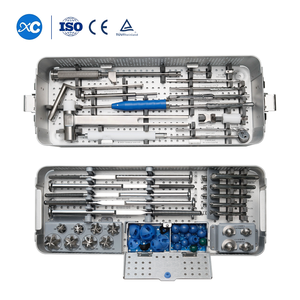
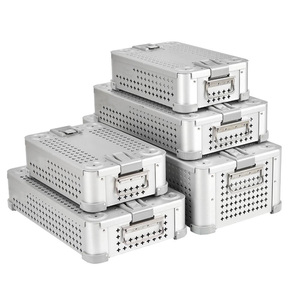
Distributors no longer wish to merely re-sell standard catalog items; they seek custom-branded surgical sets tailored to regional anatomical differences or specific surgeon preferences. Top Chinese exporters provide comprehensive ODM services, including custom tray design, laser marking of logos and lot numbers, and complete technical dossier assembly for local drug and device administration filings.
Surgical techniques are shifting from extensive extensile lateral approaches toward sinus tarsi minimally invasive approaches. Consequently, suppliers are innovating smaller, specialized MIS Calcaneus Plates that require smaller incisions, drastically reducing wound complications while preserving rigid internal fixation.
Operates out of a 62,391 sq. ft. modern production campus equipped with multi-axis Swiss lathe machines, 5-axis CNC systems, automated anodization plants, and Class 10,000 cleanroom assembly lines.
Fully compliant with ISO 13485 QMS standards and CE regulations. Our products undergo rigorous ASTM F1800 dynamic fatigue testing and ISO 10993 biological evaluation.
Exporting to over 50 countries across Europe, Asia-Pacific, Latin America, and Africa. Experienced regulatory support staff assist local partners with fast-track drug and device registrations.
Contact our international sales engineering team today to request product catalogs, sample evaluation kits, custom OEM quotations, or technical compliance dossiers.
Contact Us