
Direct factory-grade orthopedic implant solutions manufactured under ISO 13485 & CE standards. Engineered for anatomically contoured distal radius reconstruction, joint arthroplasty, and internal fixation.
Distal radius fractures (DRFs) remain among the most frequent traumatic injuries encountered in orthopedic emergency departments worldwide, representing approximately 17.5% of all adult fracture presentations. Over the past decade, the global orthopedic trauma ecosystem has undergone a paradigm shift, transitioning away from conservative closed reduction with cast immobilization toward aggressive internal fixation using anatomically contoured volar locking compression plates (ALCP).
This clinical evolution is driven by the imperative for early joint mobilization, exact restoration of radial length, volar tilt, and articular congruity. For procurement directors, hospital buying committees, and medical device brand owners, evaluating manufacturers requires an understanding of how advanced metallurgy, 5-axis CNC machining, and variable-angle polyaxial locking technology intersect to eliminate flexor tendon ruptures and post-traumatic arthritis.
Global demand for distal radius implants is projected to expand at a CAGR of 6.8%, driven by an aging global population and rising road traffic trauma in developing economies.
China's Tier-1 orthopedic OEM factories have closed the quality gap with Western brands, offering biocompatible Ti-6Al-4V ELI titanium constructs at 40%–60% lower unit economics while holding full ISO 13485, CE (MDR), and FDA 510(k) clearances.
A rigorous comparative analysis of raw material purity, surface anodization, screw-to-plate locking thread integrity, and tendon contact profiles in modern trauma implants.
Medical-grade Titanium Grade 23 (Ti-6Al-4V ELI) offers an elastic modulus (110 GPa) much closer to human cortical bone (15–30 GPa) than 316LVM Stainless Steel (210 GPa). This significantly reduces stress shielding at the fracture site, promoting faster osseous callus formation while eliminating nickel sensitivity risks.
Next-generation volar plates utilize a cone of 15° to 30° trajectory freedom. Surgeons can cross-lock distal screws to target complex intra-articular fragments (such as styloid process or dorsomedial fragments) without compromising thread engagement strength or risking joint penetration.
Tendon irritation—specifically flexor pollicis longus (FPL) attrition—is minimized by precision-milled low-profile anatomical contours. Leading Chinese factories utilize 3D laser profilometry to ensure the distal plate edge sits proximal to the anatomical watershed line with smooth chamfered borders.
| Specification Feature | Standard Monoaxial Locked Plates | Premium Variable Angle (VA) Locked Plates | Factory Precision Benchmark (China OEM) |
|---|---|---|---|
| Material Alloy | Stainless Steel 316L / Standard Ti | Titanium Ti-6Al-4V ELI (ASTM F136) | High-Purity Grade 23 Titanium |
| Distal Screw Angle Freedom | Fixed Trajectory (0°) | ±15° Polyaxial Cone Angle | Multi-directional Thread Lock Architecture |
| Plate Profile Thickness | 2.4mm – 2.8mm | 1.5mm – 2.0mm Ultra-Low Profile | 1.6mm Tapered Distal Edge |
| Surface Passivation | Standard Chemical Cleaning | Type II Electrochemical Anodization | Type II Hard Anodized (Color-Coded Options) |
| Fatigue Resistance (Cycles) | > 500,000 Cycles @ 250N | > 1,000,000 Cycles @ 350N | ASTM F382 Dynamically Validated |
How international hospital groups, B2B importers, and brand owners are optimizing their supply chains in response to regulatory shifts, material costs, and manufacturing automation.
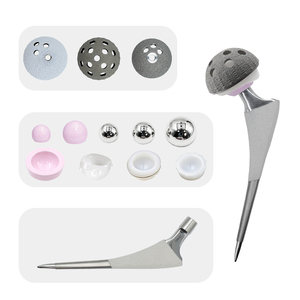
Global distributors are moving away from single-product vendors toward single-source strategic manufacturing partners. Top tier factories in China now provide end-to-end trauma solutions, supplying distal radius locked plates alongside complementary instrumentation set packages, intramedullary interlocking nails, small/large fragment locked systems, and total joint replacement components.
This consolidation streamlines regulatory auditing under EU MDR, reduces freight overhead, and simplifies SKU management for large healthcare logistics networks.
Operating rooms increasingly favor single-use, sterile-packaged trauma kits containing the implant, drill bits, and disposable drivers. China's premier manufacturers are investing heavily in automated Class 100,000 (ISO Class 7) cleanrooms, providing OEM clients with ethylene oxide (EtO) or Gamma-irradiated sterile packaging directly from the assembly line.
While standard anatomical plates cover 90% of trauma cases, severe malunions and complex comminuted articular fractures demand customized solutions. Advanced Chinese factories integrate selective laser melting (SLM) 3D printing with CT-scan DICOM data modeling to create patient-matched distal radius reconstruction plates in under 72 hours.
When selecting a Chinese manufacturing factory for distal radius plates, verify compliance with ISO 13485:2016 quality management standards, full raw material heat-lot traceability, and biocompatibility testing per ISO 10993 standards.
Our featured manufacturing partners operate out of expanded high-tech industrial campuses, combining over three decades of precision mechanical engineering with stringent quality management controls.
Request custom branding, private label packaging, regulatory documentation bundles, or technical factory audits today.
Get a QuoteDirect answers to technical, regulatory, and commercial questions asked by orthopedic procurement managers, biomedical engineers, and B2B medical importers.
Top China manufacturers primarily utilize Ti-6Al-4V ELI (Extra Low Interstitial) Titanium Alloy compliant with ASTM F136 / ISO 5832-3, or Stainless Steel 316LVM compliant with ASTM F138 / ISO 5832-1. Ti-6Al-4V ELI is preferred due to its superior strength-to-weight ratio, biocompatibility, lower magnetic susceptibility for MRI imaging, and elastic modulus that closely mirrors natural cortical bone.
Monoaxial locking systems feature pre-threaded plate holes that constrain screws to a fixed 90° or pre-set trajectory. Variable-angle (VA) systems incorporate specially designed polyaxial threading or soft metal lip inserts in the plate hole, allowing the surgeon to angle the 2.4mm locking screw within a 15° to 30° conical envelope. This flexibility enables precise fragment targeting in intra-articular fractures without compromising thread-locking security.
Cold welding and thread stripping are prevented through rigorous CNC thread pitch tolerance control (micrometer accuracy) and specialized surface passivation. Applying Type II Anodization to titanium plates hardens the surface layer, reduces friction coefficients during screw seating, and eliminates galling between the screw head threads and plate locking holes.
International procurement requires manufacturers to hold ISO 13485:2016 Medical Devices Quality Management System certification. For sales within the European Union, products must achieve CE certification under EU MDR 2017/745. For the United States market, products require FDA 510(k) clearance. Furthermore, raw materials must feature mill test certificates (MTC) proving heat-lot traceability.
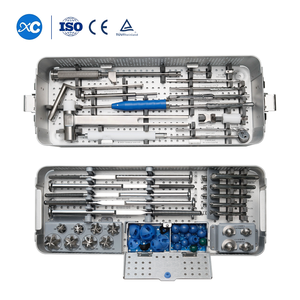
Yes. Tier-1 China orthopedic manufacturers offer comprehensive OEM/ODM services. This includes custom laser-etched logo branding, specialized anodization color coding (e.g., gold, blue, magenta plate finishes), customized screw tray configurations, and dedicated surgical instrument kit manufacturing (drill guides, depth gauges, benders, quick-coupling screwdrivers).
Standard catalog items generally carry low MOQs (often 10–50 units per SKU size). For custom OEM modifications or private-labeled packaging, typical production runs require an MOQ of 100 to 500 units per line item. Lead times range from 15 to 30 business days depending on cleanroom packaging requirements and order volume complexity.
The watershed line is an anatomical landmark on the volar distal radius. If a locking plate extends distal to this line or lacks proper anatomical arching, it risks direct friction against the flexor pollicis longus (FPL) and flexor digitorum profundus (FDP) tendons, leading to tendonitis or rupture. Modern anatomical pre-contouring fits the volar radial slope, eliminating intraoperative bending while preserving soft tissues.
Buyers should perform a 4-step audit process: (1) Request third-party ASTM F382 dynamic mechanical fatigue test reports; (2) Inspect raw material heat-lot documentation and ISO 13485 certificates; (3) Order sample plate sets for dimensional CMM optical verification; and (4) Conduct an on-site or virtual cleanroom/5-axis CNC shop floor audit.
Connect directly with our senior engineering and international trade specialists. Obtain factory-direct wholesale pricing, request product evaluation samples, or initiate private-label OEM manufacturing contracts.