
Explore our CE and ISO 13485 certified surgical fixation systems, precision digital components, and specialized trauma instrumentation engineered for global hospital supply chains.
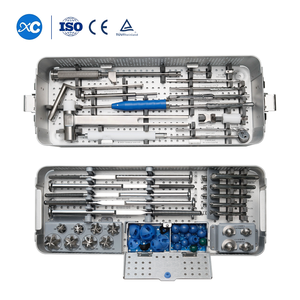
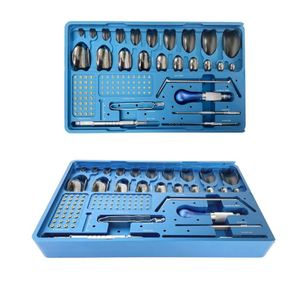
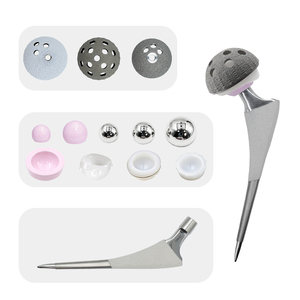
Cranio-Maxillofacial (CMF) trauma reconstruction and orthognathic surgical interventions demand the highest threshold of biomechanical precision, material purity, and anatomical adaptability. Over the past decade, China’s maxillofacial locking plate manufacturing sector has undergone a monumental shift—transitioning from basic OEM contract machining to becoming global leaders in advanced titanium osteosynthesis solutions.
Maxillofacial locking plate systems—encompassing micro (1.0mm/1.3mm), mini (1.5mm/2.0mm), and selective trauma/reconstruction (2.4mm/2.7mm) configurations—provide angularly stable fixation that prevents plate-to-bone compression degradation. Unlike conventional non-locking plates, which rely heavily on friction between the plate and cortical bone, locking titanium plates act as internal fixators. This preserves periosteal vascularization, reduces osteonecrosis risk, and enhances primary structural stability across complex fracture lines in the mandible, maxilla, zygoma, and midface structures.
Global procurement teams, healthcare systems, and OEM buyers searching for qualified China suppliers must evaluate beyond simple price parity. Technical compliance, metallurgical consistency, cleanroom packaging (Class 10,000 / ISO 7), and comprehensive MDR/FDA technical documentation represent the baseline criteria for long-term supply agreements.
Modern CMF surgical procedures require specialized locking plate geometries configured for distinct anatomical zones. China’s premier manufacturing plants utilize advanced finite element analysis (FEA) to optimize plate profile thickness while maximizing tensile rigidity and flexural fatigue endurance.
Engineered for delicate neurosurgical cranial closure, orbital floor reconstruction, and pediatric CMF procedures. Ultra low-profile design (0.6mm - 0.8mm plate thickness) minimizes tactile patient palpability.
The global workhorse standard for midface fracture management, Le Fort I/II/III osteotomies, and sagittal split ramus osteotomies (SSRO). Features cross-locking thread mechanisms to prevent screw backout under masticatory stress.
Heavy-duty load-bearing plates designed for segmental mandibular defect bridging following tumor resection or high-energy ballistic trauma. Accommodates bicortical locking screws with high pull-out force resistance.
Material selection governs both biological safety (biocompatibility, osseointegration) and mechanical survivability within the acidic environment of post-traumatic surgical sites.
| Material Standard | Yield Strength (MPa) | Tensile Strength (MPa) | Elastic Modulus (GPa) | Primary Clinical Application |
|---|---|---|---|---|
| Pure Titanium Grade 4 (ASTM F67) | ≥ 480 | ≥ 550 | 105 | Malleable Midface & Micro Plates (Easy intra-operative contouring) |
| Ti-6Al-4V ELI Alloy (ASTM F136) | ≥ 795 | ≥ 860 | 114 | High-load Mandibular Reconstruction & Locking Screws |
| PEEK (Polyetheretherketone) | ≥ 110 | ≥ 170 | 3.6 | Patient-Specific Cranial Implants (Radiolucent, non-locking) |
| Bioabsorbable Mg-Alloy / PLLA | ≥ 210 | ≥ 280 | 15 - 40 | Pediatric Maxillofacial Trauma (Resorbs within 12-24 months) |
As hospital procurement committees and international medical distributors re-evaluate their supply chain vulnerability, purchasing trends for maxillofacial locking plates are evolving beyond simple standard catalog orders. Strategic procurement directors are prioritizing suppliers equipped with the following core capabilities:
While standard pre-contoured locking plates remain essential for emergency trauma, top Chinese manufacturers now combine 3D CT image reconstruction with fast-turnaround CNC milling. Hybrid procurement models allow hospitals to order off-the-shelf standard mini plates alongside customized patient-specific reconstruction meshes within a unified logistics workflow.
Fixed-angle locking systems are rapidly giving way to Variable-Angle (VA) locking technology. VA locking mechanisms allow surgeons to trajectory-steer screws up to 15 degrees off-axis in any direction. This allows secure screw placement in dense cortical bone while avoiding tooth roots or nerve canals, driving higher hospital uptake.
Type II anodization treatments create a scratch-resistant oxide layer that reduces friction during insertion and dramatically improves fatigue strength. Leading factories implement automated color-coding (e.g., Pink for 1.5mm, Blue for 2.0mm, Gold for 2.4mm) to simplify operating room identification and minimize surgical time.
With the implementation of the European Union Medical Device Regulation (EU MDR 2017/745) and US FDA Unique Device Identification (UDI) mandates, premier Chinese suppliers provide laser-etched matrix codes directly on plates down to 1.5mm profiles, backed by complete raw material heat-lot traceability.
Sourcing maxillofacial locking plates directly from top-tier Chinese manufacturing complexes delivers significant technical and commercial advantages for international distributors, brand owners, and hospital networks:
Key technical, regulatory, and commercial answers for hospital purchasing officers and medical device distributors sourcing CMF plates from China.
Locking plate systems create a threaded rigid construct between the screw head and the plate hole. This eliminates the requirement for exact anatomical plate compression against the bone cortex, significantly protecting the underlying periosteal blood supply. Additionally, locking plates resist screw loosening and primary reduction loss under cyclical masticatory shear forces, providing superior mechanical stability in osteoporotic or comminuted bone.
Standard midface micro and mini plates typically utilize Unalloyed Commercially Pure Titanium Grade 4 (ASTM F67), which offers excellent ductile elongation for precise intra-operative manual contouring. High-load applications, such as 2.4mm mandibular reconstruction plates and self-tapping locking screws, utilize Ti-6Al-4V ELI Titanium Alloy (ASTM F136) due to its ultra-high yield strength and fatigue resistance.
Yes. Qualified factories manufacture locking systems adhering to standardized metric thread dimensions, cruciform/Stardrive screw head connections, and standardized AO-type quick-coupling instrument interfaces. This allows seamless intra-operative integration with existing global drill bits, depth gauges, and screw drivers.
Leading enterprises maintain ISO 13485:2016 Medical Device Quality Management Certification. Plates undergo rigorous physical testing including bending strength and fatigue evaluation according to ASTM F382 standards, screw axial pull-out and torque testing per ASTM F543, along with full raw material heat-lot spectroscopic analysis.
Yes. Suppliers offer both non-sterile bulk packaging for autoclave sterilization within surgical trays and gamma/EO pre-sterilized primary double-blister packaging ready for immediate sterile field introduction in operating rooms.
Standard catalog items usually have flexible MOQs starting from 50–100 units per SKU. Custom OEM plate designs requiring specialized CNC tooling setup typically carry an MOQ of 500 units per SKU, accompanied by prototype approval phases and full dimensional inspection reports (FAIR).
Gain direct access to factory pricing, certified biocompatible titanium implants, comprehensive regulatory tech files, and dedicated global export logistics.
Connect with an Export Specialist