
Engineered to international regulatory benchmarks (ISO 13485 / CE), providing clinical precision for complex periprosthetic fractures, joint revisions, and trauma reconstruction.
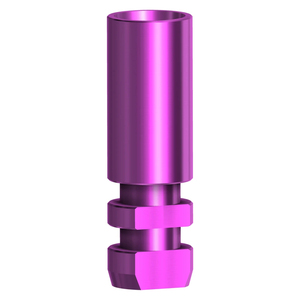
Ultra-precise titanium digital interface transfer analogs designed for multi-system compatibility, ensuring sub-micron accuracy in digital restoration workflows.
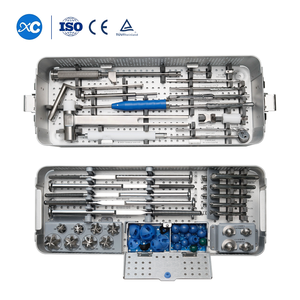
Medical-grade 316LVM ergonomic surgical instrument system optimized for veterinary and clinical total hip arthroplasty procedures.
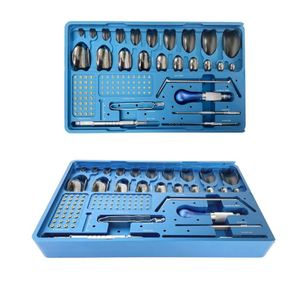
Comprehensive bio-compatible micro-implants and spinal pedicle fixation instrumentation customized for specialized veterinary trauma and reconstruction.
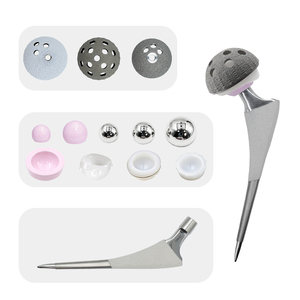
Porous plasma-sprayed titanium cup architecture facilitating rapid biological osseointegration and long-term primary fixation stability.
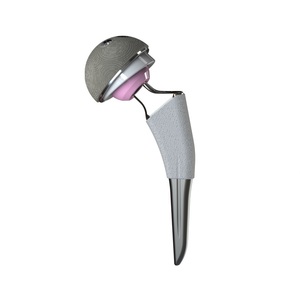
High-fatigue-strength Ti-6Al-4V ELI alloy femoral stems matched with wear-resistant ceramic or UHMWPE articulation surfaces.
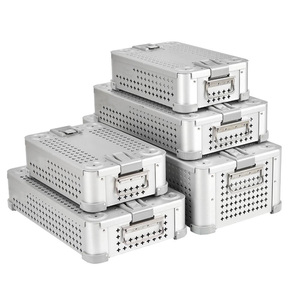
Next-generation factory-direct joint prosthesis collection engineered for superior tensile distribution and reduced revision rates.
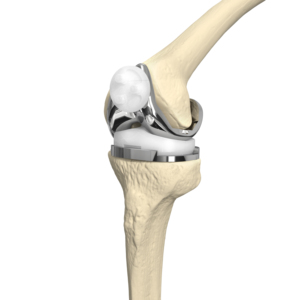
Premium Cobalt-Chromium-Molybdenum alloy total knee replacement system with anatomical femoral component matching dynamic kinematic flexure.
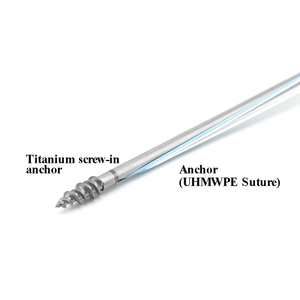
Advanced arthroscopic shoulder repair kit with self-tapping titanium anchors engineered for high pull-out resistance in soft tissue reconstruction.
Modern orthopedic surgery faces growing complexity driven by an aging global demographic and an rising incidence of periprosthetic fractures around hip and knee arthroplasty implants. Orthopedic cable fixation systems—specifically multi-filament titanium cable assemblies, cerclage crimping sleeves, trochanteric grip plates, and dynamic tensioning devices—have evolved from supplementary hardware into critical primary trauma solutions. As leading China orthopedic manufacturers and global exporters, our production facility combines advanced 5-axis CNC machining, vacuum micro-welding, and automated multi-strand braiding techniques to deliver surgical cable hardware that meets ISO 13485 and ASTM F136 standards.
Constructed from ultra-fine Ti-6Al-4V ELI or 316LVM strands braided in a 7x7 or 19x7 layout, achieving high fatigue endurance, minimal bending rigidity, and eliminated fraying during intraoperative pass-through.
Calibrated intraoperative tensioners provide step-less real-time load monitoring (up to 100 N/m), preventing bone necrosis caused by over-tightening while guaranteeing rigid osteosynthesis.
Seamless interface with locking compression plates (LCP), trochanteric re-attachment grips, and peri-prosthetic bypass plates, enabling versatile screw-and-cable combination constructs.
To assist hospital procurement committees, medical device distributors, and OEM buyers in evaluating China-manufactured cable fixation systems against European and North American benchmarks, the table below highlights key performance metrics:
| Fixation System Parameter | Titanium Alloy Cable (Ti-6Al-4V ELI) | Cobalt-Chromium (CoCrMo) Cable | Stainless Steel (316LVM) Cable | Legacy Monofilament Wire |
|---|---|---|---|---|
| Ultimate Tensile Strength (MPa) | 1,050 - 1,200 | 1,350 - 1,500 | 900 - 1,050 | 650 - 800 |
| Modulus of Elasticity (GPa) | 110 (Close to cortical bone) | 220 | 193 | 200 |
| Fatigue Limit (Cycles @ 800N) | > 5,000,000 | > 10,000,000 | > 2,500,000 | < 500,000 |
| Crimp Lock Efficiency | 94.5% Retention | 96.0% Retention | 89.0% Retention | 55.0% (Twist Slip) |
| MRI Artifact Potential | Minimal Artifact | Moderate Artifact | High Artifact | High Artifact |
| Primary Clinical Application | Periprosthetic Fractures / Revisions | High-Stress Osteotomies | Veterinary & Budget Trauma | Simple Long Bone Fractures |
As hospital purchasing consortia and international distributors re-evaluate supply chain resilience, sourcing high-end orthopedic hardware from qualified Chinese manufacturers has transitioned from simple cost containment to strategic partnership. Key trends impacting supply choices over the next decade include:
Integrates 3D-printed porous titanium sleeves with micro-textured internal channels. These sleeves increase frictional grip on the cable surface by 40%, virtually eliminating intraoperative crimp slippage while promoting localized bone ingrowth.
Leading exporters are incorporating silver nanoparticle anodization and hydroxyapatite (HA) ultra-thin plasma coatings on cerclage cables to prevent post-operative biofilm formation and periprosthetic infection rates in high-risk patients.
Surgical demand is accelerating toward targeted sub-muscular pass-through instruments. Modern cable fixation sets now include flexible, shape-memory nitinol guides that pass around the femoral shaft through 2-cm incisions, protecting soft tissue envelopes.
Tier-1 Chinese OEM factories have aggressively upgraded technical files to meet EU MDR (2017/745) requirements and US FDA 510(k) standards, offering complete material traceability, biocompatibility testing (ISO 10993), and validation protocols.
Combining decades of specialized metallurgical craftsmanship with automated robotics to guarantee consistent quality across every surgical lot.
Houses Class 100,000 cleanrooms for ultrasonic cleaning, automated sterile packaging, and precise mechanical assembly under rigorous environmental controls.
100% optical coordinate measurement machine (CMM) inspection for critical dimensions, torque verification, tensile breaking force testing, and spectrographic material verification.
Dedicated R&D engineering team offering rapid prototyping, custom crimp sleeve designs, custom laser marking, and specialized surgical instrument tray customization.
Addressing primary technical, regulatory, and commercial inquiries from biomedical buyers and orthopedic distributors.
Titanium cables (Ti-6Al-4V ELI) offer a modulus of elasticity (~110 GPa) much closer to human cortical bone than stainless steel (~193 GPa), significantly reducing stress shielding. Furthermore, multi-strand braided titanium cables deliver over 5 times the fatigue life of solid monofilament wires and exhibit minimal MRI artifacting during post-operative patient monitoring.
Our crimp lock sleeves are manufactured from ductile commercially pure titanium (CP Grade 2) or custom annealed alloys designed to deform plastically into the strand micro-grooves when compressed using our calibrated ratchet crimpers. This cold-weld mechanism prevents tension slippage up to 1,500 N of axial pull force.
All orthopedic cable fixation systems leave our factory with ISO 13485:2016 quality system compliance, CE mark technical files, material raw certificates (Mill Test Certificates confirming ASTM F136 / ASTM F138 standards), biocompatibility test reports (ISO 10993), and sterilization validation dossiers (ISO 11137).
Yes. We provide complete OEM/ODM services including custom cable diameters (1.0mm to 2.5mm), tailored cable lengths (250mm to 600mm), specialized trochanteric plate geometries, laser-etched lot numbers, and sterile blister packaging with distributor branding.
Standard stocked cable SKUs have flexible MOQs starting at 50 units. Custom OEM manufacturing orders typically carry a 300-unit MOQ with standard lead times of 15 to 30 days depending on surface treatment and sterilization requirements.
Request full product catalogs, CAD models, regulatory compliance packages, and factory-direct wholesale quotations. Our international medical engineering support team responds within 12 business hours.