
1. Engineering Integrity in Dynamic Condylar Screw (DCS) Systems
The Dynamic Condylar Screw (DCS) System represents a foundational benchmark in trauma and orthopedic reconstructive surgery, specifically engineered for complex intra-articular and extra-articular fractures of the distal femur and proximal subtrochanteric regions of the femur. As global hospital networks and surgical distribution channels scale their procurement requirements, identifying verified factories and specialized suppliers with ISO 13485 certification, micron-level CNC machining capabilities, and rigorous metallurgical controls becomes paramount to clinical efficacy.
Dynamic Condylar Screw constructs are specifically designed to provide rigid internal fixation, controlled dynamic axial compression, and anatomical alignment under heavy biomechanical load conditions. Unlike standard straight bone plates, a DCS system utilizes a fixed 95-degree angle relation between the barrel shaft and the side plate. This specific angle mirrors the natural anatomical slope of the femoral condyle, permitting precise lag screw insertion parallel to the knee joint line while maintaining rigid rotational and angular stability across the fracture plane.
95°
Fixed Barrel Angle
316LVM
Medical Grade Steel / Ti6Al4V
10,000+
Global SKU Capacity
ISO 13485
CE Certified Quality
In modern orthopedic trauma care, the choice between dynamic compression dynamic condylar screws and locked plating systems remains a core decision for surgical teams. Dynamic Condylar Screw systems excel by allowing controlled micromotion along the axis of the lag screw, inducing secondary bone healing via callus formation. When sourced from leading qualified suppliers like Sharma Orthopedic India Limited, these implant sets undergo exhaustive finite element analysis (FEA), multi-axis Swiss CNC milling, dynamic fatigue testing, and passivated surface treatments to eliminate micro-fractures, stress corrosion, and implant fatigue failure in patient care.
2. Anatomy and System Architecture of the 95° DCS Construct
A comprehensive Dynamic Condylar Screw System is an integrated assembly of high-precision components that work symbiotically to convert torsional and shearing forces into stabilizing compressive vectors. B2B procurement officers and hospital purchasing committees must evaluate the precision fits among the four primary hardware elements:
DCS Side Plate (95° Barrel Plate)
Manufactured with plate lengths ranging from 4 to 22 holes. The barrel is precision-bored to accept the lag screw shaft with sub-micron tolerances, ensuring zero toggle or axial binding during dynamic compression sliding.
Heavy-Duty DCS Lag Screw
Featuring deep buttress or asymmetric threads designed to maximize pullout strength in cancellous bone of the distal femoral condyles. Includes driving flutes and cannulation options for guide wire insertion under fluoroscopy.
Compression Screw Assembly
Engages the internal threads of the lag screw tail. As the compression screw is tightened against the plate barrel shoulder, it draws the bone fragments tightly together, eliminating inter-fragmentary gaps.
Metallurgical Specifications & Material Science
Top trusted factories utilize raw materials that strictly comply with international surgical implant standards. Dynamic Condylar Screws and plates are predominantly manufactured from two primary biocompatible alloys:
| Property Parameter | Implants Stainless Steel (316LVM) | Titanium Alloy (Ti-6Al-4V ELI) |
|---|---|---|
| Standard Compliance | ISO 5832-1 / ASTM F138 | ISO 5832-3 / ASTM F136 |
| Modulus of Elasticity | ~200 GPa | ~110 GPa (Closer to cortical bone) |
| Fatigue Limit (Cycles) | > 10,000,000 stress cycles | > 12,000,000 high-flex fatigue cycles |
| Biocompatibility Profile | High corrosion resistance (Vacuum Arc Remelted) | Superior osseointegration, bio-inert oxide layer |
| Imaging Compatibility | Moderate MRI artifact creation | Low MRI/CT interference for post-op check |
By utilizing high-grade 316LVM Stainless Steel or ultra-clean Titanium Grade 5 (Ti-6Al-4V ELI), leading suppliers ensure that the implant withstands cyclic loading up to 3.5 times body weight—the stress experienced during physiological movement before solid bony union occurs.
3. Future Procurement Trends for Dynamic Condylar Screws (2025–2030)
The orthopedic implant procurement landscape is undergoing a structural transition driven by demographic shifts, stricter global regulatory frameworks (such as the European Union MDR 2017/745 transition), and demand for cost-contained high-volume trauma solutions. B2B buyers must align with suppliers capable of meeting several emerging market realities:
A. Integration of Hybrid Locking-Sliding Technologies
While conventional DCS plates rely on cortical screws to compress the plate onto periosteal bone, modern 2025-generation factories are introducing polyaxial locking holes into the distal shaft section of DCS plates. This hybrid configuration combines the dynamic axial compression advantages of the classic lag screw with angularly stable locking screws, reducing the incidence of screw pullout in osteoporotic bone.
B. Shift Toward Direct Factory OEM/ODM Supply Chains
Global healthcare networks and regional orthopedic distributors are progressively bypassing intermediary brokers in favor of established original equipment manufacturers (OEMs). Direct factory sourcing from major manufacturing hubs—such as Vadodara, Gujarat in India—delivers cost reductions of 30% to 50% without compromising mechanical or biological performance. Manufacturers equipped with in-house toolmaking, cleanroom ISO Class 7 packaging, and automated laser marking provide scalable private-label options.
C. Streamlined Minimally Invasive Surgical (MIS) Instrumentation
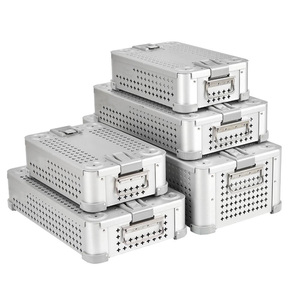
Surgical preferences lean heavily toward tissue-sparing percutaneous techniques. Dynamic Condylar Screw manufacturers now bundle specialized sub-muscular targeting guides, radiolucent insertion handles, and cannulated triple-reamers into single sterilisable container systems. Procurement tenders increasingly penalize hardware suppliers who cannot deliver matching precision instrumentation kits.
4. Advanced Manufacturing & Technological Trends in DCS Production
Achieving consistent quality across tens of thousands of dynamic condylar screw units requires state-of-the-art manufacturing infrastructure. Leading factories implement automated processing pipelines that blend advanced robotics with rigorous metallurgical validation:
5-Axis CNC Machining
Utilizing high-precision Swiss-type sliding head CNC lathes and 5-axis machining centers to carve complex 95-degree junctions and lag screw threads with tolerances strictly under ±0.005mm.
Robotic Surface Passivation
Automated electropolishing and nitric/citric acid passivation steps remove microscopic iron contaminants, establishing a dense titanium dioxide or chromium oxide protective layer against bodily fluid corrosion.
Coordinate Measurement Machine (CMM) QC
100% dimensional verification using optical CMM and laser scanning systems, ensuring that every barrel inner diameter matches lag screw outer diameter perfectly without mechanical friction binding.
Furthermore, thermal processing plays a critical role. Solution annealing and age hardening of titanium alloys eliminate micro-voids, increasing torsional shear resistance. When lag screws are driven into hard cortical bone or dense condylar cancellous structures, thread binding or head shearing is fully prevented due to controlled surface hardness gradient processing.
5. Corporate Advantage: Sharma Orthopedic India Limited
Established in 1992, Sharma Orthopedic India Limited has stood for over 30 years as one of India's premier top 3 manufacturers and exporters of orthopedic implants and surgical instruments. Operating from a 62,391 sq. ft. modern facility in G.I.D.C. Estate, Waghodia, Vadodara, Gujarat, the company serves healthcare institutions across more than 50 countries worldwide.
Massive Portfolio & Manufacturing Scale
Over 10,000 product SKUs covering Trauma (DCS, DHS, Interlocking Nails, Locked Plates), Total Hip Replacement (THR), Total Knee Replacement (TKR), Spine Systems, and Arthroscopy implants under one roof.
Specialized Human Resources & QA Support
Powered by a dedicated workforce including 100 skilled production operators, 10 Quality Control specialists, 8 Regulatory Affairs/QA experts, 5 R&D/Design engineers, and 45 global sales professionals.
International Quality Approvals
Complete regulatory compliance backed by ISO 13485 certification, CE marking, and CDSCO approvals. Material test certificates (MTR) provided for every single melt batch.
Complete OEM / Private Label Service
Full support for global orthopedic brand owners, including customized plate geometries, customized color anodization, laser etch branding, and turnkey surgical kit creation.
6. Dynamic Condylar Screw Systems Procurement FAQ
Common technical, regulatory, and logistics queries raised by hospital buyers, tenders, and international orthopedic distributors:
What is the difference between a Dynamic Hip Screw (DHS) and a Dynamic Condylar Screw (DCS)?
The primary mechanical difference lies in the barrel-to-plate angle. A Dynamic Hip Screw (DHS) system has a barrel angle typically ranging from 130° to 150°, designed specifically for proximal femoral neck and intertrochanteric fractures. A Dynamic Condylar Screw (DCS) system features a fixed 95° barrel angle, making it anatomically suited for distal femoral condylar fractures and complex subtrochanteric fractures where a right-angle insertion parallel to the joint line is anatomically required.
How do you ensure proper lag screw sliding without mechanical jamming?
Smooth sliding depends on microscopic tolerances during internal barrel reaming and lag screw shaft grinding. Qualified suppliers like Sharma Orthopedic maintain inner barrel roundness tolerance within ±0.003mm and apply smooth passivated surfaces. This ensures that even under dynamic flexural loading, the lag screw slides cleanly to provide controlled axial compression without toggle or galling.
What materials are available for OEM custom ordering of DCS plates?
DCS plates and screws are available in double-vacuum melted 316LVM Implant-Grade Stainless Steel (ISO 5832-1) and Ti-6Al-4V ELI Titanium Alloy (ISO 5832-3). Stainless steel is favored for cost-effectiveness and rigid stiffness, whereas titanium offers lower elastic modulus (reducing stress shielding) and complete MRI compatibility.
Can your factory provide complete surgical instrument sets matching the DCS implants?
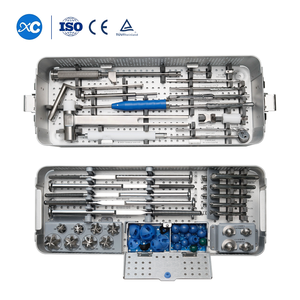
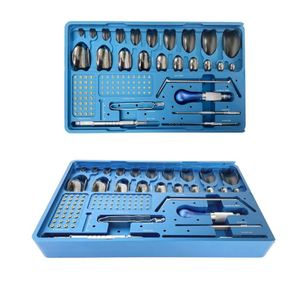
Yes. Full DCS instrument sets are supplied in custom sterilisable anodized aluminum or stainless steel graphic trays. Trays include 95° angle guide wires, triple reamers, tap sleeves, DCS lag screw drivers, compression screwdrivers, plate benders, and direct-reading depth gauges engineered for immediate operating theatre deployment.
What quality documentation accompanies international export shipments?
Every export consignment is accompanied by complete batch traceability records: Certificates of Analysis (CoA), Raw Material Mill Test Reports (MTR), ISO 13485 compliance certificates, CE certificates, sterilization validation reports (for pre-sterilized orders), and detailed commercial shipping invoices for customs clearance.
What are the standard lead times and Minimum Order Quantities (MOQs) for B2B procurement?
For standard catalog items, stock orders are typically dispatched within 7 to 14 business days. Custom OEM/ODM orders with private label etching require 30 to 45 days depending on batch volume. Flexible MOQs are offered for distributor evaluations and hospital tender submissions.
Partner with a Verified Orthopedic Implants Manufacturer
Contact our global engineering and export team today to receive direct factory pricing, comprehensive product catalogs, and custom OEM manufacturing proposals for Dynamic Condylar Screw Systems.