
As a pioneer in orthopedic surgical implants since 1992, our enterprise operates a state-of-the-art 62,391 sq. ft. ISO 13485:2016 certified manufacturing infrastructure. Engineered specifically for complex spinal fusion, occipitocervical reconstruction, and decompression procedures, our posterior cervical fixation portfolio combines high-grade medical metals (Ti-6Al-4V ELI & Pure Titanium Grade 4) with sub-micron 5-axis CNC machining accuracy. Discover our clinically validated systems, OEM capabilities, and future-ready biomechanical innovations below.
Explore our top-tier spinal fusion plates, lateral mass screw-rod construct devices, mini laminoplasty hinges, and emergency cervical traction assemblies engineered for high fatigue strength and seamless clinical execution.
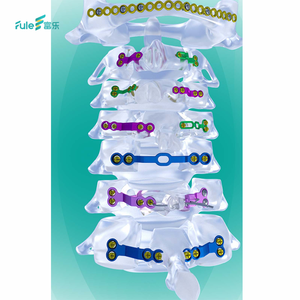
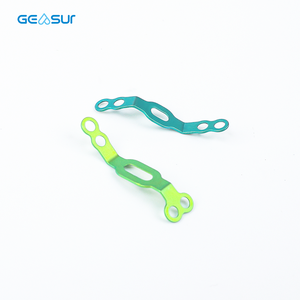
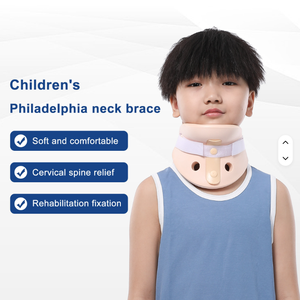
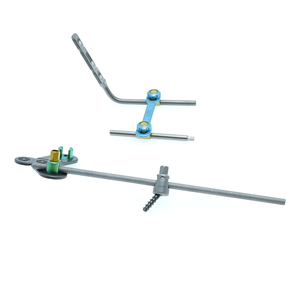
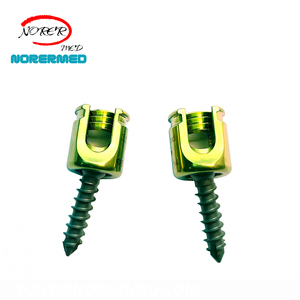
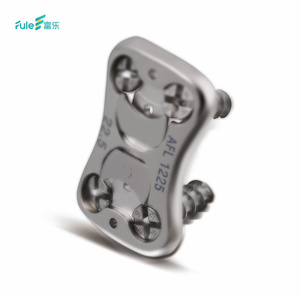
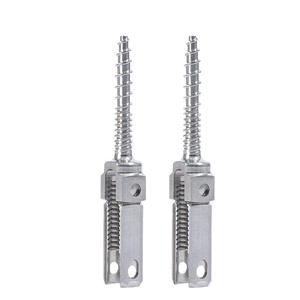
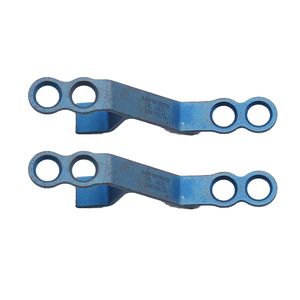
Posterior cervical spine stabilization poses unique anatomical and biomechanical challenges due to the proximity of vital vascular and neurovascular structures, including the vertebral arteries, nerve roots, and spinal cord. As a premier posterior cervical fixation systems manufacturer, our surgical implants are designed to achieve optimal load-sharing, superior fatigue strength under cyclic axial torsion, and permanent construct stability across C1 to C7 segments.
Our manufacturing facility utilizes high-precision 5-axis CNC Swiss sliding-head lathes, multi-tasking machining centers, and automated robotic surface finishing. Every lateral mass screw, pedicle screw, and laminoplasty hinge plate undergoes stringent volumetric micro-CT inspection, optical comparator verification, and mechanical stress testing conforming to ASTM F1717 and ISO 12189 standards.
| System Component | Material Specification | Key Technical Parameters | Clinical Indications |
|---|---|---|---|
| Lateral Mass Polyaxial Screws | Ti-6Al-4V ELI (ASTM F136) | Ø3.5mm / 4.0mm; Length 12mm–24mm; 52° Cone Angulation | Subaxial Cervical Instability, Spondylolisthesis, Trauma |
| C1-C2 Transarticular / Pedicle Screws | Titanium Alloy Grade 5 | Fully Threaded / Cannulated; High Pull-out Thread Design | Atlantoaxial Subluxation, Odontoid Fractures, C1-C2 Fusion |
| Laminoplasty Hinge Plates | Pure Titanium (ASTM F67 Grade 4) | Thickness 1.0mm–1.5mm; Integrated Locking Screw Holes | Cervical Decompressions, Ossification of Posterior Longitudinal Ligament (OPLL) |
| Cervical Pre-bent Rods & Transition Rods | Ti-6Al-4V / Cobalt-Chrome (CoCr) | Ø3.5mm Straight & Contour Pre-bent; 3.5mm to 5.5mm Tapered | Occipito-Cervico-Thoracic Fusion Constructs |
Features an advanced inner saddle grip design that maintains screw-head orientation during rod placement, reducing operative maneuvering time and preventing head slippage prior to final locking set screw tightening.
Engineered with reverse-buttress thread profiles that direct radial forces inward rather than outward, eliminating locking cap splaying and preventing cross-threading failure under maximum torque load (3.0 N·m).
Type II anodization process enhances fatigue resistance while Type III color-coding provides instant intraoperative identification of screw diameters (e.g., Magenta 3.5mm, Teal 4.0mm, Blue 4.5mm emergency screws).
The global posterior cervical fixation market is experiencing rapid technological evolution driven by minimally invasive surgical techniques, image-guided navigation systems, and 3D printing technologies. As hospital procurement teams and global orthopaedic distributors align their inventory strategies, key technology shifts are reshaping manufacturer selection criteria:
Direct metal laser sintering (DMLS) allows creation of biomimetic trabecular structures directly integrated into laminoplasty mini-plates. These porous architectures foster rapid osseointegration at the canal hinge site without requiring autologous bone grafting.
Surgeons increasingly demand posterior cervical screws optimized for optical tracking arrays and robotic drill guides. Modern screw heads now integrate anti-glare surfaces and standardized hex-lobe drives compatible with universal navigation kits.
With complex revision surgeries on the rise, demand for pre-machined dual-diameter transition rods (3.5mm to 5.5mm/6.0mm) has grown exponentially. This enables seamless connection between posterior cervical lateral mass screws and thoracolumbar pedicle screw constructs.
Global tenders now demand comprehensive clinical evidence, biological evaluation reports (ISO 10993), and robust post-market surveillance (PMS). Partnering with an ISO 13485:2016 factory ensures frictionless regulatory clearance across international customs.
Founded in 1992, Sharma Orthopedic India Limited has grown into a globally trusted manufacturer and exporter of orthopedic implants and surgical instruments. Serving healthcare institutions and distributors in over 50 countries, we combine cost-competitive manufacturing with uncompromising Western-grade quality management systems.
Equipped with 5-axis CNC machineries, multi-axis Integrax systems, automated washing cleanrooms (ISO Class 7), and gamma irradiation/E-beam sterilization compatibility, producing over 10,000 active SKUs under one roof.
Backed by 10 QC specialists, 8 Regulatory Affairs experts, and 5 dedicated R&D design engineers utilizing finite element analysis (FEA) to validate implant biomechanics prior to tooling release.
From custom branding, customized screw thread profiles, and specialized surgical tray design to complete white-label packaging, we provide end-to-end support for contract manufacturing partners worldwide.
Find technical details and procurement guidelines regarding our posterior cervical fixation plates, lateral mass screws, and factory OEM contracts.
Accelerate your clinical supply chain with factory-direct pricing, certified biocompatibility, and dedicated OEM support. Request our complete catalog and technical dossier today.