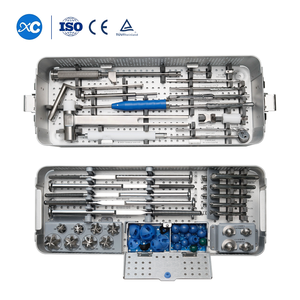
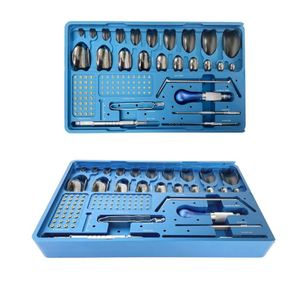
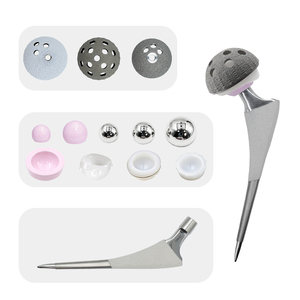
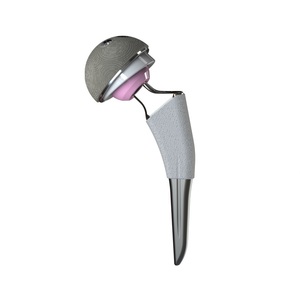
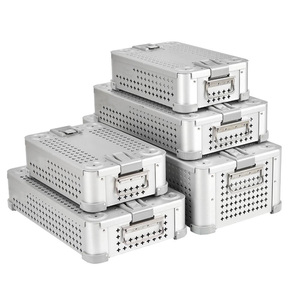
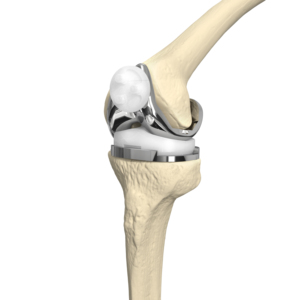
Explore our CE and ISO 13485 certified product range, spanning joint replacement systems, trauma locked plating, and precision arthroscopic instrumentation manufactured at our Vadodara facilities.
Since its inception in 1992, Sharma Orthopedic India Limited (operating globally in alliance with SF Bay Medical) has established itself among the top-tier orthopedic implant manufacturers worldwide. Operating out of a flagship 62,391 sq. ft. manufacturing campus in Vadodara, Gujarat, our facility integrates high-precision 5-axis CNC machining, Swiss-type turning lathes, and automated surface treatment to deliver clinical excellence across 50+ countries.
Our complete manufacturing footprint adheres strictly to ISO 13485:2016 and EU MDR 2017/745 regulatory frameworks. Every shoulder replacement stem, glenosphere, and suture anchor undergoes 100% optical CMM dimensional inspection and non-destructive surface testing.
We source exclusively implant-grade raw materials, including Titanium Ti-6Al-4V ELI (ASTM F136), Cobalt-Chromium-Molybdenum CoCrMo alloys (ASTM F75), and Ultra-High Molecular Weight Polyethylene (UHMWPE ASTM F648) with optional Vitamin E stabilization to eliminate wear debris risks.
Supported by a dedicated team of 5 R&D biomechanical engineers and 10 QC specialists, we offer global medical device brands complete OEM contract manufacturing—ranging from custom stem taper geometries to specialized sterile packaging solutions.
From major medical institutions in Asia and Latin America (such as our prominent presence at FEMECOT) to healthcare providers in Africa and Europe, Sharma Orthopedic delivers uncompromised surgical reliability, supporting over 100 production professionals in our Indian manufacturing hub.
An authoritative analysis of anatomical and reverse shoulder reconstruction, metaphyseal fixation, and tribological pairing for modern orthopedic surgical demands.
Anatomical Total Shoulder Replacement mimics natural glenohumeral joint anatomy, replacing the damaged humeral head with a polished metallic sphere and the glenoid cavity with a ultra-high molecular weight polyethylene component. Ideal for patients with intact rotator cuff musculature and primary osteoarthritis.
Designed for cuff tear arthropathy and severe glenoid bone loss, Reverse Total Shoulder Implants invert the anatomical joint biomechanics. A convex Glenosphere is anchored to the scapula, while a concave cup is fitted onto the proximal humeral stem, altering the center of rotation to utilize the deltoid muscle for arm elevation.
| Implant Sub-Component | Standard Material Grade | Surface Finish / Topography | Biomechanical Objective |
|---|---|---|---|
| Humeral Stem Core | Titanium Ti-6Al-4V ELI (ASTM F136) | Proximal Porous / HA Coated | Reduces stress shielding, enhances long-term biological fixation |
| Humeral Head / Glenosphere | CoCrMo Alloy (ASTM F75) / Ceramic | Mirror Polished (Ra < 0.02 µm) | Minimizes tribological wear rate against UHMWPE inserts |
| Scapular Baseplate | Ti-6Al-4V ELI / 3D Trabecular Titanium | Highly Porous Structural Grid | Maximizes early osteoblast ingrowth and secondary fixation |
| Polyethylene Articular Insert | Highly Cross-linked UHMWPE + Vit-E | Precision Machined Radius | Prevents oxidation degradation and long-term polyethylene osteolysis |
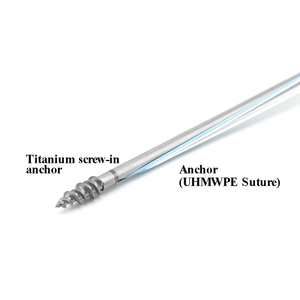
| Soft Tissue Suture Anchors | Titanium Grade 5 / PEEK Biopolymer | Knotless Screw-in Threading | Provides immediate pull-out resistance during rotator cuff repair |
Strategic insights for medical device importers, hospital procurement officers, and orthopedic OEM partners navigating the evolving shoulder arthroplasty landscape.
Global orthopaedic surgeons are increasingly favoring stemless and short-stem humeral prostheses for primary shoulder arthroplasty. Preservation of metaphyseal bone stock simplifies future revision surgeries. B2B importers are restructuring inventory toward modular platform stems that allow intra-operative conversion from anatomical to reverse configurations without removing a well-fixed stem.
Direct Metal Laser Sintering (DMLS) 3D printing is replacing conventional plasma coatings. Porous titanium matrices with interconnecting pore sizes ranging from 400 to 600 microns simulate human trabecular bone structures. This acceleration in additive manufacturing ensures superior secondary stability, driving high procurement growth across North America, Europe, and Asia-Pacific.
Global procurement standards now mandate strict compliance with EU MDR, US FDA 510(k), and ISO 13485:2016. Buyers are increasingly auditing manufacturers for complete batch-level raw material traceability (MTRs), cleanroom bioburden reporting, and validated Gamma / EtO sterilization protocols before finalizing supply contracts.
In mature markets, shoulder replacements are rapidly moving from inpatient operating rooms to Ambulatory Surgical Centers (ASCs). ASC procurement managers prioritize streamlined single-use instrument trays, pre-assembled modular kits, and cost-effective factory-direct pricing structures to maximize operational efficiency and turnover.
With major western manufacturers experiencing escalating overhead and supply chain delays, medical distributors are turning to top Indian manufacturers like Sharma Orthopedic. Indian medtech export hubs offer equal certified quality, advanced multi-axis CNC technology, and substantial unit cost savings without sacrificing safety or clinical precision.
3D preoperative planning software paired with patient-specific surgical guides derived from CT scans ensures accurate glenoid component placement. Manufacturers capable of supplying compatible surgical instrumentation alongside implants gain a distinct competitive edge in tender bids.
Detailed answers to common questions regarding quality standards, OEM capabilities, ordering procedures, and regulatory documentation.
Whether you are expanding your distributor portfolio, seeking reliable OEM manufacturing, or equipping hospital networks with ISO-certified joint replacement systems, Sharma Orthopedic offers the technical authority and cost efficiency your organization requires.