
Engineered with Swiss-type 5-axis CNC machining, micro-passivated finishes, and high torsional strength for precise skeletal traction and temporary damage control orthopedics (DCO).
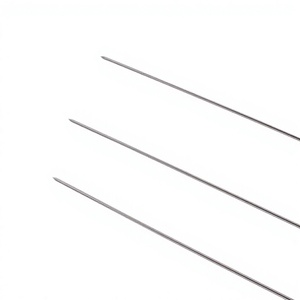
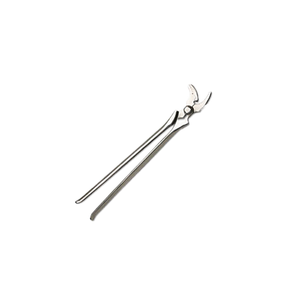
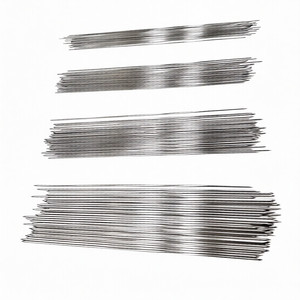
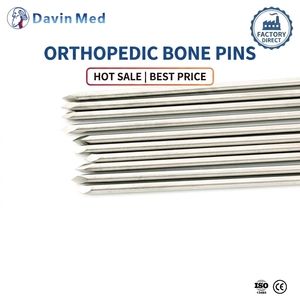
Understanding the metallurgical requirements, mechanical limits, and surface passivation protocols necessary for high-performance traction and fixation pins in demanding clinical environments.
Orthopedic Steinmann pins act as critical load-bearing interfaces between skeletal structures and external traction frames or fixation bars. To eliminate the risk of pin-tract breakdown, mechanical fatigue failure, or ion leaching, our manufacturing infrastructure relies strictly on certified medical-grade raw materials.
Ultra-Clean Implant Stainless Steel (316LVM / ISO 5832-1): Vacuum Arc Remelted (VAR) 316LVM steel ensures minimal non-metallic inclusions. This yields exceptional fatigue resistance under continuous axial loads experienced in skeletal traction.
Titanium Alloy (Ti-6Al-4V ELI / ISO 5832-3): For long-term external fixation or MRI-compatible requirements, our titanium Steinmann pins offer a lower elastic modulus closer to human cortical bone, reducing stress shielding while delivering complete immunity to physiological corrosion.
Thermal necrosis during bone insertion is a primary cause of premature pin loosening. Our Swiss-type CNC grinding centers maintain sub-micron tolerances on pin cutting tips, significantly reducing friction during insertion:
| Specification Parameter | Medical Stainless Steel (316LVM) | Titanium Alloy (Ti-6Al-4V ELI) | Standard Commercial Steel (Non-Medical) |
|---|---|---|---|
| International Standard Compliance | ASTM F138 / ISO 5832-1 | ASTM F136 / ISO 5832-3 | Non-Implant Grade (Unsafe) |
| Tensile Strength (Ultimate Rm) | ≥ 930 MPa | ≥ 860 MPa | ~ 450-550 MPa |
| Yield Strength (Rp 0.2) | ≥ 690 MPa | ≥ 790 MPa | ~ 250 MPa |
| Surface Roughness (Ra) | Ra < 0.15 µm (Electropolished) | Ra < 0.20 µm (Anodized) | Ra > 0.80 µm (Rough) |
| Corrosion Resistance (Pitting) | Nitric Passivated ASTM F86 | Natural Stable Oxide Layer | High Risk of In-Vivo Corrosion |
| Biocompatibility / Ion Release | Zero Nickel Leaching (High VAR Purity) | 100% Bio-Inert, MRI Compatible | Cytotoxic Potential |
Strategic insights for healthcare distributors, hospital procurement directors, and surgical importers across Lima, Arequipa, Trujillo, and Cusco.
In Peru, orthopedic pins and external fixation devices are governed by DIGEMID (Dirección General de Medicamentos, Insumos y Drogas) under the Ministry of Health (MINSA). Implants fall into Class II or Class III risk categories.
We supply complete technical dossiers—including ISO 13485 certification, Certificate of Free Sale (CFS), CE Certificates, and full Chemical/Mechanical Test Reports—enabling Peruvian partners to secure rapid Registro Sanitario approvals.
Public healthcare institutions such as EsSalud (Seguro Social de Salud) and MINSA regional trauma hospitals demand rigid compliance with strict tender pricing structures and zero-defect quality guarantees.
By working directly with our factory in China, Peruvian distributors achieve factory-direct pricing (saving up to 40% compared to European or US brands) while easily meeting or exceeding all MINSA surgical parameters.
Under the China-Peru Free Trade Agreement (Tratado de Libre Comercio China-Perú), medical instruments and orthopedic appliances classified under HS Code 9021.10 enjoy preferential tariff treatment.
Our export documentation team handles Form F Certificates of Origin, Bill of Lading clearance, and packing lists tailored for swift customs release at Puerto del Callao or Jorge Chávez International Airport.
Orthopedic practice in Peru presents unique geographical and socioeconomic challenges. High-altitude mining activities in regions like Pasco and Huancavelica, coupled with heavy urban transport trauma in metropolitan Lima, generate high volumes of complex high-energy skeletal trauma.
In high-energy poly-trauma cases, immediate definitive internal fixation is often contraindicated. Steinmann pins form the structural bridge for rapid span-and-scan temporary external spanning fixators (ankle, knee, and pelvis bridging) across emergency trauma centers.
In remote Andean regional clinic networks where immediate surgical OR access may experience logistics delays, distal femoral or proximal tibial traction using smooth/threaded 4.0mm 316LVM Steinmann pins remains a vital, life-saving conservative stabilization protocol.
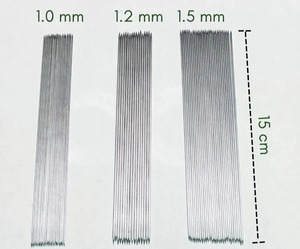
Beyond human orthopedic trauma, expanding veterinary surgical centers in Lima and Arequipa utilize smaller diameter (Ø 1.5mm - 3.0mm) Steinmann pins for intramedullary pinning of long-bone fractures in small and large animal veterinary care.
Combining 30+ years of manufacturing heritage with modern 62,000 sq. ft. cleanroom infrastructure and dedicated LATAM customer support.
Our production floor at Waghodia, Gujarat features multi-axis Integrax automated lathes and 5-axis CNC machining centers capable of maintaining ultra-tight mechanical tolerances (±0.005mm). Every Steinmann pin undergoes rigorous surface finishing to eliminate micro-burrs that could cause tissue damage during pin insertion or extraction.
Implants are cleaned using multi-stage ultrasonic aqueous wash systems and packaged within Class 10,000 (ISO Class 7) cleanrooms. We provide products in both non-sterile bulk packaging for hospital central sterile supply departments (CSSD) and sterile double-blister Tyvek packaging ready for immediate OR deployment.
Addressing technical, regulatory, commercial, and logistical queries regarding purchasing Steinmann pins from China to Peru.
Request a factory-direct quotation, complete technical dossier, or physical sample pack for your Peru market distribution network today. Our specialized Latin American export team responds within 12 business hours.