
High-precision orthopedic implants, total joint replacements, and specialized surgical instrument sets manufactured in cleanroom facilities adhering to ISO 13485 & CE standards.
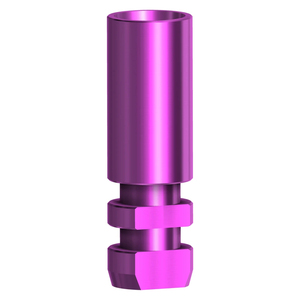
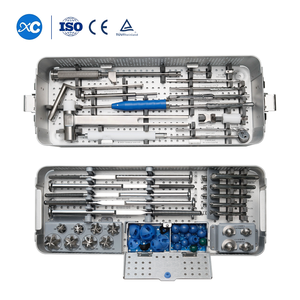
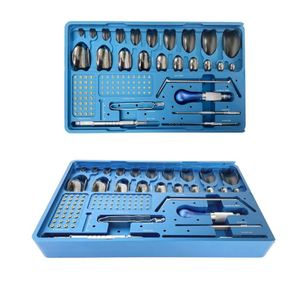
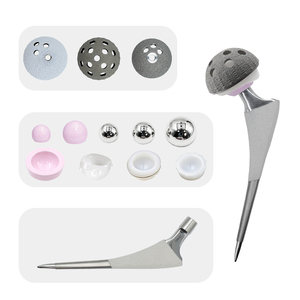
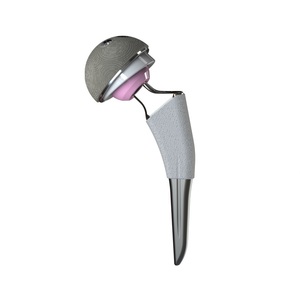
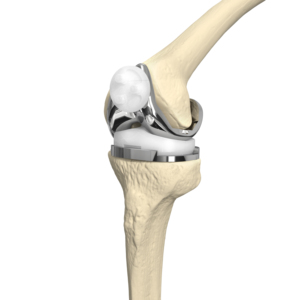
In modern total knee arthroplasty (TKA), the tibial component implant serves as the fundamental biomechanical foundation responsible for load redistribution, rotational constraint, and joint stability. As a premier wholesale manufacturer and international exporter delivering orthopedic solutions into highly demanding healthcare markets like Japan, our engineering framework synthesizes cutting-edge metallurgy, precise anatomical geometry, and advanced polyethylene polymer wear dynamics.
The human knee joint endures cyclic loading equivalent to three to five times body weight during daily activities such as stair negotiation, deep squatting, and traditional Japanese floor sitting (Seiza). To withstand these forces over decades, tibial component designs must balance three critical parameters:
When supplying medical device importers and hospital procurement networks across Tokyo, Osaka, and Fukuoka, material certification is paramount. We utilize certified medical-grade raw materials strictly compliant with international standards:
| Material Property | Ti6Al4V ELI (ASTM F136 / ISO 5832-3) | CoCrMo Alloy (ASTM F75 / ISO 5832-4) | UHMWPE Insert (ASTM F648 / ISO 5834-2) |
|---|---|---|---|
| Young's Modulus (GPa) | 110 - 114 (Lower rigidity, closer to cortical bone) | 210 - 240 (High stiffness, superior surface polish) | 0.8 - 1.2 (Biomechanical dampening layer) |
| Yield Strength (MPa) | ≥ 795 MPa | ≥ 450 MPa | ≥ 21 MPa |
| Biocompatibility Profile | Exceptional inertness; optimal for cementless osseointegration | High wear resistance; ideal for polished articulating surfaces | Highly cross-linked; enhanced resistance to micro-delamination |
| Primary Clinical Indication | Porous-coated tibial trays & porous stem extensions | Cast or forged cemented tibial baseplates | Fixed-bearing and mobile-bearing articular inserts |
Exporting medical devices to Japan requires a nuanced understanding of Japanese patient anatomy, surgical traditions, and institutional workflow preferences. Japanese orthopedists demand implants that cater specifically to the morphometric characteristics of East Asian populations.
Morphometric studies highlight that Asian knees generally possess a smaller anteroposterior (AP) to mediolateral (ML) ratio compared to Western populations. Standard Western tibial baseplates can lead to overhang medially or laterally, resulting in soft-tissue impingement. Our customized tibial components feature an asymmetric lateral-medial geometry and scaled AP/ML ratios, providing optimal cortical coverage without overhang.
Traditional Japanese domestic lifestyle demands high knee flexion for activities such as sitting on tatami mats (Seiza), bowing (Ojigi), and using traditional facilities. Our Posterior-Stabilized (PS) and Deep-Flexion tibial inserts accommodate up to 155° of flexion by optimizing the cam-post interaction and posterior chamfer relief, reducing posterior subluxation risks during hyper-flexion.
In accordance with Japan's Pharmaceuticals and Medical Devices Agency (PMDA) under the MHLW (Ministry of Health, Labour and Welfare), our technical documentation packages include comprehensive Master Files (STED format), biocompatibility reports (ISO 10993 series), and mechanical fatigue test results (ISO 14879-1 for tibial tray bending endurance over 5 million cycles).
Understanding macro trends in Japan enables distributors and OEM partners to stay ahead of clinical demand:
Operating from our 62,391 sq. ft. modern manufacturing facility in Vadodara, Gujarat, India, we combine global engineering expertise with scalable export capacity.
Equipped with multi-axis Integrax and high-precision CNC machinery, achieving dimensional tolerances as tight as ±0.005 mm on complex tibial tray locking grooves and keel profiles.
All implants undergo ultrasonic cleaning, automated bioburden testing, and sealing within certified cleanrooms under strict environmental controls prior to Gamma/EO sterilization.
Supported by 10 specialized Quality Control inspectors, 8 Regulatory Affairs experts, and a dedicated R&D design team providing rapid OEM custom design capabilities.
Key technical, regulatory, and supply chain answers for Japanese medical device dealers, OEMs, and hospital purchasing managers.
Partner with an established manufacturer trusted by orthopedic distributors across 50+ countries. Get access to detailed technical drawings, ISO certificates, and competitive volume pricing.