
Explore our ISO-certified osteosynthesis implants and arthroplasty assemblies designed for high-load clinical stabilization in modern trauma care centers.
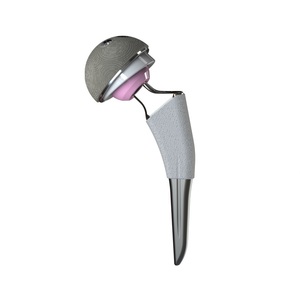
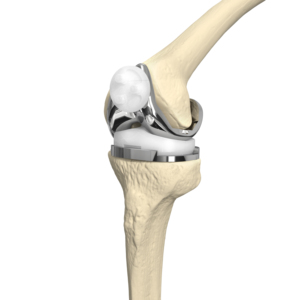
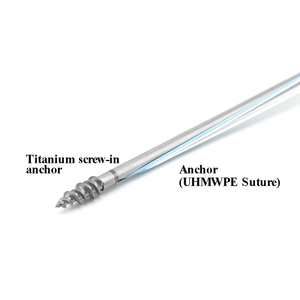
Intramedullary nailing has long stood as the definitive gold standard for the surgical management of femoral shaft fractures, subtrochanteric revisions, and complex intertrochanteric non-unions. In high-density clinical hubs like Berlin and the broader Brandenburg medical sector, trauma centers demand rigorous mechanical reliability, predictable micro-motion stabilization, and absolute biocompatibility. As leading Femoral Intramedullary Nails Manufacturers, our engineering paradigm aligns with the stringent clinical demands enforced across European Level-1 trauma centers (Traumanetzwerk DGU®).
The biomechanical advantage of an anatomical femoral intramedullary nail lies in its load-sharing characteristics. Unlike extramedullary plating systems, which experience severe bending moments due to eccentric loading off the anatomical axis, an intramedullary nail is positioned directly along the central neutral axis of the femur. This axial alignment drastically reduces mechanical lever arms, allowing early patient weight-bearing while preventing implant fatigue, hardware deformation, or delayed union.
Modern trauma surgery demands flexible locking configurations to address variable fracture patterns. Our femoral nail systems incorporate multi-planar proximal and distal locking options:
To support hospital procurement departments, clinical directors, and surgical distributors serving the German healthcare market, the following matrix outlines our standardized manufacturing benchmarks:
| Implant Attribute | Titanium Alloy Variant (Ti-6Al-4V ELI) | Stainless Steel Variant (316LVM) | Clinical / Regulatory Compliance |
|---|---|---|---|
| Standard Diameter Range | 9.0 mm – 14.0 mm (0.5 mm increments) | 9.0 mm – 14.0 mm (1.0 mm increments) | ISO 5832-3 / DIN EN ISO 14602 |
| Standard Length Offerings | 320 mm – 460 mm (20 mm increments) | 320 mm – 440 mm (20 mm increments) | Anatomical Fit Verification |
| Proximal Neck Angle | 125° / 130° Options | 125° / 130° Options | Biomechanically Validated |
| Surface Processing | Type II Anodization / Color-Coded Coding | Electropolished High-Passivation | ASTM F86 / ISO 10993 Biocompatibility |
| Fatigue Resistance Test | > 5,000,000 Cycles @ 1,800 N Load | > 5,000,000 Cycles @ 1,600 N Load | ASTM F1264 Standard Specification |
| Targeting System Compatibility | Carbon-Fiber Radiolucent Targeting Arm | Stainless Steel Precision Jig | Sub-millimeter Hole Alignment |
The healthcare landscape of Berlin—anchored by major hospital networks such as Charité – Universitätsmedizin Berlin, Vivantes Netzwerk für Gesundheit, and various specialized BG Trauma Clinics—operates under some of the most rigorous procurement protocols globally. Suppliers entering the German market must navigate complex reimbursement frameworks (G-DRG system), stringent quality standards (DIN ISO), and the comprehensive regulatory mandates of the European Union Medical Device Regulation (EU MDR 2017/745).
As dedicated Femoral Intramedullary Nails Manufacturers for the Berlin market, our manufacturing ecosystems maintain fully transparent Technical Documentation, comprehensive Clinical Evaluation Reports (CER), and rigorous Post-Market Surveillance (PMS) protocols compliant with EU MDR. This guarantees that German medical group purchasing organizations (GPOs/Einkaufsgemeinschaften) can seamlessly onboard our product catalogues without regulatory friction or audit delays.
Berlin’s urban infrastructure demands rapid surgical response for both high-energy polytrauma cases (e.g., motorway accidents on the A10/A100 ring roads) and low-energy osteoporotic fractures among the aging population. Our femoral nail systems are engineered for fast-track surgical technique:
• Instrument Modularity: Cannulated reamers, quick-connect insertion handles, and intuitive radiolucent targeting guides significantly cut intraoperative fluoroscopy time—reducing radiation exposure for surgical teams at Berlin clinic operating theatres.
• Recon & Compression Capabilities: Integrated internal compression screws allow controlled axial collapse for fragile intertrochanteric fractures common in geriatric patient populations across Berlin-Brandenburg.
To eliminate hospital inventory bottlenecks, we offer tailored logistics models for Berlin-based medtech distributors. From safety stock warehousing solutions to custom laser-marking (UDI compliant GTIN labeling), our manufacturing matrix guarantees short lead times and continuous device availability.
The global orthopedic implant sector is undergoing a rapid evolution toward minimally invasive surgery (MIS), patient-matched anatomical contours, and integrated digital preoperative planning. In progressive European surgical hubs like Berlin, three primary trends are shaping procurement decisions:
Surgeons increasingly demand clear visualization under C-arm fluoroscopy during distal screw locking. Metal targeting jigs often obstruct image intensifiers, extending operative times. Our latest femoral nail instrument sets incorporate high-rigidity carbon-fiber targeting arms, ensuring unobstructed visualization of distal locking holes and reducing surgical error rates.
Surgical Site Infections (SSI) and implant-associated osteomyelitis represent major financial burdens under the G-DRG reimbursement system. Advanced anodization protocols (Type II Titanium Anodization) create a dense, smooth oxide layer that impedes bacterial adhesion (such as Staphylococcus aureus) while enhancing mechanical wear resistance under cyclic axial loading.
Modern German trauma surgical suites rely heavily on CT-based 3D preoperative planning software. Our digital template libraries are available for major orthopedic planning platforms, allowing surgeons in Berlin to accurately predict nail diameter, length, and proximal screw trajectory prior to making the initial incision.
Combining three decades of precision engineering with world-class quality assurance infrastructures.
Utilizing state-of-the-art Swiss-type CNC lathes and 5-axis machining centers, we achieve sub-micron dimensional tolerances across complex femoral nail geometries, cannulated profiles, and anatomical sweeps.
Cleanroom washing, ultrasonic decontamination, packaging, and bioburden controls conform strictly to international medical device packaging standards (ISO 11607), guaranteeing sterile delivery to clinic operating rooms.
Every batch of Titanium (Ti-6Al-4V ELI) and Stainless Steel (316LVM) is sourced directly from audited, medical-grade raw material suppliers with full chemical and mechanical mill test certificates (MTC).
Answers to key regulatory, technical, and commercial inquiries from hospital purchasing managers and medical distributors in Germany.
A: Yes. Our manufacturing ecosystem operates under a certified ISO 13485 quality management system. All implants maintain up-to-date Technical Files, CE documentation, UDI integration, and comprehensive Clinical Evaluation Reports (CER) mandatory for clinical deployment in Germany and across the EU.
A: Standard stock catalog items are dispatched via express air freight (DHL/FedEx hubs) within 5 to 7 business days, reaching Berlin within 48 to 72 hours of dispatch. Custom OEM/ODM orders undergo a defined 4-to-6 week production and quality release cycle.
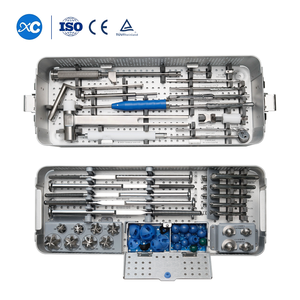
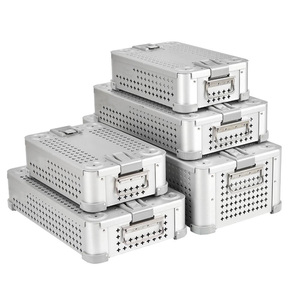
A: Absolutely. We provide complete, autoclavable surgical instrument trays featuring radiolucent carbon-fiber targeting arms, tissue protectors, flexible reamers, and depth gauges engineered specifically for our femoral intramedullary nail dimensions.
A: Titanium Alloy (Ti-6Al-4V ELI) is highly favored across German hospitals due to its lower modulus of elasticity (reducing stress shielding), superior MRI compatibility, and biological inertness. However, we maintain complete production lines for Stainless Steel (316LVM) to meet diverse tender specifications.
Request comprehensive product catalogues, technical dossiers, regulatory compliance packages, or schedule a consultation with our B2B export team.
Inquire Now