
Explore our ISO 13485 and CE certified medical devices, engineered with medical-grade Titanium (Ti-6Al-4V ELI) and Stainless Steel 316LVM to meet stringent European clinical guidelines.
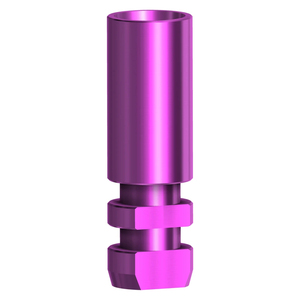
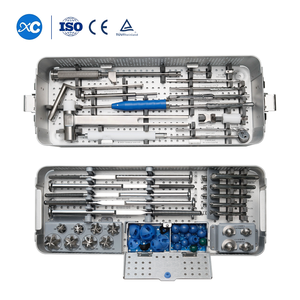
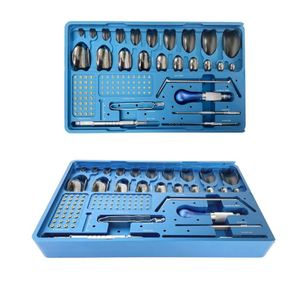
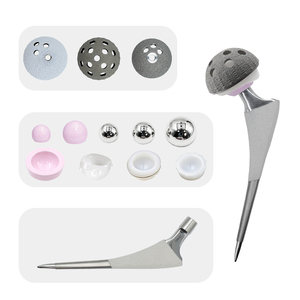
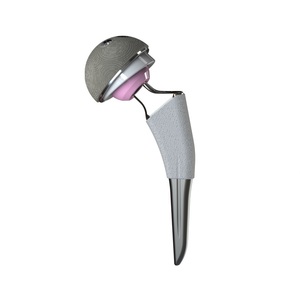
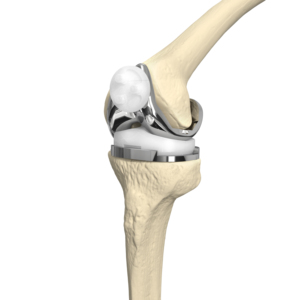
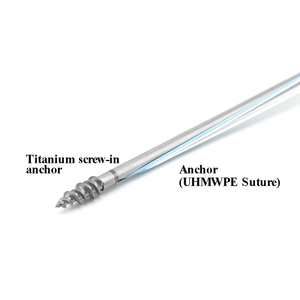
Modern lumbar and thoracolumbar spinal stabilization has evolved substantially from traditional open posterolateral fusion to Minimally Invasive Spine Surgery (MISS). Minimally invasive pedicle screw systems are specifically engineered to preserve muscle architecture, minimize paraspinal soft tissue denervation, cut intraoperative blood loss, and accelerate post-operative recovery for patients undergoing stabilization in Hamburg's medical centers.
Our percutaneous pedicle screw instrumentation relies on high-grade metallurgical selection, advanced geometric threading, and fluid percutaneous tower extensions. Manufactured from medical-grade Titanium Alloy (Ti-6Al-4V ELI conforming to ASTM F136 / ISO 5832-3), these implants balance superior tensile strength with dynamic fatigue resistance required for multiaxial rotational loads.
Internal cannulation optimized for 1.5mm Kirschner wires (K-wires). Enables precise percutaneous trajectory guidance under fluoroscopy or 3D navigation systems without deviation.
Allows up to 55 degrees of multidirectional head articulation. Simplifies rod insertion across multi-level constructs and accommodates complex anatomical variations seamlessly.
Integrated, high-rigidity percutaneous reduction extension tabs. Ensures frictionless rod passage and controlled reduction before smooth tab detachment at the anatomical neck.
The self-tapping dual-lead thread design significantly reduces insertion torque while increasing pull-out strength in both cortical pedicle walls and cancellous vertebral bodies. For compromised osteoporotic bone tissue, fenestrated MIS pedicle screw variants facilitate controlled polymethylmethacrylate (PMMA) bone cement injection directly through the screw core into the anterior vertebral body, maximizing immediate fixation stability.
| Specification Parameter | Standard MIS Pedicle Screw | Fenestrated Cement-Augmented Screw | Revision / Deformity Screw |
|---|---|---|---|
| Screw Diameters | 4.5mm, 5.5mm, 6.5mm, 7.5mm | 5.5mm, 6.5mm, 7.5mm | 7.5mm, 8.5mm, 9.5mm |
| Length Range | 30mm – 55mm (5mm increments) | 35mm – 55mm (5mm increments) | 40mm – 100mm (5mm increments) |
| Head Motion Angle | 50° – 55° Polyaxial | 50° Polyaxial | 55° Polyaxial / Monoaxial option |
| Material Grade | Ti-6Al-4V ELI (ASTM F136) | Ti-6Al-4V ELI (ASTM F136) | Ti-6Al-4V ELI / Cobalt-Chrome |
| Guidewire Clearance | Fits 1.5mm / 1.6mm K-Wire | Fits 1.5mm / 1.6mm K-Wire | Fits 1.6mm K-Wire |
How medical centers across the Metropolitan Region of Hamburg deploy our minimally invasive spinal systems across trauma, degenerative, and revision surgical procedures.
In Hamburg's specialized spine surgery suites—such as those at leading university medical complexes and regional orthopedic centers—surgeons utilize our extended-tab MIS pedicle screws for Transforaminal Lumbar Interbody Fusion (TLIF). By accessing the posterior elements via transmuscular Wiltse portals, surgical teams achieve stable 360-degree fusion without extensive detachment of the multifidus muscle. This drastically reduces post-operative pain scores, shortens hospital length of stay, and minimizes blood loss.
As a primary transport hub in Northern Germany, Hamburg handles significant trauma cases resulting from industrial accidents and transit collisions. Level-1 Trauma Centers in Altona, St. Georg, and Eppendorf require rapid percutaneous stabilization for unstable A3/A4 thoracolumbar fractures. Our cannulated screws allow rapid placement over K-wires under intraoperative C-arm or O-arm control, securing fractures spanning T10 to L5 within minimal surgical windows.
Germany's aging demographic profile demands enhanced biomechanical anchorage for osteoporotic bone. In specialized geriatric orthopedic departments across Hamburg, our fenestrated MIS pedicle screws are integrated with high-viscosity bone cement injection devices. The side-discharge distal ports distribute cement evenly into trabecular bone, providing superior pull-out resistance and preventing early hardware loosening in osteopenic and osteoporotic spine segments.
Hamburg's modern hybrid operating theaters rely heavily on real-time surgical navigation (such as Brainlab and Medtronic StealthStation systems). Our MIS pedicle screw extensions feature low-profile, non-reflective titanium surface treatments calibrated to work seamlessly with optical tracking arrays and robotic arm end-effectors, guaranteeing pedicle breach prevention during complex multi-segment constructs.
The procurement landscape for spinal medical devices in Hamburg and the broader German healthcare market (DE) is governed by strict regulatory quality oversight, shift towards ambulatory procedures, and stringent financial modeling under the German Diagnosis-Related Groups (G-DRG) system.
Following the transition from the legacy MDD to the European Medical Device Regulation (EU-MDR 2017/745), Hamburg purchasing groups (Einkaufsgenossenschaften) prioritize suppliers with verified Technical Documentation, EUDAMED registration, Unique Device Identification (UDI), and extensive Post-Market Clinical Follow-Up (PMCF) data.
Reimbursement shifts in Northern Germany are driving minor lumbar decompression and single-level fusion cases toward ambulatory surgery centers (Ambulante Operationszentren). Compact, pre-sterilized MIS screw instrument kits simplify logistics and reduce autoclave turnover times for fast-paced outpatient workflows.
Faced with tightening G-DRG fixed budgets, clinic purchasing directors in Hamburg are bypassing expensive multi-tiered intermediaries. Partnering directly with accredited global manufacturers yields substantial cost savings on spinal hardware without sacrificing mechanical performance or CE compliance.
As a global leader in orthopedic implant manufacturing since 1992, Sharma Orthopedic operates a state-of-the-art 62,391 sq. ft. manufacturing campus in Vadodara, Gujarat, India. Engineered with advanced precision tooling, our facilities maintain strict adherence to ISO 13485:2016 quality management frameworks.
Our production ecosystem combines raw material traceability, robotic coating technology, multi-axis CNC machining, and automated quality testing to guarantee batch-to-batch consistency for demanding international markets:
Clear answers regarding regulatory compliance, delivery pathways, surgical tool compatibility, and procurement logistics for Northern German partners.
Yes. All spinal systems and surgical implants exported to Hamburg and the European Union comply with applicable European regulatory frameworks, maintaining ISO 13485 quality system certification, CE marking, full UDI barcode traceability, and structured EUDAMED data submissions required for clinical deployment across German hospitals.
We offer express air freight options directly into Hamburg Airport (HAM) or Frankfurt (FRA) for urgent clinical inventory replenishment, reaching hospitals within 3 to 5 business days. For bulk distributor shipments, sea freight consignments are dispatched directly to the Port of Hamburg (Hafen Hamburg) with full customs clearance documentation, DDP/CIF terms, and complete compliance dossiers.
Absolutely. Our MIS pedicle screw extensions and driver assemblies feature standard square/hexagonal quick-connect couplings and anti-reflective titanium finishes. They are fully compatible with mainstream 3D fluoroscopy arrays and optical navigation tracking rings commonly used in Hamburg operating rooms (including Brainlab, Medtronic StealthStation, and Stryker navigation units).
Our pedicle screw implants are manufactured exclusively from high-strength Titanium Alloy (Ti-6Al-4V ELI, Grade 5 conforming to ASTM F136 and ISO 5832-3). This biocompatible alloy provides superior mechanical fatigue endurance, minimal MRI imaging artifacting, and optimized modulus of elasticity relative to cortical bone.
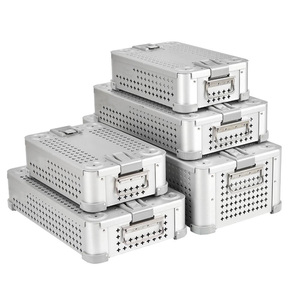
Yes. We supply complete ergonomic MIS spinal instrument trays, including percutaneous dilators, cannulated taps, K-wire inserters, counter-torque drivers, rod benders, and tab removal tools. All instrument sets are housed in heavy-duty anodized aluminum sterilizing containers designed to withstand repeated steam autoclaving cycles compliant with DIN EN 285 standards.
Hospitals, surgical groups, and medical distributors in Hamburg can initiate a formal evaluation by clicking the "Get a Quote" button below. Our international regulatory and sales team will immediately process your request, provide technical specifications, and arrange non-sterile demo instrument trays and sample implants for hands-on clinical assessment.
Streamline your hospital procurement or distribution catalog in Hamburg with ISO 13485 & CE certified minimally invasive pedicle screw systems. Contact our international export specialists today for pricing, regulatory dossiers, and clinical sample evaluations.
Get a Quote