
Direct-factory certified medical devices engineered to meet international clinical standards, supporting Tokyo orthopedic surgeons in complex spinal, joint, and trauma reconstructive procedures.
Tokyo’s metropolitan healthcare infrastructure faces an unprecedented demographic transition. As the capital region of Japan hosts one of the world's most rapidly aging populations—where over 28% of residents are aged 65 or older—the clinical prevalence of degenerative spinal disorders has escalated dramatically. Conditions such as lumbar spinal stenosis (LSS), degenerative spondylolisthesis, osteoporosis-induced vertebral compression fractures (VCF), and adult spinal deformity (ASD) demand spinal implant technologies that offer superior biomechanical fatigue strength, minimal tissue disruption, and long-term osteointegration.
For hospital procurement officers, clinical department chairs, and medical device distributors across Tokyo (spanning premier facilities in Shinjuku, Bunkyo, Chiyoda, and Minato wards), selecting a trusted B2B spinal implant supplier is no longer merely a pricing decision. It requires an alignment of regulatory compliance under Japan's Pharmaceuticals and Medical Devices Agency (PMDA) standards, absolute material purity (ISO 5832-3 Ti-6Al-4V ELI & ASTM F2026 PEEK), ultra-precise 5-axis CNC manufacturing, and resilient international supply chains.
Comparative structural performance metrics validating Sharma Orthopedic’s Thoracolumbar and Cervical Fixation Systems against rigorous international standards (ASTM F1717 & ASTM F2077).
| Implant System Parameter | Material Grade & Specification | Tensile / Fatigue Strength | Biomechanical Advantage | Tokyo Clinical Application |
|---|---|---|---|---|
| Pedicle Screw (Mono/Polyaxial) | Ti-6Al-4V ELI (ISO 5832-3 / ASTM F136) | Yield Strength > 860 MPa | 5M Cycles @ 300N | Dual-thread pitch design for rapid insertion & enhanced pull-out resistance | MIS TLIF / PLIF reconstructive surgeries for elderly osteoporosis patients |
| Cervical Interbody Cage | PEEK-OPTIMA / Porous Ti Coating | Compressive Strength > 160 MPa | Elastic Modulus ~ 3.6 GPa | Matches natural cortical/cancellous bone modulus, mitigating endplate subsidence | ACDF procedures for cervical spondylotic myelopathy in urban centers |
| Posterior Cervical Rods (3.5mm) | Medical Grade Titanium Alloy / CoCr | Flexural Rigidity > 2.4 Nm² | High ductility allowing multi-planar contouring without micro-fracturing | Occipitocervical and upper thoracic fixation for traumatic spine injury |
| Thoracolumbar Cross-Connectors | Ti-6Al-4V Precision Machined | Torsional Stiffness > 12.5 Nm/deg | Drop-in locking mechanism provides 360-degree rotational stability | Multi-segment deformity correction (Scoliosis / Kyphosis revision) |
| Expandable Interbody Spacer | Titanium 3D Printed Lattice (65% Porosity) | Static Axial Compression > 22 kN | In-situ continuous height adjustment for precise lordosis restoration | Minimal invasive lateral lumbar interbody fusion (LLIF/OLIF) |
Tailored implant configurations meeting the nuanced anatomical and procedural preferences of orthopedic spine surgeons across Japan.
High surgical volume centers in Tokyo prioritize quick patient recovery and reduced length of hospital stay (LOS). Our percutaneous pedicle screw systems feature ultra-slim cannulated extensions, low-profile screw heads, and self-tapping tip geometry. This enables precise percutaneous tower delivery under fluoroscopic guidance, minimizing paraspinal muscular trauma and blood loss during TLIF procedures.
In Japan's senior demographic, poor bone mineral density (BMD) poses significant risk of screw loosening. Sharma Orthopedic exports specialized fenestrated pedicle screws compatible with high-viscosity polymethylmethacrylate (PMMA) bone cement injection. The multi-hole fenestration optimizes cement cloud distribution within the vertebral body, increasing pull-out strength by up to 180% in osteoporotic bone.
For anterior cervical discectomy and fusion (ACDF) across multi-level cervical spondylosis cases, our anatomical PEEK cages are coupled with dynamic titanium cervical plates featuring variable-angle locking screws. The integrated anti-backout locking mechanism provides tactile feedback, ensuring surgeon confidence during high-stakes neck reconstruction.
Medical device market entry into Tokyo requires strict compliance with Japan’s Ministry of Health, Labour and Welfare (MHLW) and the Pharmaceuticals and Medical Devices Agency (PMDA) regulatory framework under the revised PMD Act (Pharmaceutical and Medical Device Act). Implants imported into Japan must adhere to stringent quality management systems aligned with ISO 13485:2016 standards, complete with comprehensive STED (Summary Technical Documentation) filings.
Sharma Orthopedic India Limited provides global distribution partners in Tokyo with complete regulatory dossiers, including ISO 10993 biocompatibility testing, ASTM F1717 mechanical fatigue test reports, gamma sterilization validation curves, and traceability records for every batch of Ti-6Al-4V ELI titanium alloy.
Tokyo hospital procurement departments are actively diversifying supply sources away from high-cost Western OEMs toward ISO 13485-certified Indian medical device leaders, achieving 30-45% cost savings without compromising clinical efficacy.
With direct cargo routes connecting Vadodara manufacturing hubs to Tokyo Narita (NRT) and Haneda (HND) international airports, emergency replenishment of custom spinal instrument trays is achieved within 72 to 96 hours.
Our spinal implants are designed in alignment with standard Japanese National Health Insurance (NHI) functional categories for spinal internal fixation devices, facilitating seamless hospital billing and insurance reimbursement.
Since 1992, Sharma Orthopedic has stood at the forefront of medical technology manufacturing, operating state-of-the-art production infrastructure engineered for uncompromised safety and precision.
Our Vadodara manufacturing campus features ISO Class 7 cleanrooms, automated ultrasonic washing, and controlled environment packaging lines to eliminate particulate contamination.
High-speed multi-axis DMG MORI CNC sliding head lathes ensure sub-micron dimensional tolerances on complex polyaxial screw heads and thread pitch geometries.
Equipped with CMM coordinate measuring machines, optical profile projectors, and non-destructive surface flaw testing. Every implant serial number is fully traceable.
In-house R&D engineering team specializing in anatomical modifications, custom surface coatings (Ti Plasma Spray / HA), and private label distribution partnerships.
Addressing key regulatory, logistical, and technical inquiries from Japanese medical equipment importers and hospital supply chain directors.
Yes. Our manufacturing facilities are ISO 13485:2016 certified and hold CE marking under European Medical Device Directives/MDR. For Japanese importers, we provide comprehensive technical files (STED format), biocompatibility reports (ISO 10993), and raw material origin certificates required for PMDA submission and Shonin approval.
We exclusively utilize implant-grade Ti-6Al-4V ELI (Extra Low Interstitial) conforming to ASTM F136 and ISO 5832-3. This material exhibits superior fatigue resistance, biocompatibility, and MRI compatibility compared to standard titanium alloys, rendering it ideal for long-term load-bearing spinal constructs.
Standard catalog items are dispatched from our Vadodara warehouse within 3 to 5 business days upon order confirmation. Express air freight to Narita (NRT) or Haneda (HND) international airports typically arrives within 4 to 6 transit days, ensuring seamless inventory buffer management for Tokyo hospitals.
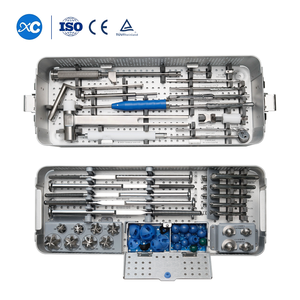
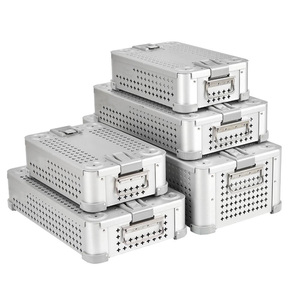
Absolutely. Our spinal surgical instrument sets are modular, color-coded, and manufactured from German stainless steel. We offer customized tray layouts, quick-connect silicone handles, and specialized low-profile bone taps specifically engineered for smaller anatomical pedicle dimensions prevalent in Japanese patient cohorts.
Yes. Implants can be supplied in double-barrier Tyvek blister packaging gamma-sterilized to an Assurance Level (SAL) of 10⁻⁶, or non-sterile validated for steam autoclave sterilization at 134°C in accordance with hospital sterile processing department (SPD) protocols.
We welcome partnerships with licensed Japanese medical device distributors (First-class/Second-class Medical Device Marketing License holders). Please submit an inquiry via our online chat portal below. Our global export team will schedule a teleconference to discuss minimum order quantities (MOQ), territory protection, and regulatory co-registration support.
Streamline your Tokyo medical procurement with high-precision, CE & ISO-certified spinal fixation systems. Contact our international export specialists today for technical catalogs, CAD drawings, and direct factory pricing quotes.
Send an Inquiry