
Precision-engineered trauma, arthroplasty, and reconstruction devices tailored for Philippine surgical centers
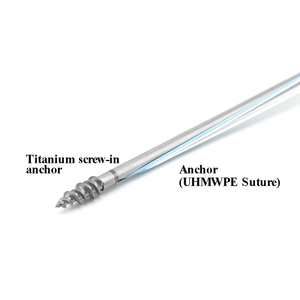
Cannulated screw fixation represents the gold standard in percutaneous osteosynthesis for periarticular fractures, slipped capital femoral epiphysis (SCFE), femoral neck fractures, and complex arthrodesis procedures. In modern trauma care, the choice of implant material, thread dynamic geometry, and cannulation tolerance dictates surgical speed, intraoperative fluoroscopic alignment precision, and post-operative non-union prevention.
Modern orthopedic surgery in demanding environments requires implants that balance structural fatigue strength with tissue compatibility. Titanium Cannulated Screws produced for international distribution are primarily forged from Ti-6Al-4V ELI (Extra Low Interstitial - Grade 23, ASTM F136). Compared to standard Grade 5 titanium or 316LVM stainless steel, Ti-6Al-4V ELI provides an optimized modulus of elasticity (approx. 110 GPa) that more closely mimics human cortical bone (15-30 GPa), significantly reducing the risk of stress shielding around the fracture site.
| Mechanical / Physical Property | Ti-6Al-4V ELI (Grade 23 ASTM F136) | Stainless Steel 316LVM (ASTM F138) | Clinical Advantage in Cannulated Screws |
|---|---|---|---|
| Elastic Modulus (GPa) | 110 GPa | 193 GPa | Minimizes stress shielding; yields natural mechanical strain transfer across osteotomy sites. |
| Yield Strength (MPa) | ≥ 795 - 860 MPa | ≥ 690 MPa | Resists shear bending deformation during percutaneous compression across the femoral neck. |
| Biocompatibility / MRI Artifact | Low Magnetic Susceptibility | Higher Interference Risk | Clear post-operative diagnostic MRI artifact profile, critical for joint cartilage evaluation. |
| Corrosion Resistance | Passive TiO₂ Oxide layer | Passivated Chromium Layer | Immune to pitting and crevice corrosion under long-term exposure to physiological fluids. |
A primary failure mode during percutaneous trauma procedures is the binding or galling of the Kirschner wire (K-wire) inside the internal lumen of the screw. Advanced CNC deep-hole drilling technology maintains a concentric cannulation lumen tolerance of ±0.02 mm along the entire longitudinal axis of the screw shaft.
Whether using a 2.7mm, 3.5mm, 4.5mm, 6.5mm, or 7.3mm cannulated screw system, precision coaxiality ensures that the screw smoothly glides over pre-placed stainless steel guide wires without unexpected resistance, binding, or wire displacement. This reduces operative duration, minimizes surgeon hand fatigue, and eliminates intraoperative fluoroscopic recalibration steps.
Cannulated Cancellous Screws depend on differential thread engagement to achieve optimal interfragmentary compression. Standard product lines offer two primary configuration types:
Reverse-cutting flute geometries integrated into the screw tip permit smooth self-drilling and self-tapping installation. This eliminates the necessity of separate tapping passes in osteopenic and cancellous bone beds, preserving bone stock density and maximizing final pullout resistance.
Integrated features crafted to optimize surgical workflow and anatomical fixation stability
Engineered with smooth, rounded countersunk contours to sit flush against the outer cortex, minimizing soft-tissue irritation in subcutaneous bone regions such as the medial malleolus and scaphoid.
Features deep Torx-compatible hexalobular drive sockets that maximize torque transfer, eliminate driver cam-out risks, and facilitate effortless screw removal during secondary hardware extraction.
Type II electrochemical anodization provides a uniform oxide barrier, increasing surface hardness, diminishing ion release, and providing color-coded visual identification of screw diameters in surgical trays.
The Philippines experiences high volumes of vehicular trauma and motorcycle accidents along congested major arteries (such as EDSA, C-5, and provincial highways in Luzon). Trauma centers including the Philippine General Hospital (PGH), Orthopedic Center (NOC), and regional tertiary medical centers frequently perform percutaneous fixation for complex tibial plateau fractures, femoral neck dislocations, and calcaneal fractures. Titanium cannulated screws allow trauma surgeons to achieve immediate compression with minimal soft-tissue disruption, reducing infection risks in emergency settings.
With an aging demographic across key metropolitan cities like Cebu, Davao, and Quezon City, the incidence of intracapsular femoral neck fractures (Garden Type I & II) has escalated. Surgeons in private networks (such as St. Luke's Medical Center, Asian Hospital, and Medical City) routinely deploy an inverted triangle configuration using three 6.5mm or 7.3mm Titanium Cannulated Screws. This percutaneous approach yields rapid postoperative patient mobilization while accommodating PhilHealth case rates for trauma care efficiency.
The tropical archipelago environment of the Philippines presents high humidity levels (averaging 75%-85% RH) and saline air exposure during transit between islands. Implants must feature hermetically sealed, medical-grade double blister packaging with Tyvek barriers. This preserves packaging sterility and prevents atmospheric moisture condensation on passivated titanium screw surfaces during long warehouse storage in provincial supply depots from Iloilo to Cagayan de Oro.
Healthcare institutions in the Philippines operate across distinct budget categories. Department of Health (DOH) retained hospitals seek cost-effective, bulk-packaged cannulated screw kits with complete regulatory documentation. Conversely, top-tier private facilities mandate premium surface finishes, customized instrument trays, and full traceability. Meeting both tiers requires a flexible manufacturer capable of supplying certified standard implants alongside specialized OEM configurations.
Founded in 1992, Sharma Orthopedic India Limited has established itself as one of the leading global manufacturers and exporters of precision orthopedic implants, spinal systems, and trauma hardware. Spanning a state-of-the-art 62,391 sq. ft. manufacturing campus in Vadodara, Gujarat, the facility integrates ultra-precision 5-axis CNC machining centers, Swiss-type automatic turning lathes, and automated robotic surface coating lines.
Every Titanium Cannulated Screw is fabricated under stringent cleanroom environments, tested for microscopic dimensional tolerances, and subjected to rigorous biomechanical fatigue testing in full compliance with ISO 13485:2016 and international CE directives. Operating across 50+ countries worldwide, Sharma Orthopedic provides Philippine medical distributors, tenders, and hospital groups with reliable factory-direct pricing, consistent stock availability, and full regulatory dossier support.
Addressing regulatory clearances, ordering logistics, product options, and technical compatibility
Contact our international export department today to request comprehensive product catalogs, pricing structure, sample sets, and FDA registration support for the Philippines.
Inquire Now