
Explore our premium orthopedic, neurosurgical, and arthroplasty implant systems manufactured under strict international quality management standards for immediate export to Uzbekistan.
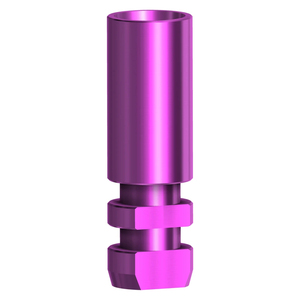
High-precision prosthetic lab components engineered for multi-system compatibility and sub-micron rotational accuracy.
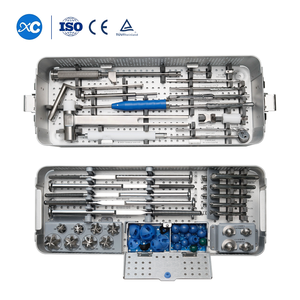
Comprehensive veterinary orthopedic instrument collection crafted from medical 316L stainless steel.
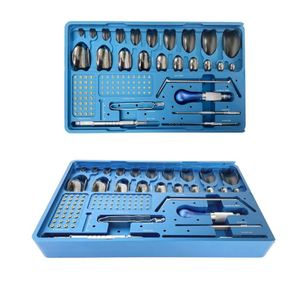
Precision-designed pedicle screws and joint replacement implants tailored for specialized veterinary reconstructive surgery.
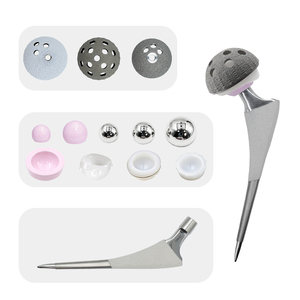
Porous titanium coated cementless acetabular cups facilitating rapid osseointegration and long-term joint stability.
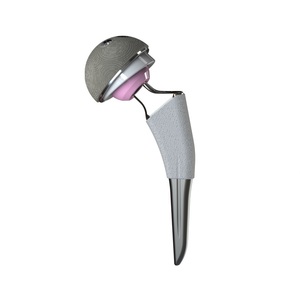
Biocompatible Grade 5 titanium hip stems featuring bio-inert surface finishing for superior primary biological fixation.
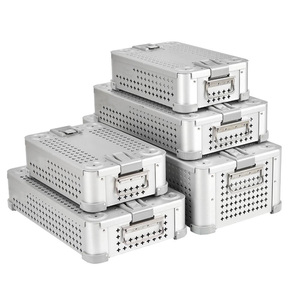
Complete surgical tray setup engineered for intraoperative precision, ergonomic handling, and standardized sterilizability.
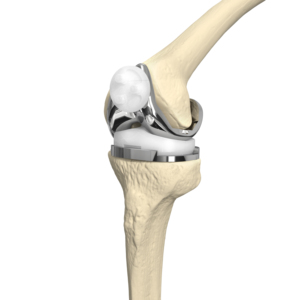
High-flexion Cobalt-Chromium-Molybdenum femoral components paired with ultra-high-molecular-weight polyethylene bearings.
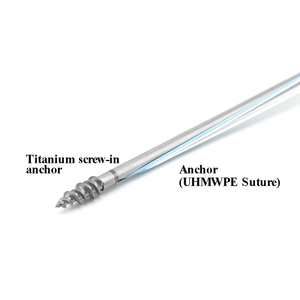
Advanced arthroscopic reconstruction anchors ensuring high pull-out strength and precise soft tissue refixation.
In modern neurosurgery, cranioplasty serves not merely as a cosmetic restoration of cranial contour, but as a critical physiological intervention to normalize intracranial pressure, restore cerebrovascular dynamics, and protect underlying brain parenchyma. As a leading Titanium Cranial Mesh Plates Manufacturer & Exporter supplying Uzbekistan, our manufacturing philosophy is rooted in metallurgical precision, anatomical compliance, and clinical safety.
Cranial defect repair following decompressive craniectomy, traumatic skull fractures, or oncological bone resections requires materials that balance structural strength with low radiodensity and high biocompatibility. Ultra-fine micro-porous Grade 5 Titanium (Ti-6Al-4V ELI - Extra Low Interstitial) has emerged as the global benchmark material for neurosurgical cranial reconstruction.
When selecting cranioplasty implants for public healthcare procurement in Uzbekistan, neurosurgical department heads must evaluate long-term mechanical stability against post-operative infection risks and imaging artifact interference.
| Biomaterial Parameters | Ti-6Al-4V ELI Titanium Mesh | Commercially Pure (CP) Titanium | PMMA (Acrylic Resin) | PEEK (Polyetheretherketone) |
|---|---|---|---|---|
| Tensile Strength (MPa) | 860 - 960 MPa | 240 - 550 MPa | 60 - 80 MPa | 90 - 100 MPa |
| Modulus of Elasticity (GPa) | 110 GPa (Optimal stiffness) | 105 GPa | 3.0 GPa | 3.6 GPa |
| Osseointegration & Tissue Acceptance | Exceptional (Porous osteoconduction) | High | Low (Risk of exothermic necrosis) | Moderate (Requires coating) |
| Intraoperative Moldability | High (3D pre-bent contouring) | Moderate (Elastic springback) | In-situ exothermic polymerization | Non-moldable (Rigid CAD/CAM) |
| Post-op CT/MRI Artifacts | Minimal (Ultra-thin mesh geometry) | Low to Moderate | Radiolucent | Radiolucent |
| Infection & Rejection Rate | < 1.5% in multi-center clinical trials | < 2.0% | 8.5% - 12.3% | 2.1% - 4.0% |
Our cranial mesh plates are manufactured utilizing high-precision Swiss-type 5-axis CNC machining and photochemical etching technologies. The micro-porous matrix configuration features pore diameters calibrated between 1.2 mm and 2.0 mm, which delivers three distinct biomechanical benefits:
Our titanium cranial mesh systems are tailored to fulfill the clinical and surgical workflow demands of trauma centers and specialized clinics throughout the Republic of Uzbekistan.
Tashkent, as the primary medical metropolis, houses national neurosurgical research centers. High-speed highway trauma and industrial head injuries require rapid decompressive skull reconstruction. Our pre-bent, easily shapeable titanium cranial plates allow surgeons to quickly adapt the implant to complex bone defects during emergency cranioplasty procedures.
Keywords: Republican Specialized Scientific-Practical Medical Center of Neurosurgery, Emergency Cranioplasty TashkentRegional medical hubs in Samarkand, Namangan, and Andijan frequently undertake extensive cranial base tumor resections. Tumor extirpation leaves irregular bone gaps spanning maxillofacial and orbital boundaries. Our 0.6 mm micro-cranial mesh sheets can be cut with surgical shears and micro-contoured to fit delicate orbital rim and frontal sinus cavities without burring.
Keywords: Regional Neurosurgical Units Samarkand, Maxillofacial Reconstruction FerganaTreating craniosynostosis and pediatric skull vault malformations requires implants that accommodate ongoing bone remodeling. Our low-profile titanium cranial screws (1.5mm / 2.0mm micro systems) combined with ultra-thin mesh plates provide stable osteosynthesis while minimizing skin palpability under pediatric scalp tissue.
Keywords: Pediatric Neurosurgery Uzbekistan, Craniosynostosis Repair TashkentThe healthcare landscape in Uzbekistan is undergoing an unprecedented structural transformation driven by state-level modernization programs under the national strategy "Uzbekistan - 2030". Key developments shaping the medical device market include:
State initiatives favoring public-private partnerships (PPP) have incentivized the establishment of over 1,200 private surgical clinics and specialized medical centers across Tashkent, Bukhara, and Urgench, creating high demand for certified neurosurgical implants.
Surgeons across Uzbekistan are rapidly phasing out hand-mixed acrylic bone cement (PMMA) due to high infection rates and thermal bone necrosis, shifting toward standardized ISO/CE certified pre-contoured Titanium Cranial Mesh systems.
Uzbekistan is positioning itself as a central medical hub for neighboring Central Asian countries including Tajikistan, Kyrgyzstan, and Turkmenistan, driving hospitals to adopt globally recognized surgical implant technologies.
As international regulatory standards tighten under the Ministry of Health of the Republic of Uzbekistan (O'zbekiston Respublikasi Sog'liqni Saqlash Vazirligi), local healthcare distributors prioritize manufacturing partners who deliver complete technical dossiers, clinical trial evidence, and unbroken batch traceability.
Leveraging over three decades of engineering expertise from our state-of-the-art Vadodara manufacturing campus to serve hospital networks across Uzbekistan.
Our production facilities operate strictly under ISO 13485 quality management systems, with full CE compliance. Every titanium cranial mesh plate undergoes rigorous mechanical fatigue testing and 100% surface defect inspection prior to double-sterile cleanroom blister packaging.
We exclusively utilize certified titanium alloys sourced from audited global metallurgists. Material test reports (MTR) verifying chemical composition, tensile strength, and non-cytotoxicity are included with every export dispatch to Uzbekistan customs authorities.
Featuring multi-axis Swiss CNC lathes, automated micro-anodization lines, robotic optical inspection, and dedicated R&D departments. Our scaled manufacturing capacity ensures rapid lead times for high-volume tender contracts in Central Asia.
"The structural precision and intraoperative elasticity of Sharma Orthopedic's titanium cranial mesh systems have dramatically reduced surgical time in our neuro-trauma cases. Their technical support and regulatory documentation support for Uzbekistan importation were seamless."
— Chief of Neurotrauma & Reconstructive Surgery, Clinical Referral HospitalAddressing common regulatory, commercial, and technical inquiries from hospital purchasing managers and medical device distributors in Uzbekistan.
Connect directly with our international export department for factory pricing, regulatory submission kits, or OEM/distributor partnerships in Tashkent and regional Uzbekistan provinces.